Highway crashes do not always happen during predictable rush hour congestion or in the middle of heavy commuter traffic. In North Carolina, a collision may occur late at night, during an off-peak afternoon, or on a relatively open stretch of interstate where traffic conditions initially appear straightforward. Claims arising from these crashes can still become […]
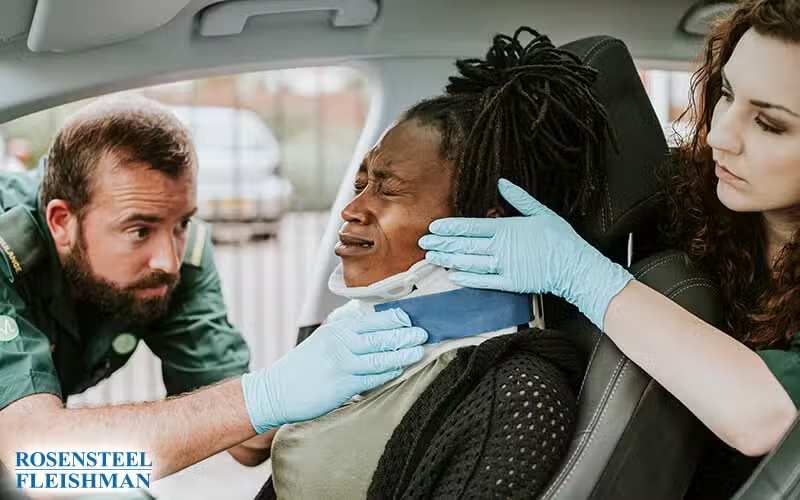

Highway crashes often move through several stages before anyone has a clear sense of what the claim may become. After a collision on I-77, I-85, I-485, or another busy route in Charlotte, NC, the first concern is always safety and medical care, but the way people communicate afterward can also affect how smoothly the situation moves toward resolution.
Insurance adjusters, drivers, passengers, medical providers, and sometimes employers may all become part of the conversation. Each person or organization may need different information, and delays can happen when details are missing, statements conflict, or injuries take time to fully develop. A clear highway accident overview can help injured people understand why some cases settle quickly while others require more time and stronger documentation.
Why Communication Can Shape the Path Forward
Good communication does not mean saying everything right away or accepting the first explanation offered. It means being careful, consistent, and organized about what is shared. As Attorney Matthew Fleishman has said, “The details people preserve early can make the later conversation much clearer.” That kind of approach matters when questions arise about fault, medical treatment, vehicle damage, missed work, or long-term recovery.
For someone dealing with pain, bills, and calls from insurance companies, it can be hard to know what matters most. Speaking with an auto accident attorney for injury claims can help clarify what information may be useful and how different resolution paths may unfold without adding unnecessary pressure.
Overview
A highway crash claim usually depends on evidence, communication, medical records, and the willingness of the involved parties to exchange information in a clear and timely way. Settlement may be possible when liability, damages, and coverage are reasonably understood, but some situations take longer because the facts are disputed or the injuries are still being evaluated.
People in Charlotte, NC should be cautious about rushing into decisions before they understand the full picture. Keeping records, following medical advice, and asking informed questions can make the process more manageable and help avoid choices that may create problems later.
How Highway Crash Claims Move Toward Settlement or Another Resolution
A claim usually begins with the basic facts of the crash, then moves into a closer review of responsibility, injuries, insurance coverage, and financial losses. On a highway, that review can be more complicated than it first appears because vehicles are often moving at higher speeds, lanes change quickly, and several drivers may have different accounts of what happened.
For example, a driver traveling on I-485 near Charlotte may be rear-ended after traffic slows suddenly. At first, the crash may seem straightforward. Later, the insurance company may ask whether brake lights were working, whether another vehicle cut into the lane, whether traffic cameras exist, and whether the injured driver had a prior back condition. These questions do not always mean the claim is weak. They show how a simple crash can become a layered review of evidence and timing.
Settlement is one possible path when the parties can agree on fault and the value of the losses. This usually requires medical records, repair estimates, wage information, photographs, witness details, and a clear explanation of how the collision affected daily life. If the injured person is still treating, it may be too early to understand the full cost of the crash. Settling before the medical picture is complete can create financial strain if symptoms worsen or additional care becomes necessary.
Another path involves continued negotiation. This can happen when the insurance company accepts some responsibility but disagrees about the extent of injuries or the amount of compensation. In these situations, communication often becomes more focused. Instead of simply reporting what happened, the injured person or their representative may need to connect the evidence to specific losses, such as physical therapy costs, time missed from work, reduced mobility, or ongoing pain during normal activities.
Some cases move more slowly because liability is contested. Highway accidents may involve merging disputes, chain reaction impacts, commercial vehicles, uninsured drivers, or unclear police reports. When stories conflict, the claim may depend on details such as impact points, skid marks, vehicle data, dash camera footage, nearby surveillance video, or witness statements. The more organized the information is, the easier it becomes to address disagreements with less confusion.
It is also important to understand that resolution does not always mean a quick settlement. A resolution can include a negotiated agreement, a formal claim process, mediation, or further legal action when necessary. The right direction depends on the facts of the crash, the severity of the injuries, the insurance coverage available, and whether the other side is handling the claim reasonably. For people who are unsure how to evaluate an offer or respond to delays, talking with an auto accident settlement lawyer may help them compare practical options before making a decision.
What Information Helps a Claim Move Forward
The strongest communication is usually backed by records rather than memory alone. After a highway crash, people may be shaken, hurt, or unsure about small details. That is normal. Written records help fill those gaps and make the claim easier to review.
Useful information may include police reports, medical records, discharge papers, photos of the vehicles, photos of the roadway, insurance letters, repair estimates, and notes about symptoms. It can also help to keep a simple timeline of appointments, missed workdays, calls with adjusters, and changes in pain or mobility. This timeline does not need to be complicated. It just needs to be accurate.
Medical consistency is especially important. If someone feels neck pain after a collision but waits weeks to seek care, the insurance company may question whether the crash caused the injury. That does not mean the person has no claim, but it may create an avoidable challenge. Prompt care and clear follow-up can show how the injury developed and what treatment was needed.
Communication with insurance companies should be careful. Basic information may be necessary, but broad recorded statements or quick settlement discussions can be risky when the full medical picture is not known. A calm and organized response is often better than guessing, minimizing symptoms, or trying to explain everything before the facts are gathered.
Why Some Highway Accident Claims Take Longer
A claim may take longer when injuries are serious, treatment is ongoing, or several insurance policies are involved. Highway crashes can cause injuries that are not fully understood in the first few days. Back injuries, shoulder injuries, concussions, and soft tissue damage may change over time, especially once the person returns to work, drives again, or resumes normal household tasks.
Disputes about fault can also slow the process. If one driver says traffic stopped suddenly while another claims unsafe following distance, the insurance company may delay a decision until it reviews more evidence. In multi-vehicle crashes, each insurer may try to place responsibility elsewhere. This can be frustrating for injured people who need answers while bills continue to arrive.
Coverage issues can create another layer. Some drivers have low policy limits, no insurance, or coverage questions that require review. When damages are greater than available coverage, the resolution path may involve looking at uninsured or underinsured motorist coverage, health insurance coordination, or other possible sources of recovery. These issues can affect timing and strategy.
A realistic scenario may involve a Charlotte commuter struck by a speeding driver on I-85 during evening traffic. The injured commuter goes to urgent care, begins physical therapy, misses several weeks of work, and then receives a settlement offer before treatment is complete. The offer may seem helpful at first because bills are piling up. But if the person still needs imaging, injections, or more therapy, accepting too early may leave important costs uncovered. That is why timing, documentation, and careful review matter.
What To Keep In Mind When Questions Continue After a Crash
A highway accident overview is useful because it reminds people that claims are not decided by one document, one phone call, or one repair estimate. They are built from a collection of facts that show what happened, who was responsible, and how the crash changed the injured person’s life.
Ongoing questions are common. People may wonder whether they should speak with an adjuster, whether a settlement offer is fair, whether delayed pain matters, or whether their case is taking too long. These concerns are practical, not unusual. The key is to avoid rushing into decisions just because the process feels stressful or unclear.
When a Settlement Offer Needs Careful Review
A settlement offer should be compared against the full scope of the harm, not just the bills that are already visible. Medical expenses, future care, missed income, reduced earning ability, pain, physical limitations, and the effect on normal routines may all matter. If the offer does not account for these realities, it may not reflect the actual impact of the crash.
People should also remember that settlement is usually final. Once a release is signed, it can be difficult or impossible to seek more compensation later. That makes it important to understand what rights are being given up before accepting payment. A careful review can help identify gaps, missing records, or assumptions that should be addressed first.
How Local Legal Guidance Can Help Clarify Options
Rosensteel Fleishman Car Accident & Injury Lawyers works with people in Charlotte, NC who are trying to understand what comes next after a crash. Corey Rosensteel and Matthew Fleishman bring experience with injury claims, insurance communication, and the practical concerns that often follow serious collisions. Their role is not to make the situation more complicated. It is to help people understand their options and make informed choices.
For someone who is unsure whether a settlement offer makes sense, whether communication with the insurance company has become difficult, or whether more documentation is needed, a conversation with Rosensteel Fleishman may provide useful direction. The firm can be reached at 1-704-714-1450 for a free consultation about available options.
Highway accident claims can feel overwhelming because the process often unfolds while the injured person is still healing. Clear communication, organized records, and careful timing can make the path forward easier to understand. When questions remain, getting reliable guidance before making final decisions can help protect both the claim and the person’s long-term recovery.
Additional Car Accidents Articles
Left Turn Gap Judgment Errors When Visibility or Road Design Plays a Role
What happens when a driver begins a left turn and another vehicle suddenly changes lanes? The available opening can disappear almost instantly. In Charlotte traffic, this type of conflict may occur near multilane intersections where drivers must monitor oncoming vehicles, traffic signals, pedestrians, and vehicles moving between lanes at the same time. These crashes can […]
Multi Policy Insurance Considerations When One Policy Does Not Cover Every Loss
Insurance coverage after a serious car accident is not always limited to one policy. A collision may involve liability coverage, underinsured motorist coverage, medical payments coverage, an employer’s commercial policy, or another source of compensation. Identifying each applicable policy can affect how losses are documented, how negotiations develop, and whether a proposed resolution fairly reflects […]
What Happens When Vehicle Damage Appears Later Despite an Initial Inspection
Damage found days or weeks after a collision can complicate an insurance claim, especially when the cause of the crash or responsibility for the repairs remains disputed. A vehicle may look drivable during an initial roadside review in Charlotte, yet later show suspension problems, electrical faults, alignment issues, or damage hidden beneath exterior panels. When […]