Highway crashes do not always happen during predictable rush hour congestion or in the middle of heavy commuter traffic. In North Carolina, a collision may occur late at night, during an off-peak afternoon, or on a relatively open stretch of interstate where traffic conditions initially appear straightforward. Claims arising from these crashes can still become […]
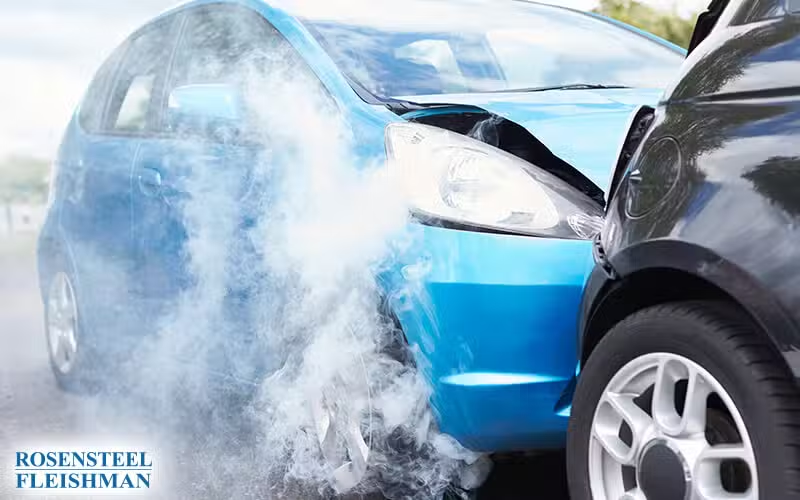

When several vehicles are involved in one crash, insurance reviews often move more slowly because each insurer is trying to sort out what happened, who may share responsibility, and whether the available information lines up. A police report might describe one sequence, a driver may remember it differently, and vehicle damage may suggest another part of the story. That is why multi vehicle claims often involve more questions, more documentation, and more back and forth before anyone has a clear picture.
For people in Charlotte, this can feel frustrating because everyday concerns continue while the claim is still being reviewed. Medical appointments, missed work, repair estimates, and rental car issues can all stack up quickly. As Attorney Matthew Fleishman has noted, “The harder part for many people is not only the crash itself, but trying to make sense of competing information afterward.” When questions grow more complicated, reviewing resources from a car accident lawyer in Charlotte can help explain how records, insurance questions, and injury concerns may fit together.
Article Brief
- Multiple vehicle crashes often take longer because insurers compare several accounts, reports, and damage patterns.
- Conflicting information does not automatically mean a claim is weak, but it can delay decisions.
- Clear documentation can help explain injuries, vehicle damage, and how the crash unfolded.
Why Insurance Reviews Become More Complicated After Multi Vehicle Crashes
A crash involving two vehicles can already raise difficult questions, but adding more drivers often creates a chain of events that takes longer to evaluate. One driver may have stopped suddenly, another may have followed too closely, and a third may have been pushed into a nearby lane. In that kind of situation, the review usually does not focus on one simple impact. It often looks at timing, distance, speed, road conditions, and how each collision affected the next one.
This is one reason why people often search for how multiple vehicles affect a car accident claim after receiving delayed or unclear responses from an insurance company. The insurer may not be ignoring the claim. It may be waiting for other statements, photos, repair inspections, medical updates, or a clearer liability review. That does not make the delay easy to handle, especially when bills and daily responsibilities continue, but it helps explain why these claims can feel slower than expected.
How Conflicting Accounts Affect the Review
After a multi vehicle crash, each driver may describe the accident from a different position on the road. A person in the front vehicle may remember being hit from behind first. A driver in the middle may believe they were pushed forward by another impact. Someone farther back may say traffic stopped suddenly and there was no time to avoid the crash. All of these accounts may contain useful details, but they may not fully match.
Insurance companies often compare these statements against physical evidence. They may look at where the vehicles ended up, the direction of damage, skid marks, debris, traffic camera footage, dash camera video, or witness statements. A single inconsistency may not decide the whole claim, but it can cause the insurer to slow down before accepting responsibility or making payment decisions.
Why Fault May Be Shared Among More Than One Driver
In some multi vehicle crashes, one driver may be primarily responsible. In others, more than one person may have contributed to the collision. For example, one driver may have changed lanes without enough space while another driver was speeding or distracted. When those facts overlap, insurers may argue about how much responsibility should be assigned to each person.
This matters because fault affects how claims are handled, especially in North Carolina. If an insurer believes there is evidence that an injured person contributed to the crash, that issue may become a major part of the review. Even small factual details can matter, including whether a driver had time to brake, whether a turn signal was used, or whether traffic was already slowing.
How Documentation Helps When the Story Is Unclear
Good documentation can make a complicated claim easier to understand. Photos of the vehicles, the roadway, the weather, nearby signs, and the surrounding traffic area may help show how the crash happened. Medical records can also connect symptoms to the accident timeline, especially when pain develops hours or days later.
A realistic example might involve a morning crash on I-77 near Charlotte where three vehicles collide during heavy traffic. The first driver slows for congestion, the second driver brakes hard, and the third driver strikes the second vehicle, pushing it forward. At first, the drivers may disagree about who hit whom and when. Later, vehicle damage photos, the crash report, and medical records may help clarify the sequence. Without that information, each insurance company may focus only on the facts that reduce its own exposure.
What Drivers Should Understand While a Claim Is Being Reviewed
The waiting period after a multi vehicle crash can feel uncertain, especially when different insurers give different explanations. One company may say it needs the police report. Another may say it is still waiting on its insured driver’s statement. A third may question whether all injuries came from the same collision. These responses can be stressful, but they are common when several vehicles and insurance carriers are involved.
This is also where practical organization can make a difference. Keeping medical records, repair estimates, claim numbers, photographs, and written communications in one place can help reduce confusion. It also helps prevent important details from getting lost when several adjusters are asking similar questions in slightly different ways.
Why Medical Timing Can Become Important
Insurance companies often pay attention to when symptoms were first reported and how treatment progressed. If someone feels sore after the crash but waits several days to seek care, an insurer may question whether the injuries are connected. That does not mean the person is being dishonest. Some injuries become more noticeable after adrenaline fades, sleep is affected, or normal movement resumes.
Still, medical timing can influence how the claim is reviewed. Prompt evaluation creates a clearer record of what hurt, when it started, and how it affected daily life. Follow up care can also show whether the injury improved, worsened, or required additional treatment.
Why Repair Evidence Can Tell Part of the Story
Vehicle damage can help explain the direction and force of impact. In a chain reaction crash, front end and rear end damage may show that one vehicle was struck and pushed into another. Side damage may suggest a lane movement or secondary impact. While repair records do not answer every question, they often provide useful context.
This can be especially important when drivers disagree about the sequence of events. An insurer may compare repair photos with statements from drivers and witnesses to decide whether the physical evidence supports one version of the crash more than another.
How Clear Guidance Can Help After a Complicated Crash
A multi vehicle claim is not always difficult because the crash was severe. Sometimes it becomes difficult because too many people are giving partial accounts, and each insurance company is reviewing the facts from its own angle. That can leave an injured person feeling stuck between competing explanations while still dealing with transportation problems, medical appointments, and financial pressure.
Rosensteel Fleishman Car Accident & Injury Lawyers works with people in Charlotte who are trying to understand what information may matter after a crash. Corey Rosensteel and Matthew Fleishman approach these situations with careful attention to records, timing, and the practical concerns people face after an accident. A conversation with Rosensteel Fleishman Law Firm at 1-704-714-1450 can help someone get a clearer sense of what questions to ask and what documents may be useful.
What Should You Do If Insurers Blame Each Other
If insurance companies are pointing fingers at each other, it helps to avoid guessing or filling in blanks. Stick with what you know, keep copies of all communications, and avoid making broad statements before you understand the full record. Even a casual comment can be repeated later in a way that creates confusion.
It is also helpful to ask what specific information the insurer is waiting for. Sometimes the delay is tied to a missing statement, a pending report, or an unresolved damage review. Knowing the reason for the delay can help you respond more effectively.
When Should You Ask for Legal Guidance
It may be time to ask questions when the claim is delayed, fault is disputed, injuries are more serious than expected, or more than one insurer is involved. Legal guidance can help explain how the claim may be evaluated and what records could support a clearer review. It can also help people avoid common mistakes, such as giving incomplete statements or accepting an early explanation before all facts are gathered.
The steady takeaway is simple. Multi vehicle crashes often require patience, documentation, and careful attention to detail. When the facts are unclear or insurers are slow to respond, getting organized and asking informed questions can make the process easier to understand and help protect the direction of the claim.
Additional Car Accidents Articles
Left Turn Gap Judgment Errors When Visibility or Road Design Plays a Role
What happens when a driver begins a left turn and another vehicle suddenly changes lanes? The available opening can disappear almost instantly. In Charlotte traffic, this type of conflict may occur near multilane intersections where drivers must monitor oncoming vehicles, traffic signals, pedestrians, and vehicles moving between lanes at the same time. These crashes can […]
Multi Policy Insurance Considerations When One Policy Does Not Cover Every Loss
Insurance coverage after a serious car accident is not always limited to one policy. A collision may involve liability coverage, underinsured motorist coverage, medical payments coverage, an employer’s commercial policy, or another source of compensation. Identifying each applicable policy can affect how losses are documented, how negotiations develop, and whether a proposed resolution fairly reflects […]
What Happens When Vehicle Damage Appears Later Despite an Initial Inspection
Damage found days or weeks after a collision can complicate an insurance claim, especially when the cause of the crash or responsibility for the repairs remains disputed. A vehicle may look drivable during an initial roadside review in Charlotte, yet later show suspension problems, electrical faults, alignment issues, or damage hidden beneath exterior panels. When […]