Highway crashes do not always happen during predictable rush hour congestion or in the middle of heavy commuter traffic. In North Carolina, a collision may occur late at night, during an off-peak afternoon, or on a relatively open stretch of interstate where traffic conditions initially appear straightforward. Claims arising from these crashes can still become […]
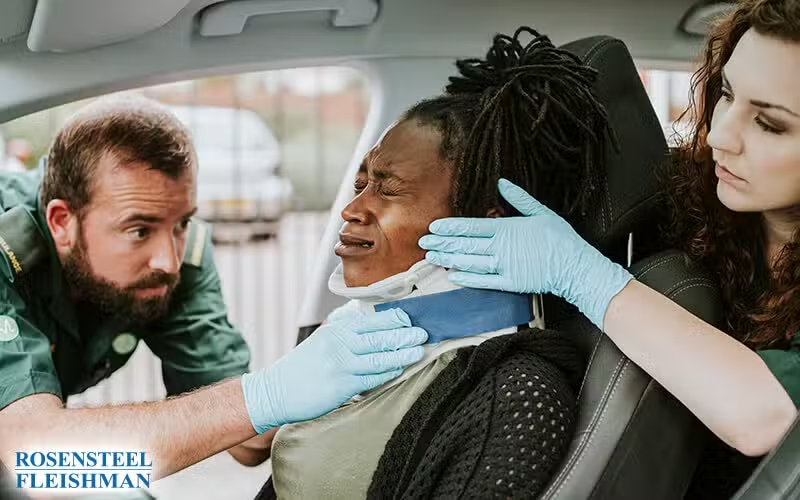

What actually determines how someone gets hurt in a car accident, and why do some claims seem stronger than others even when crashes look similar? In many cases, the answer comes down to how collision force transfers through the vehicle and into the people inside it. For families in Charlotte, North Carolina, this can directly affect how injuries are understood, documented, and ultimately evaluated by insurance companies.
When a crash happens, it is not just about the visible damage to the car. The way force moves through the body can create injuries that are not immediately obvious but still serious. Understanding how collision force transfers to occupants helps explain why medical records, vehicle damage, and even seating position all play a role in a claim. This becomes especially important when working through the details of a Charlotte auto accident attorney near me search, where clarity around injuries can influence next steps.
TLDR
Car accident injuries are often shaped by how force moves through the body during impact, not just how the crash looks.
- The direction and intensity of force can change injury severity
- Medical evidence must connect injuries to the mechanics of the crash
- Insurance companies often question injuries that lack clear physical explanation
- Early documentation and consistent treatment matter more than many expect
How Force Moves Through the Body After Impact
The way a collision unfolds follows a predictable physical pattern, even if the results feel chaotic in the moment. When two vehicles collide, the energy from that impact does not disappear. Instead, it transfers through the vehicle structure, into the seats, and ultimately into the occupants. This transfer of energy explains why two people in the same crash can walk away with very different injuries.
In a rear-end collision on I-485, for example, a driver might experience a sudden forward motion followed by a rapid snap backward. That motion places stress on the neck and spine, often leading to soft tissue injuries like whiplash. Meanwhile, a passenger who is turned slightly or reaching for something could absorb force differently, resulting in shoulder or back injuries. These differences matter when evaluating how collision force transfers to occupants and how those injuries are later presented in a claim.
Why Direction And Speed Change Injury Outcomes
Not all impacts are equal, even when the damage appears similar. The angle of impact plays a major role in how force is distributed. A side-impact crash often transfers energy directly into the body with less structural absorption from the vehicle, which can increase the risk of rib fractures or internal injuries. In contrast, a frontal collision may allow airbags and crumple zones to absorb more of that force.
Speed also adds another layer. Higher speeds increase the total energy involved, but even low-speed crashes can cause injury if the force is concentrated in a specific way. A common misconception is that minor vehicle damage means minor injuries. In reality, the human body can still absorb enough force to cause lasting pain, especially when the movement is sudden and uncontrolled.
How Evidence Connects Force To Injury Claims
Insurance companies often look for a clear connection between the mechanics of the crash and the injuries being claimed. If that connection is not obvious, claims may be delayed or challenged. This is where medical documentation becomes essential. Records that describe how an injury likely resulted from the specific type of force involved can help bridge that gap.
For instance, if a driver reports neck pain after a rear-end collision, medical notes that explain the forward and backward motion of the head can strengthen the claim. Without that explanation, insurers may question whether the injury came from the crash or another cause. This is one of the overlooked challenges people face, especially when symptoms do not appear immediately.
Why Timing And Documentation Can Change Claim Results
One of the most common issues in car accident cases is delayed treatment. After a crash, some people feel fine at first and choose to wait before seeing a doctor. However, injuries tied to force transfer, such as soft tissue damage or mild brain trauma, can take hours or even days to fully develop. Waiting too long can make it harder to connect those injuries back to the accident.
In Charlotte, it is not unusual for someone involved in a collision on roads like Independence Boulevard to go home thinking they avoided injury, only to wake up the next day with stiffness or pain. By that point, the lack of immediate medical attention can create doubt in an insurance review. Adjusters may argue that the injury is unrelated or less severe than claimed.
Another factor is consistency. Gaps in treatment or incomplete records can weaken the narrative of how the injury developed. Insurance companies tend to look for patterns that suggest uncertainty. On the other hand, clear timelines, consistent symptoms, and detailed notes help demonstrate how the force of the collision affected the body over time.
Common Missteps That Affect Compensation
Several decisions made early after a crash can unintentionally impact the outcome of a claim. These are not always obvious in the moment but can become important later.
- Delaying medical care despite experiencing discomfort
- Failing to describe how the injury occurred during treatment
- Assuming visible damage is required to prove injury
- Not following through with recommended care plans
- Providing incomplete or inconsistent statements to insurers
Each of these can create gaps in the story of how collision force transfers to occupants and results in injury. Addressing these issues early can make a meaningful difference in how a claim is evaluated.
Making Sense Of Injury Claims After A Crash
Understanding how injuries happen during a crash often brings a sense of clarity to what can feel like a confusing process. When people realize that the body absorbs force in ways that are not always visible, it becomes easier to see why documentation, timing, and consistency matter so much. This perspective can also help families feel more confident when explaining what happened and why they are seeking compensation.
At the same time, questions tend to come up as the process unfolds. It is common to wonder whether an injury is serious enough to pursue, or how to respond if an insurance company pushes back. According to Attorney Matthew Fleishman, “The details of how a crash affects the body are often where cases are won or lost, especially when those details are clearly documented and explained.”
When Should Someone Get Help Understanding Their Claim
Some situations naturally call for a closer look, especially when injuries are not straightforward. If symptoms appear later, worsen over time, or do not match the visible damage to the vehicle, it may be worth taking a deeper approach to understanding the claim. These are often the cases where questions about force transfer and injury mechanics become more important.
Speaking with a team like Rosensteel Fleishman can provide helpful context without pressure. Their familiarity with how these claims are evaluated in Charlotte can make it easier to understand what steps might make sense next, particularly when dealing with unclear or disputed injuries.
What To Keep In Mind Moving Forward
Every car accident is different, but the way force moves through the body is always part of the equation. Paying attention to how injuries develop, seeking timely care, and keeping clear records can all help support a more accurate understanding of what happened.
A steady, informed approach often leads to better outcomes than rushing decisions or overlooking early symptoms. Taking the time to understand how collision force transfers to occupants can make a meaningful difference in how a claim is handled and how recovery is supported.
Additional Car Accidents Articles
Left Turn Gap Judgment Errors When Visibility or Road Design Plays a Role
What happens when a driver begins a left turn and another vehicle suddenly changes lanes? The available opening can disappear almost instantly. In Charlotte traffic, this type of conflict may occur near multilane intersections where drivers must monitor oncoming vehicles, traffic signals, pedestrians, and vehicles moving between lanes at the same time. These crashes can […]
Multi Policy Insurance Considerations When One Policy Does Not Cover Every Loss
Insurance coverage after a serious car accident is not always limited to one policy. A collision may involve liability coverage, underinsured motorist coverage, medical payments coverage, an employer’s commercial policy, or another source of compensation. Identifying each applicable policy can affect how losses are documented, how negotiations develop, and whether a proposed resolution fairly reflects […]
What Happens When Vehicle Damage Appears Later Despite an Initial Inspection
Damage found days or weeks after a collision can complicate an insurance claim, especially when the cause of the crash or responsibility for the repairs remains disputed. A vehicle may look drivable during an initial roadside review in Charlotte, yet later show suspension problems, electrical faults, alignment issues, or damage hidden beneath exterior panels. When […]