
Highway crashes do not always happen during predictable rush hour congestion or in the middle of heavy commuter traffic. In North Carolina, a collision may occur late at night, during an off-peak afternoon, or on a relatively open stretch of interstate where traffic conditions initially appear straightforward. Claims arising from these crashes can still become […]
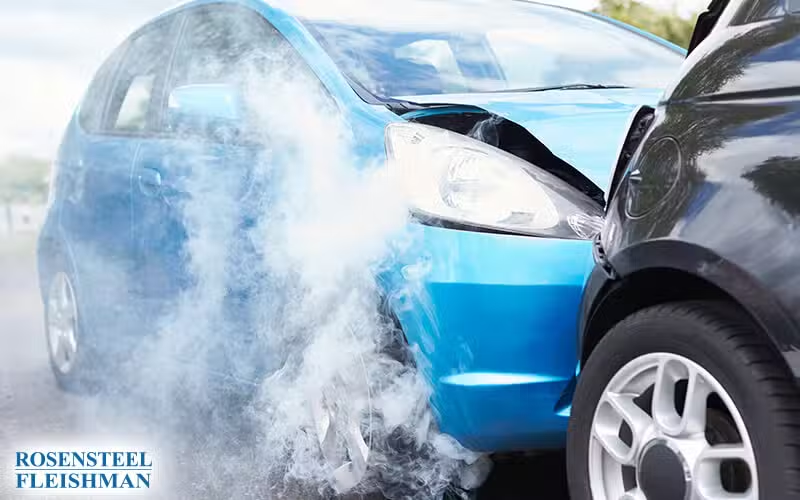

Car crashes involving teen drivers have become a growing focus in North Carolina, with schools, safety advocates, and researchers paying closer attention to what happens when new drivers gain independence too quickly. Behind the statistics are real collisions that can change a family’s routine in an instant, especially when injuries require ongoing treatment, time away from work, and repeated medical appointments.
In many cases, the hardest part is not only the crash itself but what comes after it. Insurance companies often move quickly to gather statements and assign responsibility, while injured people are still trying to understand their diagnosis and follow a treatment plan. At the same time, the facts of a collision can develop over days or weeks as reports are finalized, witness accounts are reviewed, and additional evidence is evaluated.
For anyone injured in a crash, having the right support early can make the process feel more manageable and more accurate. Speaking with a car accident attorney in Charlotte can help organize records, handle communications, and protect against rushed decisions that do not reflect the full impact of the injuries. That structure can be especially important in teen related collisions, where licensing stages, passenger limits, and supervised driving rules may shape how the incident is reviewed.
Teen Driving Risks In North Carolina And Why They Matter After A Crash
Teen driving is a major safety issue across North Carolina, and the trend lines have worried many families, schools, and traffic safety researchers. Local reporting and research discussions have pointed to a meaningful rise in fatal crashes involving teen drivers over the last decade, along with concerns that inexperience, distraction, and high risk situations can quickly turn a routine trip into a serious collision.
For injury victims, these patterns matter because teen related crashes often raise questions that are not answered at the scene. What was happening in the moments before impact, whether a driver was properly licensed, and whether a vehicle’s safety systems performed as expected can shape how an insurance claim is evaluated and how responsibility is assessed.
Why Inexperience And Distraction Create Higher Stakes On Real Roads
New drivers are still learning the basics that experienced motorists do automatically, like scanning intersections, judging closing speed, and reacting calmly when something unexpected happens. Add common distractions, like passengers, phones, and navigation prompts, and the risk of a mistake increases. Serious injuries can occur even at moderate speeds, especially when a crash involves a side impact, a rollover, or a collision with a larger vehicle.
When a teen is involved, the situation can become more complicated because the crash may be reviewed through multiple lenses at once. Families may be focused on medical care, insurers may be focused on statements and fault, and investigators may be focused on whether any licensing rules or safety restrictions were followed.
Graduated Driver Licensing And Permit Changes Can Affect Crash Outcomes
North Carolina’s graduated driver licensing system was designed to help teens gain experience over time, moving from supervised driving to greater independence in stages. Research discussions highlighted in local coverage have connected longer supervised practice periods and certain restrictions, such as limits on night driving and teen passengers, with lower crash risk for newer drivers.
Changes to permit timeframes have been a public topic in recent years, including temporary shifts during the pandemic and subsequent adjustments. Local reporting has also described early data suggesting crash rates for certain teen groups rose during shorter practice periods, which helped restart debate about how long new drivers should be supervised before driving alone.
How Passenger Limits And Night Driving Restrictions Come Into Play
Teen passenger rules and nighttime limits can matter because they address situations that tend to increase risk. Multiple teen passengers can raise distraction, increase peer pressure, and reduce attention to the road. Night driving adds visibility challenges and fatigue. When a serious crash occurs, investigators and insurers may look closely at who was in the vehicle, what time it was, and whether the driver was in the correct licensing stage for those conditions.
If a crash leads to significant injuries, it is common for the review to go beyond a quick summary of “what happened.” Questions about licensing status, supervision requirements, and compliance with restrictions can affect how coverage applies and how different parties frame the claim.
What Happens After A Serious Car Accident In Charlotte
Even when a collision seems straightforward at first, the process that follows is often layered. Police reports, witness accounts, scene photos, vehicle damage patterns, and medical records can all become important pieces of the story. In Charlotte, a crash may be reviewed not only by law enforcement, but also by multiple insurance adjusters, and sometimes by reconstruction or medical professionals depending on the injuries involved.
For an injury victim, the early days after a crash are often the hardest. Pain and treatment plans can shift quickly. Missed work can add stress. At the same time, insurers may request recorded statements or ask for details that feel difficult to answer while recovery is still unfolding.
Why Early Insurance Questions Can Feel Misaligned With Recovery
Insurance companies often move fast because they want to lock in details early. That does not mean every adjuster is unfair, but it does mean the process can feel transactional at a time when a person is dealing with real medical uncertainty. Seemingly small details, like how a symptom started or what was said at the scene, can later be used to argue about injury cause, severity, or timing.
That is one reason many people choose to have legal representation. A lawyer can help keep the process organized, handle communications, and make sure documentation reflects what medical providers are actually seeing over time, not just what was obvious in the first hours after the crash.
Why Injury Victims Often Need A Lawyer After A Crash
A Car Accident claim is not only about property damage. When injuries are involved, the claim can include medical costs, future care needs, time away from work, and the day to day impact of pain or limited mobility. Proving those losses usually requires more than a few bills. It can involve treatment records, imaging, therapy notes, work documentation, and sometimes expert input to explain future limitations.
A lawyer’s role is to build a clear, evidence supported narrative and to protect the injured person from being pressured into an outcome that does not match the reality of their recovery. Legal representation can also help identify all potentially responsible parties and coverage sources, which is especially important when injuries are serious and costs are high.
Common Problems That Legal Representation Helps Prevent
Many injury victims are surprised by how often a claim becomes a debate over documentation, timing, and interpretation. Legal support can help reduce common pitfalls, including:
- Accepting a settlement before the full medical picture is clear
- Miscommunications during recorded statements or written claim forms
- Gaps in treatment documentation that insurers later point to
- Underestimating future care needs, therapy, or time off work
- Confusion about liability when multiple vehicles or policies are involved
A lawyer also helps keep the claim focused on facts. That includes what records show, what the scene evidence supports, and what medical professionals are documenting as recovery progresses.
How Crash Investigations Develop Over Time
In many cases, the first version of events is not the final version. Early reports are often based on initial observations, quick statements, and what could be seen before vehicles were moved or weather changed the scene. As additional information becomes available, the understanding of a collision may shift.
Investigations may involve reviewing damage angles, checking roadway conditions, verifying license status, analyzing phone data when relevant and legally available, and comparing witness accounts for consistency. For teen related collisions, investigators may also review whether restrictions applied based on licensing stage.
Why Witness Statements And Physical Evidence Both Matter
Witness accounts can be helpful, but they are not always consistent. People see crashes from different angles, at different moments, and with different levels of attention. That is why physical evidence matters so much. Vehicle damage, skid marks, debris fields, and the final resting positions of vehicles can support or challenge early assumptions.
For injury claims, this development over time is a key reason to approach the process carefully. A person should not be forced into a permanent decision while the factual record and medical record are still evolving.
A Practical Approach To Injury Claims In Charlotte
For someone hurt in a crash, the goal is usually simple: get treatment, stabilize finances, and understand what options exist. The challenge is that claims do not always move in a straight line. An insurer may accept some parts of a claim and question others. Liability may be disputed. A health insurer may assert reimbursement rights. A vehicle may be declared a total loss while injury treatment continues for months.
A steady approach typically includes consistent medical follow through, organized record keeping, and a clear plan for handling insurance communication. Many people find it helpful to learn about common next steps after a collision, including how documentation works and what to expect during the claim process.
How A Lawyer Helps Keep The Process Organized Without Adding Pressure
A good representation experience should feel structured, not stressful. Injury victims often benefit from having one point of contact for claim communication, deadlines, document requests, and settlement discussions. That reduces the chance of missed details and allows the injured person to focus on recovery.
Legal representation can also help set realistic expectations. Some claims resolve quickly. Others take longer because treatment is ongoing, liability is disputed, or future needs must be evaluated carefully. The goal is not speed for its own sake. The goal is a fair outcome supported by the record.
A Thoughtful Way To Move Forward In Charlotte After A Car Accident
As people adjust to the aftermath of a Car Accident, clear communication and steady planning can make the next steps feel less overwhelming. It helps to understand how claims are usually evaluated, what documentation matters most, and why the story of an injury can become clearer over time rather than all at once.
Rosensteel Fleishman Car Accident & Injury Lawyers works with individuals and families across Charlotte who want a clear, measured process and support that stays focused on real world facts. As our attorney Matthew Fleishman often says, “Clarity matters most when everything feels uncertain. Our job is to help people understand what the process looks like and what the evidence actually shows.”
Learning What A Structured Claim Process Can Look Like In Charlotte
When someone contacts our firm, we focus on understanding the crash circumstances, the medical treatment so far, and the questions that are most likely to arise as the claim develops. From there, we help organize documentation, manage communication with insurers, and explain what outcomes are realistic based on the facts and the timeline of recovery.
If you are trying to make sense of what comes next, we can help you think through the process in a calm, straightforward way. Our goal is to support informed decisions, reduce avoidable stress, and keep the focus on building a claim that is accurate, well documented, and aligned with the realities of recovery.
Additional Car Accidents Articles
Left Turn Gap Judgment Errors When Visibility or Road Design Plays a Role
What happens when a driver begins a left turn and another vehicle suddenly changes lanes? The available opening can disappear almost instantly. In Charlotte traffic, this type of conflict may occur near multilane intersections where drivers must monitor oncoming vehicles, traffic signals, pedestrians, and vehicles moving between lanes at the same time. These crashes can […]
Multi Policy Insurance Considerations When One Policy Does Not Cover Every Loss
Insurance coverage after a serious car accident is not always limited to one policy. A collision may involve liability coverage, underinsured motorist coverage, medical payments coverage, an employer’s commercial policy, or another source of compensation. Identifying each applicable policy can affect how losses are documented, how negotiations develop, and whether a proposed resolution fairly reflects […]
What Happens When Vehicle Damage Appears Later Despite an Initial Inspection
Damage found days or weeks after a collision can complicate an insurance claim, especially when the cause of the crash or responsibility for the repairs remains disputed. A vehicle may look drivable during an initial roadside review in Charlotte, yet later show suspension problems, electrical faults, alignment issues, or damage hidden beneath exterior panels. When […]



