
Lane markings, turning movements, and crosswalk locations can help explain a truck collision, but they cannot establish an injury. Clear records help separate crash circumstances from documented losses.
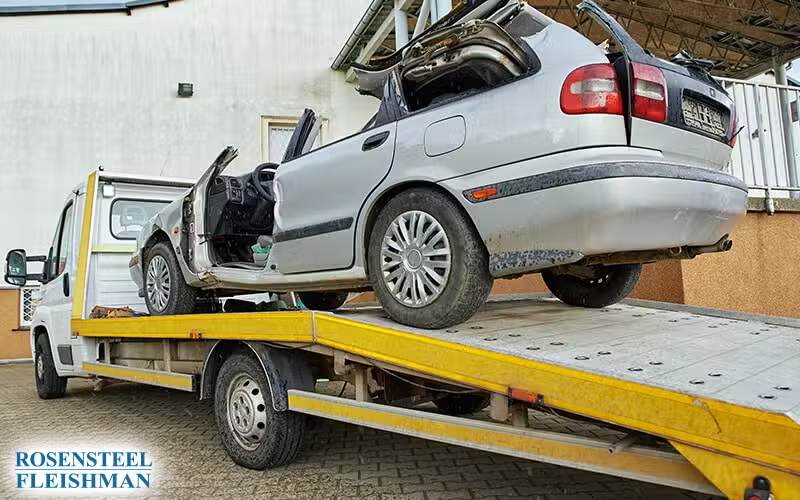

After a commercial-truck collision, the tractor and trailer may be photographed, towed, stored, inspected, downloaded, repaired, returned to service, sold, or dismantled. Each step can produce a different description of damage. A repair invoice may list work performed but omit the first observed condition, while an inspection report may address only selected safety items. Reconciliation requires the record chain, not one document in isolation.
A post-crash truck record should identify the tractor, trailer, component, observed condition, observer, date and location, inspection or repair action, replaced material, and source without treating later damage or repair as proof of the truck’s pre-crash condition.
Identify every vehicle and component
- Carrier and owner names, USDOT number, unit number, VIN, license plate, tractor make and model, trailer number, trailer type, and interchange or lease reference
- Truck, trailer, converter dolly, cargo equipment, tire, wheel, brake, lamp, steering, suspension, coupling, underride, or electronic component identified precisely
- Driver, tow operator, storage facility, carrier representative, insurer, investigator, inspector, repair facility, parts supplier, and later custodian recorded by role
- A component name or location not inferred when photographs, diagrams, or records use inconsistent labels
Build the post-crash custody sequence
- Scene location, removal time, tow company, tow unit, destination, arrival, storage area, access restrictions, and release authority
- Each inspection, download, movement, repair, part removal, transfer, return to service, sale, salvage, or disposal recorded as a dated event
- Person authorizing each action, person performing it, observers, photographs, work order, invoice, receipt, and release document linked
- Gap in location or custody retained as unresolved instead of filled from assumption
Separate observation, diagnosis, and repair
- Visible condition, warning lamp, fluid, deformation, fracture, wear, missing part, contamination, or other observation quoted or described with its source
- Diagnostic test, measurement, scan, teardown, calibration, or inspection procedure identified by performer and date
- Recommended work, authorized work, completed work, deferred work, warranty work, and unrelated routine service kept separate
- Removed part, replacement part number, serial or lot information, photographs, packaging, storage location, and disposition preserved when available
49 C.F.R. § 396.3 addresses inspection, repair, and maintenance duties and related records for covered motor carriers and vehicles. Section 396.9 addresses inspection of motor vehicles in operation, while Section 396.11 addresses driver vehicle inspection reports in specified operations. Applicability and the meaning of a particular record depend on the vehicle, operation, date, and current regulation.
Reconcile records without merging their purposes
- Scene photographs and police observations compared with tow photographs, insurer appraisals, inspection reports, estimates, invoices, and later images
- Pre-crash defect, collision damage, towing damage, storage change, inspection change, repair damage, and ordinary wear treated as different possibilities
- Estimate line item linked to the later invoice and replaced part rather than assumed completed
- Roadside inspection, carrier inspection, insurer inspection, manufacturer analysis, and repair-facility check labeled by source and purpose
The related guide to truck maintenance and inspection records after a crash addresses the broader pre-crash service history. The post-crash record should link to that history where relevant but should not rewrite a later repair as an earlier condition.
Preserve originals and foundation information
North Carolina Rule of Evidence 901 addresses authentication, including examples involving witness knowledge, distinctive characteristics, and a process or system. Rule 1001 defines terms concerning writings, recordings, photographs, originals, and duplicates. Whether a particular image, invoice, scan, inspection, or component is usable depends on its purpose, source, completeness, and foundation.
- Retain native images, metadata, videos, invoices, work orders, diagnostic exports, inspection forms, and correspondence
- Do not clean, operate, repair, dismantle, or discard physical evidence merely to improve documentation
- Record who created, received, exported, copied, annotated, or altered each item
- Use qualified vehicle, regulatory, evidence, and legal review for technical or causation conclusions
A North Carolina truck-accident matter involving disputed vehicle condition or repair history may require prompt review of custody, inspection, maintenance, repair, electronic, and physical evidence. This article provides an organization method, not a technical conclusion, preservation instruction for a specific vehicle, or prediction about liability or recovery.
Additional Trucking Accidents Articles
Living With Permanent Disabilities After a Truck Crash Involving Multiple Vehicles
A lasting disability affects more than a claim file. Learn how to connect the collision timeline with documented changes in work, household responsibilities, and expenses without treating assumptions as evidence.
Reducing Reinjury Risk With Physical Therapy After a Truck Crash in Charlotte
Concerns about reinjury involve medical questions that claim records cannot answer. Learn how to organize physical therapy documentation, practical expenses, and scene evidence without drawing unsupported conclusions.
When Mobility Loss After a Charlotte, NC Truck Crash Has No Clear Diagnosis
An unclear diagnosis does not prevent a family from recording practical changes after a truck crash. Keep observations, added expenses, and unanswered claim questions separate.



