Highway crashes do not always happen during predictable rush hour congestion or in the middle of heavy commuter traffic. In North Carolina, a collision may occur late at night, during an off-peak afternoon, or on a relatively open stretch of interstate where traffic conditions initially appear straightforward. Claims arising from these crashes can still become […]
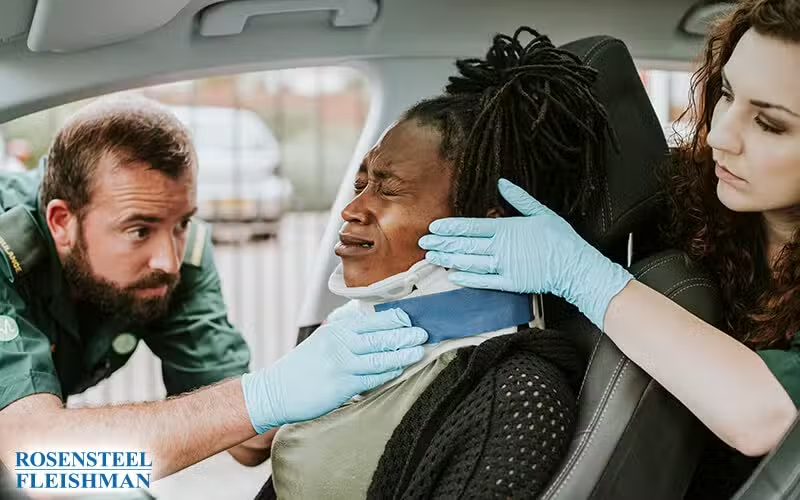

A serious collision may lead from an emergency department to surgery, inpatient care, rehabilitation, skilled nursing, home health, outpatient treatment, or home without formal services. The transition can generate several versions of medication lists, restrictions, referrals, equipment orders, and follow-up instructions.
A hospital discharge record should connect the inpatient course to the next setting, responsible people, instructions, equipment, follow-up, restrictions, and later changes without converting the plan into a prediction.
Preserve the complete discharge packet
- Admission and discharge dates, diagnoses, procedures, consultations, imaging, laboratory results, complications, and condition at transition
- Discharge summary, after-visit summary, medication reconciliation, prescriptions, restrictions, warning instructions, referrals, appointments, and contact numbers
- Destination, transportation, caregiver, receiving facility or clinician, handoff records, home-health order, therapy plan, and equipment order
- Work, driving, lifting, mobility, wound, bathing, diet, cognitive, supervision, or other instructions stated by the treating team
- Corrected, superseded, or conflicting versions retained with dates rather than replaced by one summary
CMS explains that its discharge-planning rule addresses informed choices, care transitions, patient goals and preferences, and transfer of necessary medical information to the receiving setting. The actual chart should show what was planned and communicated for the individual patient.
Create a transition chronology
- Date and time of discharge, arrival at the next setting, first medication access, first follow-up contact, and each scheduled appointment
- Who received instructions, who asked questions, interpreter or accessibility needs, and what the record says was understood
- Equipment ordered, delivered, fitted, used, delayed, changed, returned, or never received
- Home-health, rehabilitation, therapy, nursing, transportation, pharmacy, and caregiver contacts with confirmations or missed services
- New symptom, urgent call, return visit, readmission, later diagnosis, changed restriction, and stated clinical reason
MedlinePlus provides a patient-facing hospital discharge-planning overview addressing the destination, help needed, medications, follow-up, activity, diet, equipment, and questions. Medical decisions and urgent concerns belong with the treating team or emergency services, not a legal checklist.
Reconcile medications without giving medical advice
- Medication name, dose, route, frequency, purpose stated in the record, start, stop, change, and prescribing clinician
- Pre-admission list, inpatient list, discharge list, pharmacy fill, later clinician list, and discrepancy sent for clinical clarification
- Access problem, cost, transportation, pharmacy stock, side effect reported, missed dose, or instruction that affected adherence
- No independent instruction to start, stop, substitute, or change medication
Compare function before and after the hospital stay
Record the pre-collision baseline separately from the condition at admission, discharge, and later follow-up. Use concrete tasks: walking, transfers, stairs, bathing, dressing, meals, transportation, medication management, work, school, childcare, and household responsibilities. Identify who observed or assisted and preserve schedules, messages, invoices, and clinician notes.
Keep the legal and medical questions separate
North Carolina Rule of Evidence 702 addresses qualified opinion testimony based on sufficient facts or data and reliable methods applied reliably. The discharge file can supply part of that foundation, but it does not by itself prove collision causation, necessity, prognosis, future care, or the reason for every later event.
- Identify each diagnosis, restriction, service, cost, and claimed consequence separately
- Distinguish what was ordered, recommended, scheduled, supplied, used, declined, delayed, or discontinued
- Preserve preexisting conditions, alternative causes, later events, and the clinician’s actual reasoning
- Use qualified medical review for diagnosis, treatment, causation, and prognosis questions
The related daily-function and household-assistance guide explains how to document concrete task changes after the person returns home.
Rosensteel Fleishman Car Accident & Injury Lawyers provides information about Charlotte car-accident claims involving serious injuries and care transitions. The record should show what happened without promising a medical or legal outcome.
Sources
Additional Car Accidents Articles
Left Turn Gap Judgment Errors When Visibility or Road Design Plays a Role
What happens when a driver begins a left turn and another vehicle suddenly changes lanes? The available opening can disappear almost instantly. In Charlotte traffic, this type of conflict may occur near multilane intersections where drivers must monitor oncoming vehicles, traffic signals, pedestrians, and vehicles moving between lanes at the same time. These crashes can […]
Multi Policy Insurance Considerations When One Policy Does Not Cover Every Loss
Insurance coverage after a serious car accident is not always limited to one policy. A collision may involve liability coverage, underinsured motorist coverage, medical payments coverage, an employer’s commercial policy, or another source of compensation. Identifying each applicable policy can affect how losses are documented, how negotiations develop, and whether a proposed resolution fairly reflects […]
What Happens When Vehicle Damage Appears Later Despite an Initial Inspection
Damage found days or weeks after a collision can complicate an insurance claim, especially when the cause of the crash or responsibility for the repairs remains disputed. A vehicle may look drivable during an initial roadside review in Charlotte, yet later show suspension problems, electrical faults, alignment issues, or damage hidden beneath exterior panels. When […]