
Lane markings, turning movements, and crosswalk locations can help explain a truck collision, but they cannot establish an injury. Clear records help separate crash circumstances from documented losses.
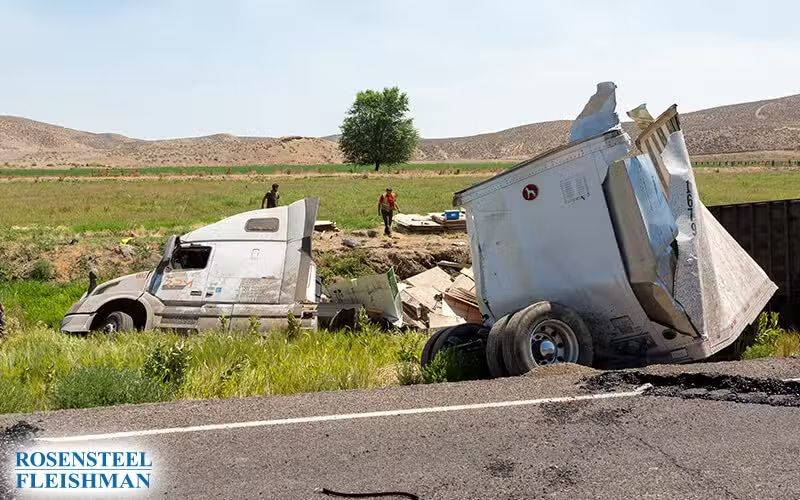

A semi-truck involved in a North Carolina crash may have an out-of-state driver, carrier, tractor owner, trailer owner, shipper, insurer, and records custodian. Those facts add procedural and logistical questions, but they do not remove the need to establish the collision and injury evidence.
An out-of-state plate does not by itself decide jurisdiction, venue, governing law, service, insurance, or regulatory coverage.
Confirm every legal identity
- Driver’s full identity, domicile, license, employer, and work relationship
- Carrier legal name, trade name, USDOT authority, principal address, registered agent, and insurer
- Tractor, trailer, container, cargo, owners, leases, and dates of control
- Shipper, loader, broker, maintenance provider, data vendor, and relevant contracts
- Exact entity names and current status from original records rather than logo assumptions
Analyze North Carolina jurisdiction factually
G.S. 1-75.4 provides grounds for personal jurisdiction in specified circumstances, including certain local acts, local injuries connected with foreign acts, services, goods, contracts, and insurance relationships.
The crash location is important, but each proposed defendant’s conduct and relationship to North Carolina should be evaluated. Subject-matter jurisdiction, personal jurisdiction, and venue are different questions.
Service outside North Carolina has formal requirements
North Carolina Rule of Civil Procedure 4 addresses issuance, timing, methods, and proof of service, including service outside the state and in a foreign country.
G.S. 1-105 contains a specific service provision concerning nonresident motor-vehicle drivers and claims arising from operation in North Carolina. The correct route depends on the defendant and facts.
Do not assume one state’s law controls every issue
Collision conduct, employer or agency relationships, insurance contracts, damages, procedural rules, evidence, limitation periods, and business agreements can raise different governing-law questions. Identify the issue first, then the connecting facts and controlling authority.
Preserve records wherever they are kept
- Tractor and trailer location, repair, continued use, inspection, sale, salvage, and custodian
- Electronic logging, engine, event, camera, telematics, dispatch, phone, toll, fuel, and vendor systems
- Driver qualification, hours, inspection, maintenance, loading, trip, and accident records
- Corporate, contract, authority, employment, lease, and insurance documents
- Native format, metadata, time zone, retention period, access method, and preservation notice
Use federal records without assuming federal civil jurisdiction
Federal motor-carrier rules and agency records may help identify operational duties, carrier authority, insurance filings, and evidence. A federal regulation does not automatically mean the civil injury action belongs in federal court. Parties, citizenship, amount, claims, removal rules, and other jurisdictional requirements need separate analysis.
Build the insurance tower
Obtain complete policies for the carrier, tractor, trailer, owner, driver, umbrella or excess layer, and any other applicable source. Record the named insured, vehicle, territory, limit, exclusion, reservation, other claimant, and written coverage position. Policy issuance in another state does not resolve every North Carolina coverage issue.
Coordinate inspections and testimony
Remote equipment, witnesses, records, and companies require a plan for access, preservation, inspection protocol, depositions, document authentication, travel, subpoenas or discovery, and qualified witnesses. Record who can establish the source and operation of each system.
Track deadlines without relying on a defendant’s absence
Limitation and service rules can be claim- and party-specific. Evidence may disappear before a complaint is due. Maintain a deadline ledger for filing, summons, service, preservation follow-up, insurer notice, estate or government procedure, and discovery.
The related North Carolina truck-claim legal-system guide separates federal operational rules, state traffic duties, civil proof, discovery, insurance, and deadlines.
Rosensteel Fleishman Car Accident & Injury Lawyers provides information about out-of-state truck collisions in North Carolina. Early identity and custodian work helps prevent procedural and evidence gaps.
Sources
Additional Trucking Accidents Articles
Living With Permanent Disabilities After a Truck Crash Involving Multiple Vehicles
A lasting disability affects more than a claim file. Learn how to connect the collision timeline with documented changes in work, household responsibilities, and expenses without treating assumptions as evidence.
Reducing Reinjury Risk With Physical Therapy After a Truck Crash in Charlotte
Concerns about reinjury involve medical questions that claim records cannot answer. Learn how to organize physical therapy documentation, practical expenses, and scene evidence without drawing unsupported conclusions.
When Mobility Loss After a Charlotte, NC Truck Crash Has No Clear Diagnosis
An unclear diagnosis does not prevent a family from recording practical changes after a truck crash. Keep observations, added expenses, and unanswered claim questions separate.



