
When hand limitations interfere with manual work after a dog bite, records should connect specific job demands with missed hours and changed duties while keeping responsibility questions separate.
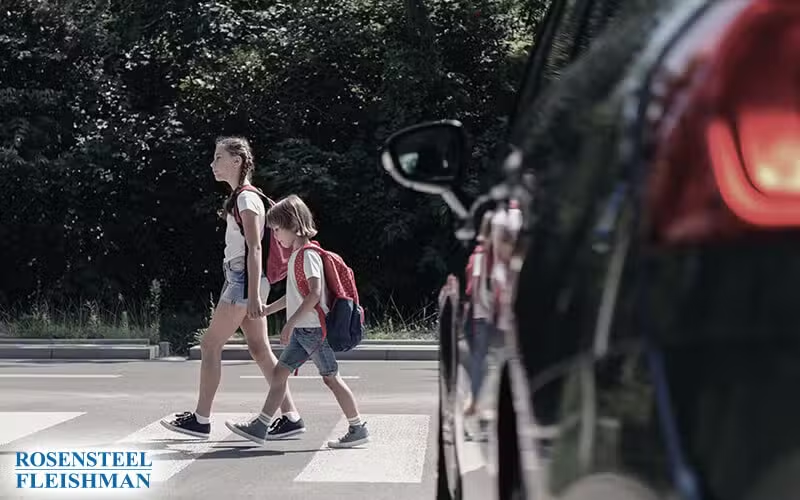

North Carolina crosswalk disputes often begin with a simple statement—“the pedestrian had the right of way” or “the pedestrian was outside the lines.” The legal and factual analysis is more specific. It depends on the type of crossing, the signals in use, the person’s position, the driver’s movement, and what each could perceive in time.
A marked crosswalk, an unmarked crosswalk, a pedestrian signal, and an ordinary traffic signal create different questions; the word “crosswalk” does not answer all of them.
Identify the crossing before applying a rule
- Marked crosswalk, including the location and visibility of every line, sign, beacon, island, curb ramp, and stop line
- Unmarked crosswalk at an intersection, with the intersecting roadway boundaries and pedestrian route mapped accurately
- Midblock crossing outside a marked crosswalk, including the nearest intersections and traffic-control signals
- Sidewalk crossing a driveway, alley, building entrance, private road, or parking-lot entrance
- Intersection controlled by WALK, flashing or steady DON’T WALK, an accessible pedestrian signal, or only ordinary traffic lights
Read pedestrian signals and traffic lights separately
G.S. 20-172 addresses pedestrian-control signals. A WALK indication allows pedestrians facing it to proceed across the roadway in the direction of the signal, and drivers must yield. A pedestrian may not start crossing toward a flashing or steady DON’T WALK indication, but a person who has partly completed the crossing on WALK proceeds to a sidewalk or safety island while the signal is showing.
When special pedestrian signals are not in place, the statute directs pedestrians to the vehicular traffic-control signals. G.S. 20-158 permits a right turn facing a steady circular red light after a complete stop unless a sign prohibits it. The driver must yield to other traffic and pedestrians using the intersection, and to pedestrians moving toward it who are reasonably close and preparing to cross in front of the stopped traffic.
At some crosswalks, the driver must yield
G.S. 20-173 requires a driver to yield to a pedestrian crossing within a marked crosswalk or an unmarked crosswalk at or near an intersection when traffic-control signals are not in place or operating. The statute also prohibits another vehicle from overtaking and passing a vehicle stopped at a crosswalk to permit a pedestrian to cross.
The same section requires a vehicle emerging from or entering an alley, building entrance, private road, or driveway to yield to a pedestrian on a sidewalk extending across that location. That provision can be important where a parking-lot exit crosses a sidewalk, but it should not be stretched to every movement inside a private lot without examining the location.
Pedestrians also have statutory duties
G.S. 20-174 generally requires a pedestrian crossing outside a marked crosswalk or an unmarked crosswalk at an intersection to yield to vehicles on the roadway. A pedestrian crossing the roadway where a tunnel or overhead crossing has been provided must yield to vehicles. Between adjacent intersections where traffic-control signals are operating, pedestrians may cross only in a marked crosswalk.
Those duties do not erase the driver’s continuing obligation under the same statute to exercise due care to avoid colliding with a pedestrian, sound the horn when necessary, and exercise proper precaution upon observing a child or a confused or incapacitated person on the roadway. Liability and contributory negligence remain fact-specific questions rather than automatic results from one location detail.
Preserve the signal and position evidence
- Signal phase, countdown display, cycle timing, activation button, accessible signal, and whether equipment was operating
- Pedestrian start point, direction, pace, clothing, visibility, lane position, point of impact, and resting location
- Vehicle lane, direction, speed evidence, stop position, turn movement, sight lines, braking, lighting, and obstructions
- Intersection design, lane markings, crosswalk condition, signs, curb ramps, construction, vegetation, weather, and illumination
- Original video, photographs, 911 and dispatch records, witness locations, vehicle data, and timestamps synchronized to one timeline
The related Charlotte pedestrian-crash first-steps guide covers medical care, reporting, driver identification, insurance notice, and early record preservation.
Rosensteel Fleishman Car Accident & Injury Lawyers provides information about discussing a Charlotte pedestrian-accident claim involving disputed right of way. A review should begin with the exact crossing, signal, movement, and original event record.
Sources
Additional Personal Injury Articles
Rehabilitation Costs After Truck Rollover Injuries
Rehabilitation expenses can affect a family beyond the bills themselves. Separate documented charges, everyday costs, and uncertain estimates to build a clearer financial record.
Overlooked Risks to Discuss With Charlotte Providers Before Tapering Medication
When providers disagree about a medication plan, a clear record helps distinguish what was communicated, what changed, and what remains uncertain in a potential claim.
Planning for Help at Home in Charlotte After a Bicycle Injury
A practical household plan separates immediate needs from uncertain claim payments. Clear records can explain what changed, who helped, and which expenses remain unresolved.




