After a car accident in Charlotte, recovery often develops one day at a time, and the records connected to that process may be less complete than expected. A person might visit an emergency room, schedule follow-up care with a family doctor, miss a physical therapy appointment because of pain, or forget to save a receipt […]
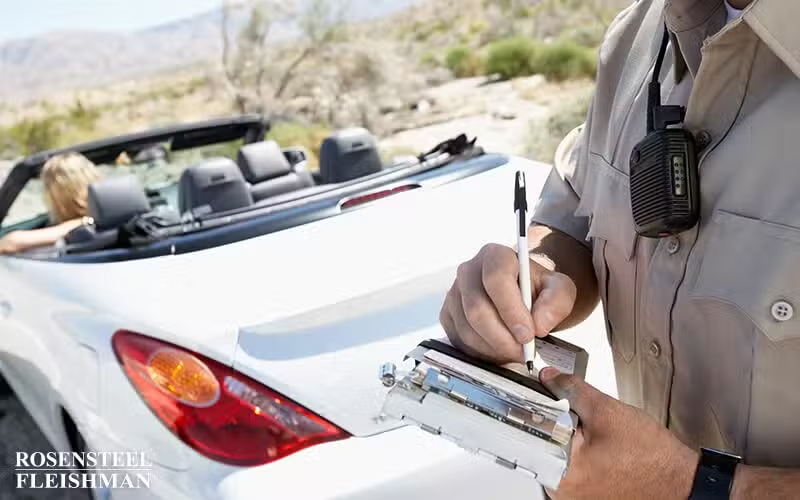

North Carolina does not have one rule making an entire police crash report admissible or inadmissible in every case. The answer depends on who prepared the report, which part is offered, how the information entered the report, why it is offered, whether it is authenticated, and whether another evidence rule permits or excludes that component.
A crash report should be analyzed component by component; the fact that the document exists does not make every observation, statement, diagram, code, opinion, or conclusion admissible for every purpose.
Begin with the accident-report statute
G.S. 20-166.1 requires investigation and a written report for a reportable accident. Subsection (i) distinguishes reports made by a person other than a law-enforcement officer or specified investigator from other reports. It also states that other accident reports may be used as evidence or for another trial purpose only as permitted by the rules of evidence. The statute therefore does not replace the evidence analysis.
Identify each component and its source
- Officer observations at the scene, including positions, conditions, marks, damage, and measurements
- Statements attributed to drivers, passengers, witnesses, medical personnel, or another officer
- Information copied from licenses, registrations, insurance records, databases, dispatch, or a later supplement
- Diagram symbols, narrative, sequence codes, contributing-circumstance codes, citations, estimates, and conclusions
- Photographs, body-camera or dash-camera material, notes, recordings, measurements, and records not physically contained in the report
Analyze the public-record issue
Rule 803 includes a public-records provision for specified agency activities, matters observed under a legal duty to report, and certain factual findings in civil proceedings, subject to the rule's text and trustworthiness condition. The same rule contains other exceptions that may apply to a particular statement or record. A party still must identify the precise material offered and satisfy the applicable requirements.
Check every additional layer of hearsay
Rule 805 provides that hearsay within hearsay is not excluded only when each part of the combined statements conforms to an exception. Even if an officer's report qualifies under one rule, a quoted witness statement inside it may require its own nonhearsay purpose or exception.
Authenticate the item actually offered
Rule 901 requires evidence sufficient to support a finding that the item is what its proponent claims. The foundation may depend on the form of the record, certification, testimony, custody, completeness, alterations, supplements, or the relationship between the report and another exhibit.
Address relevance, purpose, and unfair prejudice
A report component may be relevant for one purpose but not another. A limiting instruction, redaction, separate exhibit, officer testimony, witness testimony, or original source record may be needed. Rule 403 permits exclusion of relevant evidence when the danger identified in the rule substantially outweighs its probative value. The trial court decides objections in the context of the actual record and purpose.
Build an admissibility worksheet
- Exact report page, box, sentence, diagram symbol, attachment, or source file
- Author and original information source, personal knowledge, duty, time, method, and later changes
- Purpose for offering it and the fact it tends to establish
- Authentication route, hearsay layer, possible exception or nonhearsay purpose, and contrary argument
- Relevance, completeness, trustworthiness, Rule 403 concern, proposed redaction, and alternative proof
- Court ruling, permitted purpose, limiting instruction, and preserved objection
Keep report access and correction separate
The related North Carolina crash-report guide explains how to obtain, read, verify, and seek a supplement or correction to a report. That practical process is different from deciding what a court may admit at trial.
Rosensteel Fleishman Car Accident & Injury Lawyers provides information about consulting a car accident lawyer in Charlotte when a crash report, witness statement, diagram, opinion, or other evidence is disputed.
Sources
Additional Car Accidents Personal Injury Articles
How Accident Reports in Bicycle Cases Help Compare Conflicting Versions of Events
Bicycle accident reports often become important when the people involved remember the same collision differently. A driver may say a cyclist entered the roadway unexpectedly, while the cyclist may remember having the right of way and being visible well before impact. In Charlotte, those differences can influence how insurers and others evaluate responsibility, particularly when […]
What Causes a Claim to Move Forward or Stall When Answers Feel Uncertain
After an injury, families often expect an insurance claim to follow a fairly simple path. Information is submitted, the insurer reviews what happened, and eventually an answer arrives. In practice, claims can move in bursts. A person may hear regularly from an adjuster for several weeks and then encounter a period when very little seems […]
Police Report Accuracy After a Crash When Important Details Are Missing
In Charlotte areas where cyclists and pedestrians frequently share the road with drivers, such as Uptown, South End, and busy crossings near greenway access points, a collision can become complicated within seconds. The police report may later serve as an important record, but officers often arrive after the impact and must reconstruct events from statements, […]