
Truck crash injuries can affect far more than a person’s ability to work or attend medical appointments. They may also change how someone cooks, cleans, shops, handles yardwork, cares for children, or completes basic home maintenance. Insurers handling claims with several involved parties often examine who caused the collision, which insurance policies apply, and whether […]
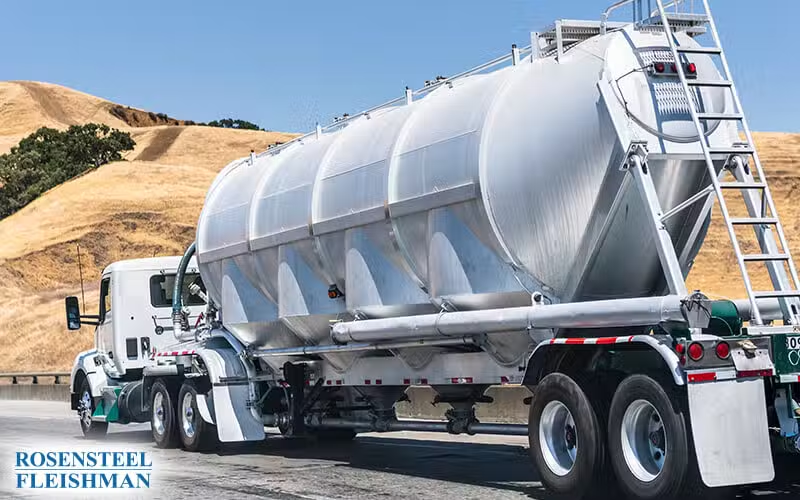

Commercial motor carriers manage risks involving drivers, tractors, trailers, cargo, schedules, routes, weather, repairs, and third-party vendors. A safety program can reduce risk when responsibilities are clear and the actual operation follows the written process.
A written safety policy matters only when the operating records show how it was carried out.
Assign control over every vehicle and component
49 C.F.R. § 396.3 requires covered carriers to systematically inspect, repair, and maintain vehicles subject to their control. The rule also identifies specified maintenance-record information for controlled vehicles.
- Identify tractors, trailers, converters, leased equipment, and dates of control
- Set inspection intervals according to vehicle, use, mileage, environment, and manufacturer information
- Route reported defects to a person with authority, parts, time, and a documented decision
- Prevent operation when a condition makes the vehicle unsafe
- Audit vendors and confirm the exact work performed rather than relying on an invoice label
Make pretrip readiness a real decision
49 C.F.R. § 392.7 states that a commercial vehicle may not be driven unless the driver is satisfied that specified parts and accessories are in good working order, including service brakes, parking brake, steering, lighting, tires, horn, wipers, mirrors, coupling devices, and emergency equipment.
A practical process gives the driver time and a usable reporting channel, identifies who evaluates the concern, records any test or repair, and protects the driver from schedule pressure to use unsafe equipment.
Treat cargo as part of vehicle control
49 C.F.R. § 392.9 addresses cargo distribution and securement, pretrip assurance, inspection within the first 50 miles for covered loads, and later reexamination at specified events or intervals, subject to stated exceptions.
- Document the loader, seal status, weight, distribution, securement devices, and driver access
- Match inspection duties to the type of cargo and whether inspection is practicable
- Record stops, adjustments, broken devices, load shift, weather exposure, and dispatch instructions
- Separate excess weight from inadequate securement; either, both, or neither may be involved
Use dispatch as a safety checkpoint
Dispatch records can show route planning, delivery expectations, weather alerts, parking constraints, hours remaining, vehicle concerns, customer pressure, and decisions after a driver reports a risk. A schedule is not evidence of unsafe pressure by itself; the communications and operational response provide context.
Train for the actual equipment and assignment
Training should match the license, endorsements, vehicle configuration, cargo, routes, loading access, electronic systems, and recurring tasks. Attendance alone does not show understanding or application. Observation, coaching, incident review, and correction records can show how the carrier evaluated performance.
Make enforcement consistent and issue-specific
- Define reportable defects, fatigue concerns, distraction, speeding, unsafe following, and cargo events
- Record the source, date, review, response, retraining, restriction, or other decision
- Distinguish an unverified complaint from an established event
- Look for repeated exceptions, missing reviews, altered records, or pressure to bypass the process
- Preserve contrary evidence and reasons for decisions
Measure outcomes without confusing a score with a cause
Inspections, violations, crashes, telematics alerts, maintenance trends, complaints, and training results can identify patterns. A company-level measure does not establish the cause of one collision. The event still needs its own timeline, vehicle examination, driver record, and causal analysis.
Records should connect policy to action
For each safety issue, map the governing procedure, responsible person, input received, time of decision, action, verification, and later audit. Missing or inconsistent records can require further inquiry, but absence alone does not establish what occurred.
The related truck-crash investigation guide applies these operating records to fatigue, qualification, maneuvering, mechanical condition, cargo, and multiple-cause analysis.
Rosensteel Fleishman Car Accident & Injury Lawyers provides information about Charlotte truck-accident matters. After a collision, the safety system should be evaluated through native records and actual decisions, not a policy manual viewed in isolation.
Sources
Additional Trucking Accidents Articles
Joint Trauma Truck Collisions Can Cause and How Doctors Confirm It
After a serious truck crash, checking for joint injuries early can reduce the risk of untreated damage becoming harder to manage. The force of a collision may injure cartilage, ligaments, tendons, bones, or the joint capsule even when swelling and pain seem manageable at first. In Charlotte, anyone experiencing stiffness, weakness, instability, or reduced movement […]
Documenting Family Impact Truck Accident Injuries in Charlotte Households
When a serious truck collision disrupts a Charlotte family’s daily life, medical records often become the clearest evidence of what changed and why. Insurance adjusters review those records to determine whether injuries are connected to the crash, how treatment progressed, and whether ongoing limitations are medically supported. That review can affect compensation for medical expenses, […]
How Imaging Confirms Compound Fractures Truck Crash Injuries Can Cause
Compound fractures are medical emergencies that require fast treatment, careful imaging, and thorough documentation. When these injuries result from a collision involving a commercial truck, the medical issues may be clear long before the insurance claim is ready for resolution. Questions about responsibility, insurance coverage, vehicle maintenance, and employment relationships can add months of investigation. […]



