
After a serious truck crash, checking for joint injuries early can reduce the risk of untreated damage becoming harder to manage. The force of a collision may injure cartilage, ligaments, tendons, bones, or the joint capsule even when swelling and pain seem manageable at first. In Charlotte, anyone experiencing stiffness, weakness, instability, or reduced movement […]
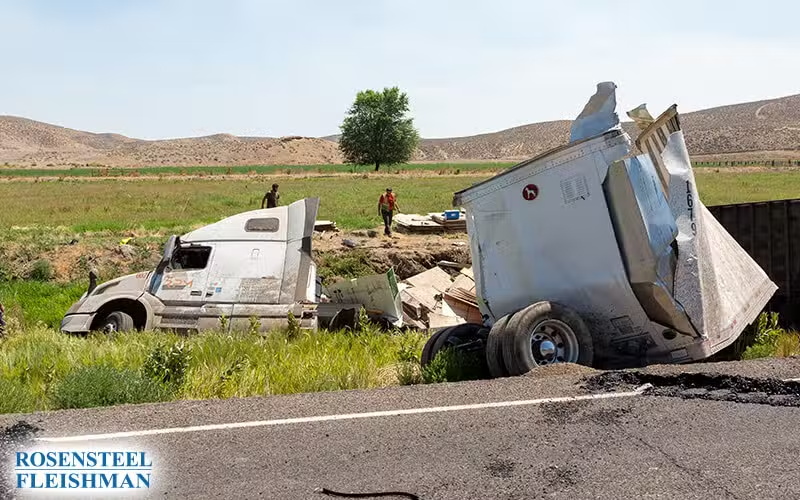

The Federal Motor Carrier Safety Administration’s Crash Preventability Determination Program, or CPDP, reviews specified crash types submitted through DataQs. The program has its own eligibility rules, evidence requirements, statuses, and system effects. It should not be confused with correcting an ordinary data field, a carrier safety-rating review, or a civil lawsuit.
A CPDP determination changes how an eligible crash is labeled in certain FMCSA systems; it does not decide negligence, causation, damages, or a carrier’s safety rating.
Confirm the crash date and program version
FMCSA’s CPDP frequently asked questions state that the program currently reviews specified crash types and that eligibility changed for crashes occurring on or after December 1, 2024. The crash date determines which eligibility framework applies.
- Crash date, time, state, report number, USDOT number, carrier, driver, tractor, trailer, and event location verified from original sources
- FMCSA-reportable crash record in the Motor Carrier Management Information System identified before treating an event as available for submission
- Program version, eligible crash type, age of the crash, and date the eligibility material was accessed recorded
- A crash outside the listed categories or time window described as an eligibility issue rather than an adverse preventability finding
Match the evidence to the claimed crash type
The official CPDP Crash Type Eligibility Guide describes the program’s current categories and examples for crashes on or after the stated expansion date. The guide also explains that a request outside an eligible type is not reviewed for preventability under the program.
- Police accident report, full report number, investigating agency, diagrams, supplements, citations, and later dispositions preserved
- Photographs, video, witness information, vehicle positions, damage, road evidence, and other documents tied to the exact eligibility criterion asserted
- For a fatal crash, required drug-and-alcohol test information or the required documentation explaining timing or non-testing included when applicable
- Each submitted file saved in its original form with source, date, page count, metadata, and a short explanation of what it is offered to show
Preserve the full DataQs submission history
- Request for Data Review number, submitter, crash type selected, submission date, acknowledgement, and every uploaded document
- Submitted, in-review, pending-response, closed, determination, and reconsideration entries captured with their timestamps
- FMCSA request for more information, response deadline, supplemental submission, and final response kept in sequence
- Original request retained when the crash is moved to another eligible type or reopened with additional information
Read the outcome in the correct system context
FMCSA’s current FAQ describes completed outcomes as Not Preventable, Preventable, or Undecided and explains how those labels appear in the Safety Measurement System and, for specified results, the Pre-Employment Screening Program. It also states that CPDP determinations do not affect a carrier’s safety rating or operating authority and do not establish new legal obligations or sanctions.
- Determination wording copied exactly rather than shortened to “at fault” or “not at fault”
- SMS display, PSP notation, posting date, and later change checked as separate records
- CPDP outcome kept separate from a state citation, insurance position, employment action, FMCSA investigation, or court decision
- Additional evidence and a reopened request documented without assuming that reconsideration will change the result
The related guide to FMCSA DataQs reviews and corrected truck-safety records explains the broader Request for Data Review file, status history, supporting documents, response, and later database version. This page owns the narrower CPDP eligibility and preventability task.
Rosensteel Fleishman Car Accident & Injury Lawyers provides general records information for people who may later discuss a Charlotte truck-accident claim involving a CPDP record. Program eligibility, evidentiary use, negligence, causation, defenses, and damages depend on current guidance, the complete crash record, and individual facts.
Sources
Additional Trucking Accidents Articles
Documenting Family Impact Truck Accident Injuries in Charlotte Households
When a serious truck collision disrupts a Charlotte family’s daily life, medical records often become the clearest evidence of what changed and why. Insurance adjusters review those records to determine whether injuries are connected to the crash, how treatment progressed, and whether ongoing limitations are medically supported. That review can affect compensation for medical expenses, […]
How Imaging Confirms Compound Fractures Truck Crash Injuries Can Cause
Compound fractures are medical emergencies that require fast treatment, careful imaging, and thorough documentation. When these injuries result from a collision involving a commercial truck, the medical issues may be clear long before the insurance claim is ready for resolution. Questions about responsibility, insurance coverage, vehicle maintenance, and employment relationships can add months of investigation. […]
Assessing Fear of Driving After Truck Collision Through Symptoms and Treatment Records
Charlotte drivers share major routes such as I-77, I-85, and I-485 with commercial trucks every day. Improvements such as brighter lane markings, longer merge areas, better lighting, and clearer warning signs can reduce collision risks, but infrastructure cannot prevent every crash. After a serious truck collision, a driver may remain physically capable of operating a […]



