Concerns about reinjury involve medical questions that claim records cannot answer. Learn how to organize physical therapy documentation, practical expenses, and scene evidence without drawing unsupported conclusions.
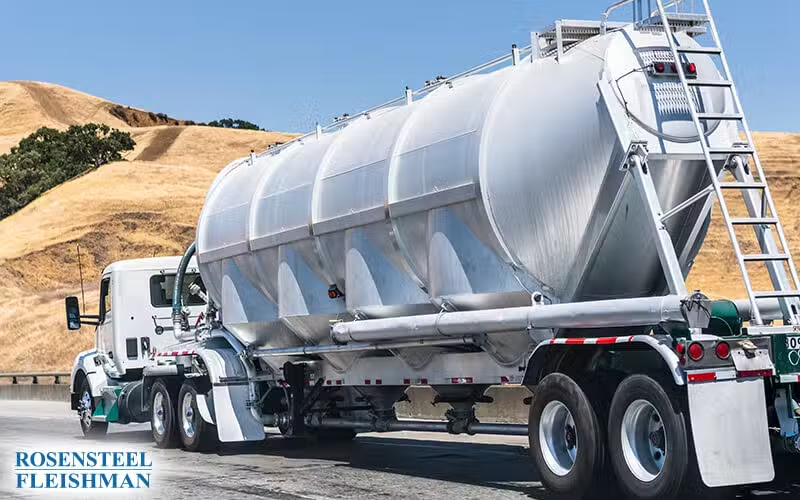

A collision involving a commercial truck can include the same roadway questions found in another motor-vehicle case: speed, right of way, visibility, perception, response, impact, injury, and insurance. It may also involve a regulated transportation operation, several businesses, separate tractor and trailer ownership, electronic systems, and records that change or disappear on different schedules.
A truck collision is not merely a car collision involving a heavier vehicle.
Begin with the complete operating arrangement
- Driver, employing or contracting entity, dispatching carrier, and USDOT operating authority
- Tractor, trailer, container, cargo, lease, owner, and party controlling each component
- Shipper, loader, broker, maintenance provider, repair shop, and electronic-data vendor
- Route, terminal, origin, destination, delivery window, load instructions, and communications
- Every liability, cargo, trailer, umbrella, household, or other potentially relevant policy
A logo or company name is a useful lead, not a complete relationship analysis. Contracts, dispatch records, bills of lading, payroll or settlement records, authority records, and actual control over the work help show what each participant did.
The driver file answers a different question from the crash report
49 C.F.R. § 391.51 identifies materials maintained in a motor carrier’s driver-qualification file, including an employment application, motor-vehicle records, road-test documentation or an accepted equivalent, and specified medical or variance records.
Those records can help evaluate license status, qualifications, prior review, medical documentation, and carrier process. They do not automatically establish that a qualification issue caused the collision. The claimed issue must be connected to the event sequence.
Tractor and trailer condition require separate histories
49 C.F.R. § 396.3 requires covered carriers to systematically inspect, repair, and maintain vehicles subject to their control and to retain specified vehicle-maintenance records.
- Brake, tire, steering, suspension, coupling, lighting, mirror, warning-system, and stability-control evidence
- Ownership and control dates, mileage, inspections, reported defects, work orders, invoices, parts, and return-to-service decisions
- Post-crash movement, repair, disassembly, testing, salvage, sale, and software activity
- Whether a condition existed before impact, resulted from impact, or had no causal role
This is a map of records for an investigation, not a checklist for inspecting a damaged truck yourself. Coordinate access, physical inspections and electronic downloads with qualified personnel and the lawful custodian. Do not move equipment, enter restricted areas or alter a device to obtain evidence.
Electronic records cover different time periods
An event data recorder may capture a short crash interval, while an engine module, electronic logging device, camera, telematics platform, dispatch application, phone, toll record, or fuel record may address another part of the trip. Native files, metadata, time settings, driver assignment, and system limitations matter.
Carrier accident records are only one part of preservation
49 C.F.R. § 390.15 requires a covered carrier to maintain an accident register for three years and retain specified reports. That requirement does not guarantee preservation of every vehicle, message, video, sensor file, vendor record, or physical item.
A preservation plan should identify each custodian, exact system or object, native format, relevant date range, routine retention period, and requested suspension of ordinary destruction. An overbroad request for every record can be less useful than a focused map tied to disputed issues.
Federal rules and civil causation are related but distinct
A safety rule can help identify a duty, record, or question. A civil claim still requires the applicable legal theory, responsible participant, breach, actual and proximate cause, injury, damages, and consideration of defenses. A violation should not be treated as a substitute for collision reconstruction or medical causation.
Organize the investigation around a timeline
- Hiring and qualification before the trip
- Inspection, maintenance, loading, scheduling, and dispatch
- Hours, route, stops, messages, warnings, and vehicle operation
- Perception, response, braking, steering, impact, and post-impact movement
- Emergency care, diagnosis, treatment, function, work, expenses, and prognosis
- Post-crash reports, downloads, repairs, communications, insurance, and claim decisions
The related truck-collision cause map shows how fatigue, qualification, maneuvering, maintenance, cargo, and carrier operations can be tested without assuming an answer.
Rosensteel Fleishman Car Accident & Injury Lawyers provides information about truck-accident claims in Charlotte. Early work should preserve the evidence and identify the correct participants before records and equipment change.
Sources
Additional Trucking Accidents Articles
When Mobility Loss After a Charlotte, NC Truck Crash Has No Clear Diagnosis
An unclear diagnosis does not prevent a family from recording practical changes after a truck crash. Keep observations, added expenses, and unanswered claim questions separate.
How Insurers Review Worsening Pain After a Truck Crash
An early insurance review may start with an incomplete account. Dated records can help explain later changes in pain, work limitations, and expenses without treating symptoms as proof of an injury.
When Burn Care Needs Reassessment After a Truck Crash in Charlotte
Unclear accident details call for careful documentation, not medical conclusions. Learn how to organize care records, explain timeline gaps, and track practical losses after a truck crash.