
Lane markings, turning movements, and crosswalk locations can help explain a truck collision, but they cannot establish an injury. Clear records help separate crash circumstances from documented losses.
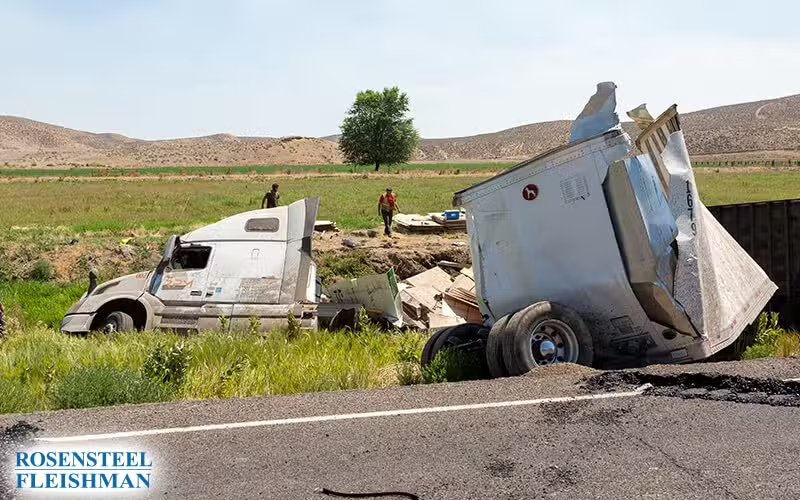

A company pickup, van, box truck, service vehicle, delivery vehicle, or tractor may be used by several drivers across shifts. A name on the door or a person listed on an incident report does not show who held the key, received the assignment, inspected the vehicle, changed its condition, or returned it at each earlier point. A custody timeline preserves those transitions before records from different drivers or units are mixed.
A shared-vehicle custody timeline should identify the vehicle, key or access method, person, employer or fleet unit, assignment, handoff, location, use period, inspection, condition report, and source for every transition without treating access as proof of control or responsibility.
Fix the identity of the exact vehicle
- VIN, plate, issuing state, fleet number, unit number, make, model, model year, body type, color, markings, and photographed location
- Trailer, attached equipment, load, tool body, temporary replacement, rental, loaner, or reassigned unit kept as a separate object
- Registration, title, lease, rental agreement, insurance record, fleet database, maintenance file, telematics account, and fuel-card profile reconciled by identifier
- Duplicate unit number, transferred plate, replaced vehicle, changed decal, or uncertain match preserved as a conflict
Record each access and handoff event
- Key cabinet, key card, application, PIN, dispatcher release, supervisor assignment, sign-out sheet, reservation system, or informal handoff
- Person receiving and returning access, date, time, location, stated purpose, route or work order, expected return, and actual return
- Shift start, shift end, break, relief driver, passenger, mechanic, loader, cleaner, tow operator, manager, and other person with access kept as separate roles
- Vehicle parked, unattended, locked, left running, moved within a yard, transferred between branches, or taken home recorded only from an identified source
Connect condition reports to the correct custody period
49 C.F.R. § 396.3 addresses systematic inspection, repair, and maintenance and specified records for covered motor carriers and vehicles. 49 C.F.R. § 396.11 addresses driver vehicle inspection reports for the operations within its scope. Determine applicability before using either rule; a company-owned vehicle does not automatically fall within every federal motor-carrier provision.
- Pre-use inspection, post-use report, defect notice, repair request, work order, release, cleaning, fuel, mileage, and odometer entry linked by vehicle and date
- Reported condition separated from a mechanic finding, repair decision, completed work, driver observation, and later failure
- Unreported condition, missing inspection, unreadable entry, wrong unit, or unexplained mileage gap shown as unresolved
- Later repair or inspection added without assigning when a condition began unless a qualified source supports the timing
Use system data as a source, not a conclusion
- Telematics, GPS, access control, dispatch, timekeeping, fuel, toll, parking, camera, phone, and maintenance-system records listed by custodian
- Device, account, time zone, clock source, export range, file type, metadata, collection method, and later processing recorded
- Automated assignment kept separate from actual possession, driving, supervision, work purpose, or permission
- System gap, manual override, shared credential, device swap, delayed upload, duplicate account, or later correction retained
The related guide asking whether a company vehicle is a commercial motor vehicle under federal rules explains the vehicle, trip, passenger, cargo, commerce, and rule-specific classification questions. Complete that analysis separately from the custody timeline.
Preserve source form and legal boundaries
North Carolina Rule of Civil Procedure 34 addresses production and inspection requests to parties in pending civil actions. Evidence Rule 901 addresses authentication or identification. Preserve the native record, source system, custodian, export process, and version instead of relying only on a screenshot or retyped table.
- Do not access a private fleet account, device, or vehicle without valid authority
- Keep working copies and annotations separate from native records
- Record corrections and later supplements without deleting the prior version
- Keep custody, permission, employment, agency, regulation, insurance, causation, and responsibility as separate questions
A North Carolina company-truck collision involving a shared vehicle may require a source-specific custody and handoff timeline. This article offers that recordkeeping method, not a determination that federal rules apply or that any person or organization is responsible.
Additional Trucking Accidents Articles
Living With Permanent Disabilities After a Truck Crash Involving Multiple Vehicles
A lasting disability affects more than a claim file. Learn how to connect the collision timeline with documented changes in work, household responsibilities, and expenses without treating assumptions as evidence.
Reducing Reinjury Risk With Physical Therapy After a Truck Crash in Charlotte
Concerns about reinjury involve medical questions that claim records cannot answer. Learn how to organize physical therapy documentation, practical expenses, and scene evidence without drawing unsupported conclusions.
When Mobility Loss After a Charlotte, NC Truck Crash Has No Clear Diagnosis
An unclear diagnosis does not prevent a family from recording practical changes after a truck crash. Keep observations, added expenses, and unanswered claim questions separate.


