Reconsidering motorcycle travel after a crash means separating road concerns from assumptions about fault. Clear records can help connect everyday transportation decisions with unresolved claim questions.
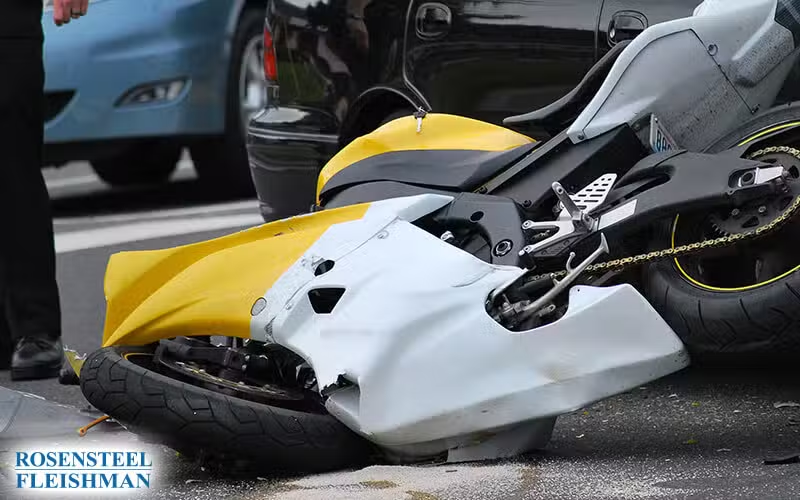

Intersection motorcycle collisions often produce a short explanation: the driver turned, entered, or crossed because the motorcycle was not seen. That statement leaves important questions unanswered. A useful review reconstructs where each road user was, what each could see, when the motorcycle became visible, which signals or movements occurred, and whether either person had time and space to respond.
A statement that a driver did not see the motorcycle is the beginning of a visibility analysis, not its conclusion.
Preserve the intersection as it existed
- Approach lanes, turn lanes, medians, stop lines, crosswalks, grades, curves, parking, vegetation, signs, signal heads, lighting, and temporary construction
- Driver and rider eye positions, vehicle dimensions, mirrors, pillars, windscreens, helmets, passenger or cargo placement, and the motorcycle’s lane position
- Daylight, darkness, sun angle, glare, precipitation, contrast, background lighting, headlamp operation, clothing, and reflective material
- Traffic-camera, business, residential, bus, vehicle, helmet, and phone video in original quality with timestamps and surrounding minutes
- Vehicle damage, tire marks, debris, resting positions, electronic data, photographs, measurements, witness locations, and later scene changes
Build a movement and signal timeline
G.S. 20-154 addresses starting, stopping, turning, direct movement, and required signals. Identify the movement at issue, which signal provision applies, when a signal began, whether it continued for the required interval, and what witnesses or recordings actually show. A working lamp or reported signal does not establish that another road user had a clear opportunity to perceive it.
G.S. 20-155 addresses specified right-of-way situations at intersections and left turns. Match the correct subsection to the roadway configuration and event sequence. Right of way, lookout, speed, signal use, turning path, and avoidance remain separate factual questions.
Measure the available observation window
A reconstruction that estimates speed, timing, eye position or response opportunity may require qualified technical analysis. Preserve the original observations and identify what the analyst assumed. Do not enter traffic or recreate a maneuver to test visibility, and do not treat photographs taken later as proof of the conditions at the collision time.
- Place the vehicles at time intervals before impact using supported speed, path, video, signal, and physical evidence
- Map fixed and moving obstructions, including queued vehicles that may briefly hide a motorcycle
- Record when the motorcycle first entered the driver’s possible field of view and when it became identifiable as a conflict
- Distinguish line of sight from attention, detection, recognition, decision, and physical response
- Test how reasonable changes in speed, lane position, eye height, or timing affect the reconstruction instead of presenting one uncertain estimate as exact
Use rider guidance for context, not automatic fault
The NCDMV Motorcyclist Handbook discusses lane position, visibility, blind intersections, lighting, reflective material, and communication with other road users. Those practices can help frame evidence questions. Determine whether a point is a statute, a vehicle requirement, training guidance, or a general safety recommendation before assigning legal significance.
Check competing explanations
A missed observation may involve an obstruction, brief exposure, glare, contrast, another vehicle, signal timing, distraction, speed estimate, memory error, or a post-event assumption. Conversely, visibility equipment or lane position may be alleged without proof that it affected detection or the collision. The reconstruction should state which observations are measured, reported, inferred, or unavailable.
The related motorcycle brake and lighting evidence guide explains how to document lamp condition without assuming that post-impact damage describes pre-impact operation.
Rosensteel Fleishman Car Accident & Injury Lawyers provides information about Charlotte motorcycle-accident claims involving intersection visibility evidence. Signal compliance, observation opportunity, conduct, collision cause, and injury cause require separate findings.
Sources
Additional Motorcycle Accidents Articles
Investigating Unexplained Loss of Control in Charlotte, NC Motorcycle Crashes
An unexplained loss of motorcycle control leaves questions about what happened before the fall. Clear records can help families distinguish evidence from assumptions and respond to claim disputes.
Medical Guidance for Resuming Outdoor Walks After a Motorcycle Crash in Charlotte
An outdoor walk does not tell the whole story of an injury. Accurate records can distinguish daily activity, treatment history, practical limitations, and unresolved claim questions.
When Anxiety After a Motorcycle Crash Disrupts Sleep and Relationships in Charlotte
When anxiety affects family routines after a motorcycle crash, specific records can describe what changed. Learn how to separate everyday observations from medical conclusions and questions about a claim.