A prior insurance claim can create confusion even when the accident was caused entirely by someone else. Insurance companies maintain records of reported losses, and those records may appear when a carrier reviews a new application, renews a policy, or investigates another accident. For drivers in Charlotte, understanding what information appears in a claims record […]
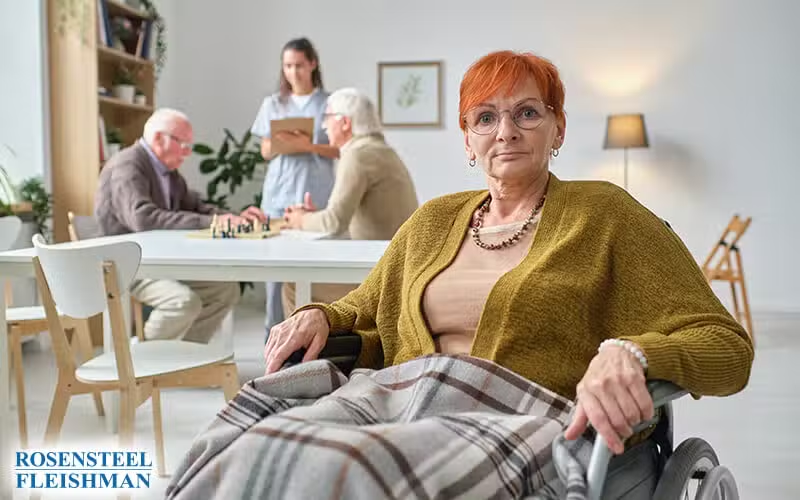

Some nursing-home concerns can be clarified through a care conference or records request. Others require immediate medical care, separation from a suspected person, law enforcement, protective services, or regulator notice before a complete investigation is possible.
Safety decisions should be based on the resident’s current condition and credible concern, not on whether every record has been collected. Call 911 for immediate danger, acute injury, suspected crime in progress, or urgent medical deterioration.
Act promptly for urgent health or safety changes
- Unexplained major injury, head impact, bleeding, breathing change, severe pain, altered consciousness, weakness, or possible sexual assault
- Missing resident, unsafe restraint, elopement risk, untreated emergency, medication error with symptoms, or hazardous equipment
- Fear of a particular caregiver or resident, credible threat, retaliation, isolation, blocked access, or destruction of evidence
- Rapid weight loss, dehydration, infection signs, pressure injury, repeated falls, untreated pain, or marked functional decline
Listen to the resident privately and without coaching
Use open questions and the resident’s preferred communication method. Record the resident’s words, demeanor, date, time, setting, interpreter, people present, and any spontaneous details. Do not repeat the interview unnecessarily or suggest facts the resident did not provide.
Cognitive impairment, communication disability, or changing accounts do not justify ignoring a concern. They call for careful corroboration, trauma-aware interviewing, medical assessment, and protection from pressure.
Know what federal facility duties address
The federal abuse and neglect rule provides rights against abuse, neglect, exploitation, involuntary seclusion, and specified restraints. It also addresses allegation reporting, thorough investigation, protection during the investigation, and result reporting.
Use the reporting channel that matches the concern
North Carolina DHSR’s complaint page lists phone, fax, mail, and email methods and explains the scope and prioritization of complaints about regulated care. It notes that adult-care-home complaints follow a different route through local social services, so confirm the facility type.
- Emergency services or law enforcement for immediate danger, injury, suspected crime, assault, theft, or missing person
- Facility administrator, director of nursing, practitioner, resident representative, ombudsman, or compliance route as appropriate
- DHSR Complaint Intake for regulated facility-care concerns and the appropriate protective-services route for the setting
- Keep report numbers, names, time, written submission, attachments, response, and any instruction about further evidence
Recognize warning signs without treating them as findings
The U.S. Department of Justice elder-abuse red-flags resource lists possible indicators across physical abuse, emotional abuse, financial exploitation, neglect, abandonment, and sexual abuse. A warning sign supports inquiry and protection; it does not identify the responsible person or prove a cause on its own.
Preserve focused evidence while protecting privacy
- Photographs of injuries or conditions with consent, date, identity, scale, original files, and medical follow-up
- Chart, assessments, care plans, orders, medications, treatment, incident, notification, investigation, staffing, and audit records
- Video, call light, alarm, access, visitor, phone, message, financial, property, pharmacy, and contractor evidence as relevant
- Witness identities and separate accounts based on personal knowledge rather than a coordinated family narrative
Separate immediate protection from later civil analysis
A regulator, police, facility, protective service, licensing board, and civil claim may use different standards and remedies. Preserve each finding and source, but do not assume one outcome controls every other process.
The evidence guide explains how to reconstruct the resident’s care and facility systems after immediate safety needs are addressed.
Rosensteel Fleishman Car Accident & Injury Lawyers provides information about nursing-home abuse and neglect concerns in Charlotte. A responsible response protects the resident, reports through the correct channel, preserves evidence, and later tests duty, causation, loss, and deadlines.
Sources
Additional Personal Injury Articles
Mobility Issues Dog Bite Injuries May Create During Short Term and Long Term Healing
How can a dog bite change a person’s ability to walk, work, drive, or manage ordinary routines? The answer varies because the practical effects depend on the location of the wound, the type of injury documented by medical professionals, and the physical demands of the person’s daily life. Uncertainty during the early stages can make […]
Underinsured Coverage Bicycle Cases When Insurance Accounts and Crash Details Conflict
Roadway congestion can make bicycle crashes more complicated because several things may happen at once, including sudden lane changes, limited visibility, close passing, and multiple vehicles reacting within seconds. When a cyclist is injured and the responsible driver does not have enough insurance to cover the resulting losses, underinsured coverage bicycle cases may involve a […]
How CT Scans Are Used in Injury Claims to Document Physical Harm
When an injury claim is being reviewed, medical records often provide the clearest timeline of what happened to a person after an accident. CT imaging can become an important part of that record because it allows medical providers to examine internal structures that may not be fully evaluated through a physical examination alone. When a […]