Reconsidering motorcycle travel after a crash means separating road concerns from assumptions about fault. Clear records can help connect everyday transportation decisions with unresolved claim questions.
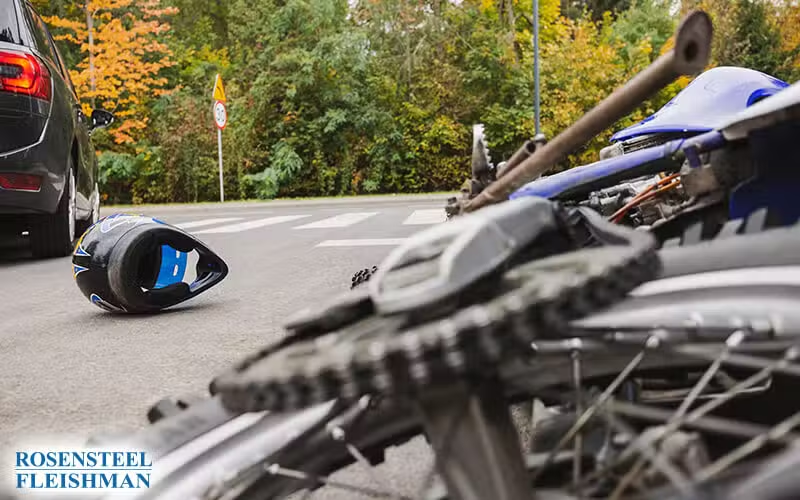

A motorcycle may be moved from the scene, loaded by a tow operator, stored, released to an insurer, inspected, repaired, sold, or dismantled soon after a crash. Tire pressure can change, debris can be removed, a wheel can be rotated, a valve can be disturbed, or a damaged tire can be replaced during that process. A record created before alteration can preserve what was actually observable without deciding what caused the crash.
A motorcycle tire-and-wheel evidence record should connect each component and position to its identifiers, condition, pressure reading if one was taken, photographs, service history, recall information, scene material, storage, inspection, and later alteration without deciding from appearance alone why the motorcycle lost stability.
Freeze the identity of every assembly
- Motorcycle vehicle identification number, year, make, model, trim, plate, mileage, owner, and documentation source
- Front or rear position, tire manufacturer, product line, size, construction, load and speed markings, and other sidewall information photographed on both sides
- DOT Tire Identification Number, including the complete visible sequence and the production week and year indicated by its final four digits
- Wheel or rim markings, part number, dimensions, finish, spoke or cast design, valve type, tube if present, bearing or axle components, and related hardware identified from the record rather than assumed
NHTSA’s tire information explains that the DOT Tire Identification Number appears on a tire sidewall and that its final four digits indicate the production week and year. It also discusses tire condition, pressure, tread, aging, labeling, recalls, and the limits of visual inspection. Its passenger-vehicle examples do not replace motorcycle manufacturer instructions or a vehicle-specific evaluation.
Preserve before inflating, deflating, rotating, or removing
- Current custodian, exact storage location, tow and release records, keys, access history, insurer inspection, repair authorization, salvage status, auction, and disposal date
- Written preservation request identifies the entire motorcycle, front and rear tire-and-wheel assemblies, removed pieces, valve components, tubes, bearings, axle hardware, scene debris, records, and requested inspection
- No pressure change, leak testing, cleaning, repair, disassembly, bead breaking, valve removal, wheel straightening, tire replacement, or road operation solely for evidence collection without appropriate authority and safety planning
- If emergency handling or safety requires a change, condition before and after, person, reason, tools, procedure, time, and removed material documented
Photograph the assembly in a repeatable sequence
- Whole motorcycle from all sides, front and rear assembly in place, relationship to forks, swingarm, fender, brake components, chain or belt, and surrounding crash damage
- Both tire sidewalls, full tread circumference, bead area when visible, valve and cap, wheel or rim, spokes, hub, brake disc, axle, adjusters, bearings, fasteners, and contact marks
- Scale, orientation marker, position label, lighting, camera distance, file name, date, time, photographer, and unedited original retained
- Cut, puncture, tear, abrasion, scuff, crack, bulge, exposed material, missing tread, debris, heat mark, sealant, patch, plug, deformation, or residue described as an observation
Record pressure information with its conditions
- Whether a reading was taken, tire position, pressure, unit, gauge make and identifier, calibration information if available, person, date, time, and location
- Ambient temperature, tire temperature if measured, elapsed time since travel, visible damage, valve condition, and whether air was added or released
- Motorcycle manufacturer’s pressure specification and source kept separate from a sidewall marking and from the measured value
- No reconstruction of pre-crash pressure solely from a post-crash reading when the assembly, temperature, valve, impact, handling, or elapsed time may have changed it
Map the tire, wheel, road, and debris observations
- Scene coordinates or reference points, motorcycle rest position, tire or wheel fragment, valve or cap, fastener, debris, fluid, gouge, scrape, scuff, track, and surface condition
- Photograph or scan showing scale and direction, collector, packaging, seal, item number, transfer, storage, and later inspection
- Potential road material retained only when lawful and safe, with its source location and collection method
- A mark on the road or component not labeled a tire mark, failure mark, or causal event without an appropriate foundation
Collect installation and maintenance history
- Purchase, installation, mounting, balancing, prior repair, valve or tube replacement, wheel work, bearing service, alignment or chain adjustment, inspection, and complaint records
- Date, mileage, shop, technician, work order, tire or part identifiers, measured condition, recommended work, declined work, warranty, and payment
- Owner manual and manufacturer service information retained for the exact motorcycle, tire, and component where available
- Prior puncture, pressure loss, vibration, wobble, noise, impact, curb or pothole event, storage condition, or performance concern attributed to the source that reported it
Check recalls by the component’s actual identity
NHTSA’s recall search includes vehicles, tires, and equipment and also provides broader searches for investigations, complaints, and manufacturer communications. Preserve the search date, VIN or tire identifier used, result, recall or campaign number, affected-product description, remedy status, owner notice, dealer communication, and repair record. NHTSA explains limitations of VIN and plate results, so a single result should not be treated as a complete repair or campaign history.
Maintain chain of custody and an inspection log
- Item or assembly identifier, condition, packaging, seal, custodian, location, release, receipt, date, time, purpose, and return
- Inspection protocol, attendees, equipment, photographs, measurements, scans, test proposed, test performed, removed material, and alteration
- Destructive or materially altering examination considered only with appropriate agreement, protocol, documentation, and opportunity for affected parties as applicable
- Original component and every removed fragment retained when lawful and feasible; otherwise disposition and reason documented
Authenticate records and separate observation from opinion
North Carolina Rule of Evidence 901 addresses evidence sufficient to support a finding that an item is what its proponent claims. The person with knowledge, original file, component identifier, distinctive characteristics, collection record, and custody history can be material to that foundation.
North Carolina Rule of Evidence 702 addresses qualified expert testimony, sufficient facts or data, reliable principles and methods, and their application. Tire condition, wheel damage, air-loss timing, mechanical function, vehicle dynamics, crash reconstruction, and medical causation are different questions. A photograph or pressure reading may preserve a fact, but it does not automatically decide any of them.
The related motorcycle storage and repair guide covers the broader custody, tow, storage, inspection, repair, and salvage timeline. For the tire and wheel, keep the assembly identifier, measured condition, service history, scene connection, and each later change in separate dated entries.
Rosensteel Fleishman Car Accident & Injury Lawyers provides general information about Charlotte motorcycle accident claims involving disputed tire or wheel evidence. Do not operate a damaged motorcycle or alter a component for evidence collection without appropriate safety and legal guidance.
Sources
Additional Motorcycle Accidents Articles
Investigating Unexplained Loss of Control in Charlotte, NC Motorcycle Crashes
An unexplained loss of motorcycle control leaves questions about what happened before the fall. Clear records can help families distinguish evidence from assumptions and respond to claim disputes.
Medical Guidance for Resuming Outdoor Walks After a Motorcycle Crash in Charlotte
An outdoor walk does not tell the whole story of an injury. Accurate records can distinguish daily activity, treatment history, practical limitations, and unresolved claim questions.
When Anxiety After a Motorcycle Crash Disrupts Sleep and Relationships in Charlotte
When anxiety affects family routines after a motorcycle crash, specific records can describe what changed. Learn how to separate everyday observations from medical conclusions and questions about a claim.