Truck crash injuries can affect far more than a person’s ability to work or attend medical appointments. They may also change how someone cooks, cleans, shops, handles yardwork, cares for children, or completes basic home maintenance. Insurers handling claims with several involved parties often examine who caused the collision, which insurance policies apply, and whether […]
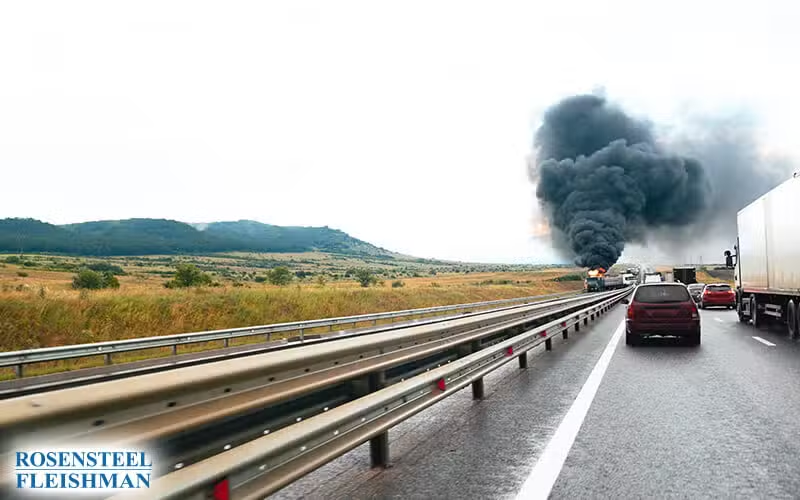

Dump trucks may enter, leave, back within, or cross traffic near construction, utility, paving, demolition, and material sites. The scene can change quickly as signs, cones, barriers, equipment, workers, loads, and road surfaces move.
A work-zone plan, a dump-truck movement, and another road user’s response are separate parts of the causal sequence.
Freeze the temporary traffic-control layout
Part 6 of the Federal Highway Administration’s current Manual on Uniform Traffic Control Devices addresses temporary traffic control. It describes work zones as areas where construction, maintenance, or utility activity changes road-user conditions through signs, devices, barriers, markings, work vehicles, or authorized personnel.
- First warning sign, tapers, lane shifts, closures, buffers, work space, access points, and end treatment
- Sign type, position, visibility, covering, lighting, condition, and installation or removal time
- Cones, drums, barriers, pavement markings, flaggers, police, signals, message boards, and work vehicles
- Approved plan, field changes, daily logs, inspection records, photographs, and responsible person
- Road-user path from first warning through the impact location
Reconstruct the dump-truck movement
Identify origin, destination, gate, loading point, delivery ticket, weight, dispatch, planned route, turn, backing path, stopping point, bed position, and spotter instructions. Compare video, GPS, telematics, engine or event data, radio or phone activity, and witness accounts.
Examine access and visibility
- Sight distance for the truck driver and approaching road users
- Mirrors, windows, cameras, sensors, audible alarms, lighting, and obstructions
- Dust, glare, darkness, rain, grade, curves, equipment, parked vehicles, and material piles
- Whether a spotter was assigned, visible, communicating, and positioned safely
- Pedestrian, cyclist, worker, and public traffic paths
Separate cargo weight, distribution, and securement
49 C.F.R. § 392.9 addresses cargo distribution and securement, pretrip assurance, and specified reinspection duties for covered operations, subject to exceptions.
49 C.F.R. § 393.100 generally addresses preventing cargo from leaking, spilling, blowing, or falling and containing or immobilizing cargo so shifting does not adversely affect stability or maneuverability.
Preserve loading records, scale tickets, material type, moisture, distribution, tarp or cover, tailgate, bed, hydraulic system, residue, cleanup, photographs, and physical samples when appropriate. A spill, overload, load shift, or raised bed requires its own causal analysis.
Inspect the truck before its condition changes
Document brakes, tires, steering, suspension, lights, mirrors, cameras, alarms, bed, hoist, tailgate, hydraulic system, and damage. Obtain inspections, defect reports, maintenance, repairs, rental or ownership history, and post-crash work. Controlled inspection protects original condition and chain of custody.
Map every project role
- Driver, employer, carrier, truck owner, lessor, and maintenance provider
- General contractor, subcontractor, hauling company, material supplier, site owner, and public agency
- Traffic-control designer, installer, inspector, flagger provider, and safety coordinator
- Who controlled the truck, access point, traffic plan, route, schedule, and correction of hazards
Test concurrent causes
A truck may enter unsafely while a warning sign is hidden; another vehicle may travel too fast for a lane shift; a spotter may be absent while visibility is blocked. Each alleged act must be connected to what the road user perceived, the available response, the collision, and injury.
Preserve changing evidence immediately
Work-zone video can overwrite, crews move devices, pavement is resurfaced, truck beds are unloaded, and vehicles return to service. Request the plan, revisions, daily reports, inspections, photographs, subcontract records, dispatch, electronic data, and physical items with exact dates and custodians.
The post-truck-crash action guide provides a safety-first sequence for reporting, identification, scene evidence, medical care, insurance notice, and preservation.
Rosensteel Fleishman Car Accident & Injury Lawyers provides information about dump-truck and work-zone collisions in Charlotte. The analysis should preserve the temporary scene and distinguish each participant’s control and causal role.
Sources
Additional Trucking Accidents Articles
Joint Trauma Truck Collisions Can Cause and How Doctors Confirm It
After a serious truck crash, checking for joint injuries early can reduce the risk of untreated damage becoming harder to manage. The force of a collision may injure cartilage, ligaments, tendons, bones, or the joint capsule even when swelling and pain seem manageable at first. In Charlotte, anyone experiencing stiffness, weakness, instability, or reduced movement […]
Documenting Family Impact Truck Accident Injuries in Charlotte Households
When a serious truck collision disrupts a Charlotte family’s daily life, medical records often become the clearest evidence of what changed and why. Insurance adjusters review those records to determine whether injuries are connected to the crash, how treatment progressed, and whether ongoing limitations are medically supported. That review can affect compensation for medical expenses, […]
How Imaging Confirms Compound Fractures Truck Crash Injuries Can Cause
Compound fractures are medical emergencies that require fast treatment, careful imaging, and thorough documentation. When these injuries result from a collision involving a commercial truck, the medical issues may be clear long before the insurance claim is ready for resolution. Questions about responsibility, insurance coverage, vehicle maintenance, and employment relationships can add months of investigation. […]