
Reconsidering motorcycle travel after a crash means separating road concerns from assumptions about fault. Clear records can help connect everyday transportation decisions with unresolved claim questions.
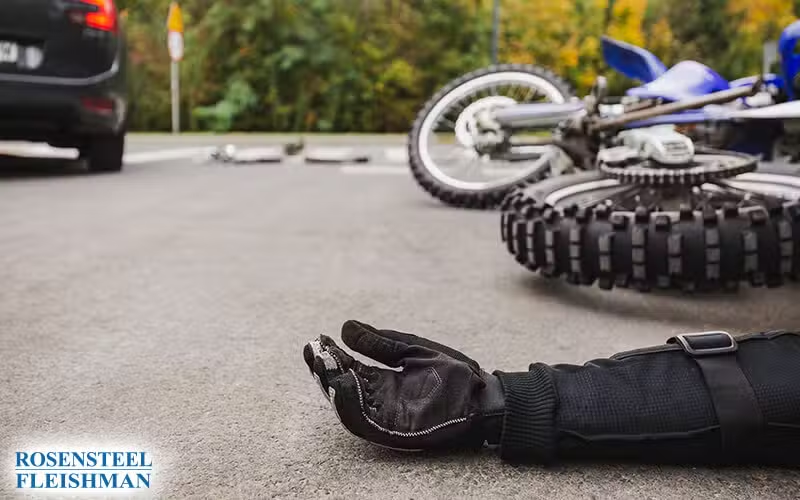

The minutes after a motorcycle crash can involve traffic, fire, leaking fluids, unstable vehicles, severe injury, shock, and confusion. The safest action depends on the scene and instructions from emergency personnel.
Emergency care and scene safety come before collecting evidence or discussing fault. A rider should not risk another collision or worsen a possible head, neck, or spinal injury to take photographs or move equipment.
Call for help and protect people from a second impact
- Call 911 for an injury, dangerous location, blocked lane, fire, spill, suspected impairment, hit-and-run, or other emergency
- Give the road, direction, nearest intersection or marker, number of injured people, and known hazards
- Move only when safety and medical circumstances allow; follow dispatcher and responder instructions
- Do not remove a helmet from an injured rider unless emergency care requires it and you are qualified or directed to do so
- Accept evaluation for head, neck, chest, abdominal, orthopedic, road-rash, and other symptoms that may not be obvious immediately
North Carolina requires stopping, information, and reasonable assistance
G.S. 20-166 contains duties to stop after specified crashes, provide identifying and vehicle information, and render reasonable assistance to an injured person. Reasonable assistance includes calling for medical help when it is apparently necessary or requested.
Do not leave because damage appears minor or because another person suggests handling the matter privately. If a driver leaves, record the vehicle description, plate, direction, driver description, witnesses, and available video without pursuing the vehicle.
Reportable crashes require prompt law-enforcement notice
G.S. 20-166.1 requires the driver involved in a reportable accident to notify the appropriate law-enforcement agency immediately by the quickest means of communication. The agency depends on whether the crash occurred inside a city or town.
The statutory definition and reporting rules should be applied to the actual injuries, death, property damage, location, and event. Calling law enforcement also creates an opportunity to identify witnesses, document the scene, and address impaired or fleeing drivers.
Exchange facts without guessing about cause or injury
- Names, addresses, driver-license information, plates, vehicle owners, insurance companies, policy information, and contact details
- Witness names, phone numbers, viewpoints, and any photographs or recordings they made
- Officer name, agency, incident number, tow destination, and instructions for obtaining the report
- Time, precise location, travel directions, lanes, signals, signs, road surface, weather, lighting, visibility, and nearby cameras
A short factual exchange is different from admitting fault, minimizing symptoms, speculating about speed, or signing a release. Stress and incomplete information can make a scene explanation unreliable.
Preserve the motorcycle, helmet, gear, and digital records
Photograph the overall scene only if it can be done safely. Preserve the motorcycle, helmet, clothing, protective gear, parts, keys, electronics, and repair estimates. The guide to helmet-law and injury evidence explains why the helmet’s unchanged condition can matter.
- Dash-camera, traffic-camera, business, residential, doorbell, and bystander video
- Phone, navigation, application, Bluetooth, motorcycle, vehicle, event-data, and telematics records
- Tow, storage, inspection, repair, maintenance, recall, tire, brake, lighting, and modification information
- Emergency, hospital, follow-up, rehabilitation, pharmacy, employment, wage, and expense records
Notify insurers carefully and obtain the crash report
Give required notice under the applicable policies, but do not assume the other driver’s insurer represents the rider’s interests. Keep copies of notices and correspondence, and review any request for a recorded statement, broad authorization, repair release, or settlement before agreeing.
The N.C. Division of Motor Vehicles crash-report page explains current ways to request a report. A report can supply useful leads, but diagrams, codes, statements, and an officer’s preliminary fault entry should be compared with the underlying evidence.
Do not wait for every symptom or record to act
Medical needs, preservation windows, policy notice, business video retention, vehicle disposal, government procedures, and legal deadlines may run on different schedules. Early organization does not require making a premature settlement demand.
Rosensteel Fleishman Car Accident & Injury Lawyers provides information about Charlotte motorcycle-crash claims. A useful first review identifies immediate medical needs, involved people and entities, every vehicle and policy, temporary evidence, disputed facts, potential defenses, and the deadlines that govern the claim.
Sources
Additional Motorcycle Accidents Articles
Investigating Unexplained Loss of Control in Charlotte, NC Motorcycle Crashes
An unexplained loss of motorcycle control leaves questions about what happened before the fall. Clear records can help families distinguish evidence from assumptions and respond to claim disputes.
Medical Guidance for Resuming Outdoor Walks After a Motorcycle Crash in Charlotte
An outdoor walk does not tell the whole story of an injury. Accurate records can distinguish daily activity, treatment history, practical limitations, and unresolved claim questions.
When Anxiety After a Motorcycle Crash Disrupts Sleep and Relationships in Charlotte
When anxiety affects family routines after a motorcycle crash, specific records can describe what changed. Learn how to separate everyday observations from medical conclusions and questions about a claim.



