Work disruptions after a bicycle injury can involve more than missed paychecks. Separating employment support expenses, lost income, and future earning concerns helps make the financial picture clearer.
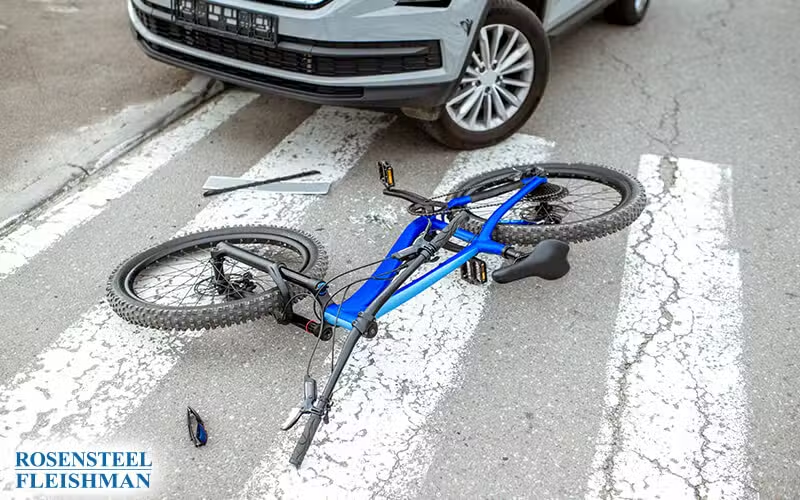

After a bicycle crash involving a possible head injury, the helmet and medical record answer different questions. A helmet can document make, model, size, labels, fit, use, contact, damage, and handling. Clinicians determine diagnosis and care from the individual history, examination, testing, and medical judgment.
A helmet-and-medical record should preserve the helmet’s identity and condition, the collision and handling timeline, the person’s reported and observed changes, and the qualified medical findings without treating helmet damage as a diagnosis.
Address urgent medical concerns before evidence work
The CDC’s current mild traumatic brain injury and concussion symptoms page explains that symptoms can affect how a person feels, thinks, acts, or sleeps and may appear immediately or later. It also lists danger signs that call for emergency medical care. Evidence collection should never delay emergency evaluation or professional medical instructions.
Identify the helmet before its condition changes
- Manufacturer, brand, model, size, color, serial or lot information, date label, certification label, warnings, prior use, and purchase record
- Fit system, strap routing, buckle, adjustment, accessories, camera or light mount, liner, shell, padding, and missing component
- Who selected and fitted the helmet, whether it was worn and fastened, known prior impacts, modifications, storage, and pre-crash condition
- Native pre-crash photographs, purchase page, receipt, manual, packaging, registration, recall search, and replacement history
The U.S. Consumer Product Safety Commission’s bicycle-helmet guidance explains that 16 C.F.R. Part 1203 sets performance requirements and that each bicycle helmet must carry a label certifying compliance with the CPSC standard. Photograph the complete label and helmet; the label does not establish what happened in a particular collision or what injury occurred.
Preserve the post-crash condition and custody timeline
- Helmet location at final rest, orientation, strap and buckle condition, visible contact, cracking, compression, abrasion, transfer, missing part, and attached device
- Wide, medium, and close photographs with scale and identifiers, plus unedited video showing all surfaces without manipulating damage
- Person who collected, moved, cleaned, stored, transported, inspected, photographed, tested, repaired, discarded, or returned the helmet, with dates
- Dry, stable storage that preserves the item and its labels while avoiding testing, disassembly, cleaning, or alteration before qualified review
Record the collision sources separately
- Bicycle, rider, helmet, motor vehicle, roadway, object, impact, fall, slide, final rest, and source for each proposed event
- Witness observation separated from later inference, report coding, diagram, video, photograph, vehicle damage, bicycle damage, and scene evidence
- Emergency response, helmet removal, transport, statements, level of alertness, and contemporaneous observations attributed to their source
- No missing helmet damage treated as proof that no head movement or medical injury occurred, and no visible damage treated as a diagnosis
Build a symptom, observation, and care chronology
- Reported symptom, first noticed time, person reporting, duration, trigger, change, and communication to a clinician
- Observation by family, coworker, teacher, coach, or other witness recorded in that person’s own words and separated from diagnosis
- Emergency, primary, neurologic, rehabilitation, therapy, vision, hearing, behavioral-health, or other visit linked to its actual findings and plan
- Prior head injury, health condition, medication, sleep issue, later event, or alternative explanation preserved for qualified evaluation
45 C.F.R. § 164.524 addresses an individual’s access to protected health information in a designated record set, subject to the rule’s procedures and exceptions. Track each provider, requested date range, clinical notes, imaging, testing, discharge instructions, therapy records, work or school notes, response, and missing item.
Apply North Carolina helmet law to the verified rider and location
N.C. Gen. Stat. § 20-171.9 addresses helmet and restraining-seat requirements for persons below age sixteen on specified public places. Subsection (c) states that no negligence or liability shall be assessed or imputed on account of a violation of subsections (a) or (b). Record the rider’s age, location, helmet use, and complete statutory language rather than applying the rule to every rider or using it as an automatic liability conclusion.
Preserve authentication information
North Carolina Rule of Evidence 901 addresses authentication and identification. Keep the physical helmet identifier, custodian, storage record, photographs, native files, metadata, creator, device, export method, edits, and inspection notes connected so later material can be evaluated for what it claims to show.
Keep the questions separate
- Helmet compliance, fit, use, condition, and collision contact are different questions
- Medical diagnosis, injury cause, prognosis, function, and treatment require qualified clinical support
- Collision fault and any legal effect of helmet evidence require the complete facts and current law
- An inspection or expert analysis should document its methods and limits without altering the original record silently
The related guide to North Carolina bicycle helmet and child-passenger rules focuses on who the statute covers and what it requires. This page owns the separate preservation and source record for a helmet and possible head injury after a crash.
Rosensteel Fleishman Car Accident & Injury Lawyers provides general information about North Carolina traumatic-brain-injury claims involving a bicycle crash. Emergency care, diagnosis, helmet analysis, medical causation, and legal conclusions require individual qualified review.
Sources
Additional Bicycle Accidents Articles
How Insurers Evaluate Extra Work Breaks During Bicycle Injury Recovery
Extra breaks can change a workday without changing a paycheck. Clear records help distinguish interrupted tasks, unpaid time, and questions about responsibility for a bicycle accident.
Charlotte Street Lighting and Light Sensitivity After a Bicycle Injury
Street lighting at a crash scene and light sensitivity afterward raise different documentation questions. Clear records can help explain what happened, what changed, and what still needs legal review.
Using Bicycle Injury Recovery Reviews to Identify Lasting Limitations
Bicycle injury progress reviews can document continuing difficulties without proving that a limitation is permanent. Learn what to record and how to address conflicting accounts.