
Work disruptions after a bicycle injury can involve more than missed paychecks. Separating employment support expenses, lost income, and future earning concerns helps make the financial picture clearer.
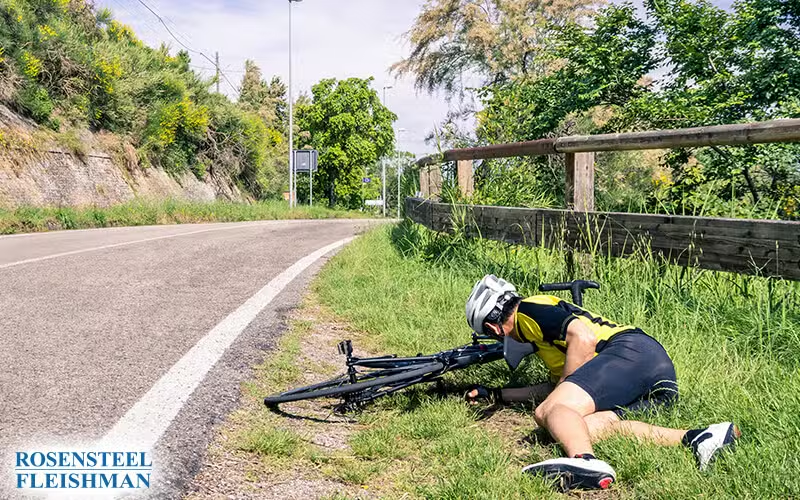

A damaged bicycle is not one undifferentiated property item. The frame, fork, wheels, drivetrain, brakes, controls, fitted accessories, helmet, clothing, electronics, cargo equipment, and transportation expenses may have different identifying records, conditions, owners, safety questions, repair options, and payment sources.
A bicycle-property record should preserve the pre-crash item, post-crash condition, custody, inspection, estimate, repair or replacement decision, expense, payment, and remaining dispute as separate entries.
Identify the bicycle and every claimed item
- Owner, purchaser, make, model, frame serial number, size, color, year, purchase date, seller, receipt, registration, photograph, and pre-crash condition
- Frame, fork, wheels, tires, brakes, drivetrain, handlebar, saddle, pedals, racks, child seat, bags, lights, camera, computer, phone mount, power meter, and other fitted component listed separately
- Helmet, eyewear, clothing, shoes, gloves, carried electronics, tools, lock, cargo, and personal item identified by owner and source
- Rental, loan, lease, employer, household, insurer, or third-party ownership stated rather than assumed
Preserve condition before repair or disposal
- Overall photographs plus close views of each claimed area, label, serial number, scrape, bend, crack, separation, or missing component
- Date, photographer, device, file name, original file, viewpoint, scale reference when appropriate, and storage location
- Person who collected, moved, stored, inspected, disassembled, repaired, returned, sold, recycled, or discarded an item
- Permission, notice, work order, receipt, transfer record, and reason for any change in condition
Treat safety inspection and claim valuation as different tasks
The Consumer Product Safety Commission’s bicycle guidance describes federal performance and labeling requirements involving frames, forks, brakes, tires, seats, handlebars, controls, and reflectors. Those requirements do not establish the condition or value of a particular crashed bicycle. A qualified inspection may address safe use, while a separate estimate or market record may address repair or replacement cost.
- Inspector identity, qualifications, requested scope, date, item condition on receipt, tests or measurements, photographs, findings, limitations, and disposition
- Repair estimate showing parts, labor, tax, availability, compatibility, manufacturer instruction, and whether hidden damage could change the estimate
- Replacement comparison matching material characteristics rather than selecting an unrelated premium or discounted model
- Safety recommendation, insurer position, owner decision, and actual repair or replacement kept as separate events
Handle an impacted helmet separately
CPSC bicycle-helmet guidance explains that a helmet receiving an impact may be damaged even when the damage is not visible and describes required warnings about returning, destroying, or replacing an impacted helmet. Preserve photographs, model and certification labels, purchase information, impact description, and manufacturer instruction. Do not continue using a potentially damaged helmet merely to keep it unchanged as evidence; document its condition and follow appropriate safety guidance.
Document transportation consequences without assuming coverage
- Trip date, origin, destination, purpose, transportation mode, receipt, distance when relevant, and amount
- Rental bicycle, public transit, rideshare, taxi, vehicle ride, delivery, parking, storage, or other substitute recorded by actual use
- Ordinary pre-crash transportation cost kept separate from an added post-crash expense
- Reimbursement request, policy provision, payment, denial, deductible, or disputed balance linked to its document
Read the actual insurance documents
The North Carolina Department of Insurance explains basic auto coverages, including property-damage liability under the policy terms. Its after-accident information also discusses claim reporting, estimates, and disagreements. Whether a bicycle, accessory, helmet, transportation charge, or other item is covered depends on the responsible parties, applicable policies, terms, facts, limits, exclusions, and proof; the label attached to a claim does not answer that question.
Close each item with a disposition row
- Item and owner, claimed condition, supporting source, requested amount, estimate or comparison, and date submitted
- Inspection completed, repair authorized, repair completed, item replaced, item retained, or item disposed of
- Payment source, amount, date, payee, deductible or reduction, and remaining balance or disagreement
- Unresolved safety, ownership, valuation, evidence, coverage, or return-of-property question assigned for follow-up
The related guide to using auto insurance after a North Carolina bicycle crash explains coverage categories and policy questions. This page owns the item-by-item bicycle, gear, repair, and transportation record.
Rosensteel Fleishman Car Accident & Injury Lawyers provides general information about consulting a Charlotte bicycle-accident lawyer about disputed bicycle and gear losses. Safety, ownership, fault, valuation, insurance coverage, and recoverability require review of the actual items, records, policies, and current law.
Sources
Additional Bicycle Accidents Articles
How Insurers Evaluate Extra Work Breaks During Bicycle Injury Recovery
Extra breaks can change a workday without changing a paycheck. Clear records help distinguish interrupted tasks, unpaid time, and questions about responsibility for a bicycle accident.
Charlotte Street Lighting and Light Sensitivity After a Bicycle Injury
Street lighting at a crash scene and light sensitivity afterward raise different documentation questions. Clear records can help explain what happened, what changed, and what still needs legal review.
Using Bicycle Injury Recovery Reviews to Identify Lasting Limitations
Bicycle injury progress reviews can document continuing difficulties without proving that a limitation is permanent. Learn what to record and how to address conflicting accounts.



