Records created after an injury often serve different purposes. A crash report records an officer’s investigation, an emergency intake captures information available during treatment, an insurer log tracks a claim, and an employer record documents work. A difference among them does not automatically establish dishonesty, but a material error should be addressed through the channel […]
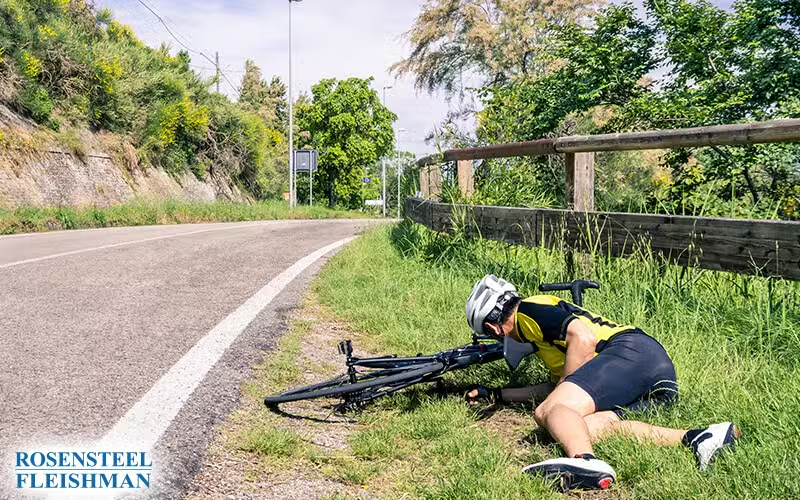

A surface-related bicycle crash can involve a pothole, longitudinal joint, utility cut, drainage grate, loose material, debris, wet marking, rail track, shoulder drop-off, construction plate, uneven patch, ice, or an unexpected transition. Bicycle tires and balance can make the direction and shape of a condition significant.
The useful question is not whether the road was imperfect, but whether a defined condition contributed to loss of control and who had a relevant role. A photograph of damage somewhere on the block is not a substitute for the rider’s line and contact point.
Document the condition before repair or weather changes it
- Wide views fixing the street, block, lane, bicycle lane or shoulder, direction, landmarks, traffic, and rider approach
- Close views with a stable scale showing length, width, depth, height, angle, orientation, loose material, edge, and drainage
- Lighting, shadow, weather, water, ice, warnings, cones, markings, construction, sight restrictions, and practical avoidance space
- Coordinates, measurements, date and time, original files, witness positions, camera locations, and post-event changes
Do not enter active traffic or a work zone to take measurements. Use a qualified inspection plan when safe access, traffic control, engineering measurement, or destructive testing is needed.
Connect the surface to the bicycle’s movement
- Tire path, approach angle, wheel contact, steering input, braking, speed, body motion, ejection, and landing
- Wheel, tire, rim, fork, frame, component, and carried-load condition before and after the event
- Fitness-device route and speed, phone data, bicycle camera, vehicle camera, nearby surveillance, and witness account
- Alternative explanations such as component failure, vehicle interaction, rider medical event, debris movement, or later damage
Preserve the bicycle, wheels, tires, components, helmet, clothing, and electronics without repair, cleaning, disposal, or destructive inspection. Record custody and storage conditions.
Identify the road jurisdiction and every work participant
The City of Charlotte’s maintenance page describes CDOT street, drainage, resurfacing, and sidewalk work. State-maintained roads, private streets, greenways, utility cuts, rail facilities, and active projects can have different record custodians and responsibilities.
- State or local roadway authority, property owner, developer, utility, railroad, transit entity, contractor, and subcontractor
- Permits, plans, cut or encroachment approvals, traffic-control records, inspection, acceptance, warranty, and payment
- 311 or maintenance requests, complaints, prior incidents, work orders, patch history, photographs, and recurring-condition reports
- Who created, marked, inspected, repaired, reopened, or controlled the area and when each action occurred
Report the hazard after preserving it safely
NCDOT’s cycling-safety page provides a route for reporting safety concerns. Keep the report number, submission, attachments, agency, status, and response. A post-event report does not establish earlier notice, so trace pre-event complaints and inspection separately.
Evaluate visibility and rider equipment without shortcuts
G.S. 20-129(e) addresses bicycle lighting and a rear reflector for nighttime operation. Document lights, reflectors, charge, ambient light, roadway illumination, contrast, and sight distance. A lighting question must still be connected to detection of the surface or rider and to the actual mechanism.
Government and construction claims may have distinct procedures
Jurisdiction, immunity, administrative procedure, contract allocation, statutes of repose, and filing periods can affect the route. Identify the entity and project before applying a general premises or negligence rule.
The post-crash guide explains how to preserve bicycle, roadway, witness, and medical evidence immediately after a Charlotte crash.
Rosensteel Fleishman Car Accident & Injury Lawyers provides information about surface-related bicycle crashes in Charlotte. A useful review connects condition, riding line, jurisdiction, work history, notice, bicycle evidence, visibility, medical causation, and deadlines.
Sources
Additional Law Articles Articles
Why Micronutrient Focus After Fall Recovery Matters During Early Healing
A fall in a busy Charlotte grocery store, apartment stairwell, or rain-slick parking area can produce injuries that change during the first weeks of recovery. Medical records may initially focus on pain, swelling, mobility, and imaging results, but later updates can add information about nutrition, fatigue, bone health, wound healing, or delayed progress. When those […]
How Different Accident Scenarios Affect Claims After a Multi Vehicle Crash
A claim’s value is usually built in stages, starting with what happened in the crash and continuing through the injured person’s recovery. In a multi vehicle accident, that process can take extra care because insurers are not only looking at repair bills and medical costs. They are also trying to understand whether the injury will […]
Car Accident Claim Strategy Basics When the Process Moves Slowly
Car accident claims can move slowly because the facts often develop in stages, especially when injuries, insurance reviews, and fault questions are still being evaluated. In Charlotte, a crash on a busy road like I-77, South Boulevard, or Independence Boulevard may seem straightforward at first, but new medical records, repair findings, witness details, or insurance […]