Concerns about reinjury involve medical questions that claim records cannot answer. Learn how to organize physical therapy documentation, practical expenses, and scene evidence without drawing unsupported conclusions.
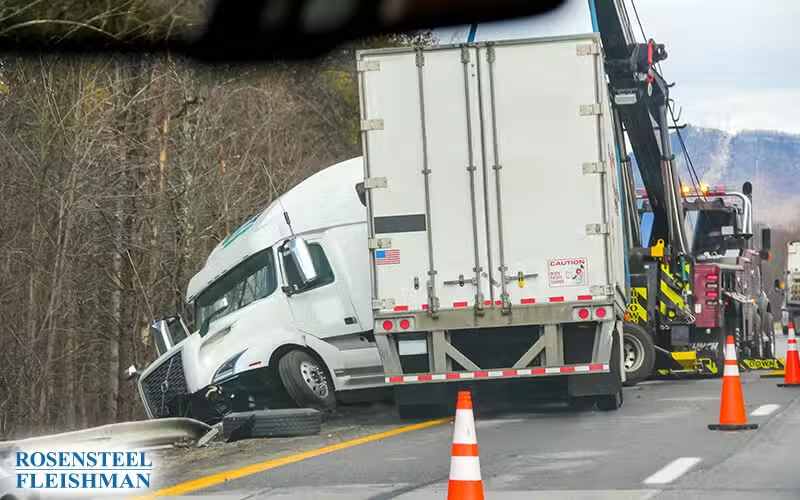

Cargo on a highway can obstruct lanes, reduce traction, strike vehicles, create fire or exposure risk, or prompt evasive maneuvers. A later collision may result from the cargo, traffic response, warning and cleanup, or another independent cause.
A cargo spill can be the initial hazard, a result of a first collision, or an event with no causal role in a later impact.
Protect people before preserving a claim
Call 911 for injury, fire, spill, blocked lanes, dangerous material, or another emergency. Do not enter traffic or approach unstable cargo, vapor, fire, electrical danger, or unknown substances. Follow law-enforcement, fire, medical, and hazardous-material instructions.
Establish the event order
- Vehicle and cargo condition before any impact
- Load movement, leakage, falling object, door or tailgate opening, rollover, or first collision
- Location, spread, lane blockage, visibility, traction, and warning opportunity
- Traffic slowing, lane changes, evasive actions, secondary impacts, and emergency response
- Cleanup, towing, unloading, repair, disposal, testing, and roadway reopening
Determine the applicable cargo duties
49 C.F.R. § 392.9 addresses cargo distribution and securement, pretrip assurance, inspection within the first 50 miles for covered loads, and later reexamination at specified events or intervals, subject to exceptions.
49 C.F.R. § 393.100 generally addresses preventing cargo from leaking, spilling, blowing, or falling and containing, immobilizing, or securing it so shifting does not adversely affect stability or maneuverability.
Map the loading and custody chain
- Cargo identity, quantity, packaging, weight, distribution, seal, manifest, and hazards
- Shipper, loader, carrier, driver, broker, trailer owner, and consignee roles
- Who selected, supplied, inspected, maintained, tightened, or replaced securement and containment
- Driver access to a sealed or otherwise impracticable load and any applicable exception
- Stops, inspections, adjustments, broken devices, warnings, messages, and prior movement
Preserve physical evidence safely
Document the overall load, spill pattern, packaging, doors, gates, tarp, anchor points, tiedowns, chains, straps, binders, blocking, bracing, dunnage, trailer structure, damaged components, residue, cleanup, and disposal. Technical or destructive testing needs a controlled protocol and chain of custody.
Preserve electronic and trip records
Request vehicle event and engine data, cameras, stability and brake systems, telematics, electronic logs, dispatch, phone, GPS, route, tolls, fuel, scales, gates, loading, and delivery information. Align system times and retain native files and metadata.
Evaluate highway warning and response
Obtain 911, traffic-management, responder, towing, cleanup, lane-closure, message-sign, camera, and road records. Analyze when the spill could be seen, warnings available, traffic speed, sight distance, response time, escape paths, and whether later drivers acted reasonably under developing conditions.
Carrier accident records are not the complete file
49 C.F.R. § 390.15 requires a covered carrier to maintain an accident register for three years and specified reports. Cargo, vendor, video, vehicle, platform, and physical evidence can have other custodians and shorter retention.
Separate each impact and claimant
Identify which vehicle encountered cargo, traffic, or another vehicle; what the driver perceived; what response was available; and how each impact occurred. Then build an occupant-specific medical chronology. A shared pile-up does not establish identical fault or injury causation.
Evaluate weight and securement independently
A load can comply with overall weight rules but be insecure, or exceed a limit without spilling. The issue is not merely whether a record shows weight or a broken device, but whether the condition contributed to instability, containment failure, or the roadway hazard.
The related cargo-crash response and preservation guide provides a safety-first sequence for emergency reporting, documentation, carrier notice, medical care, and independent interests.
Rosensteel Fleishman Car Accident & Injury Lawyers provides information about cargo-spill truck collisions in Charlotte. The analysis should preserve the load and event sequence while separating each actor and impact.
Sources
Additional Trucking Accidents Articles
When Mobility Loss After a Charlotte, NC Truck Crash Has No Clear Diagnosis
An unclear diagnosis does not prevent a family from recording practical changes after a truck crash. Keep observations, added expenses, and unanswered claim questions separate.
How Insurers Review Worsening Pain After a Truck Crash
An early insurance review may start with an incomplete account. Dated records can help explain later changes in pain, work limitations, and expenses without treating symptoms as proof of an injury.
When Burn Care Needs Reassessment After a Truck Crash in Charlotte
Unclear accident details call for careful documentation, not medical conclusions. Learn how to organize care records, explain timeline gaps, and track practical losses after a truck crash.