
Highway crashes do not always happen during predictable rush hour congestion or in the middle of heavy commuter traffic. In North Carolina, a collision may occur late at night, during an off-peak afternoon, or on a relatively open stretch of interstate where traffic conditions initially appear straightforward. Claims arising from these crashes can still become […]
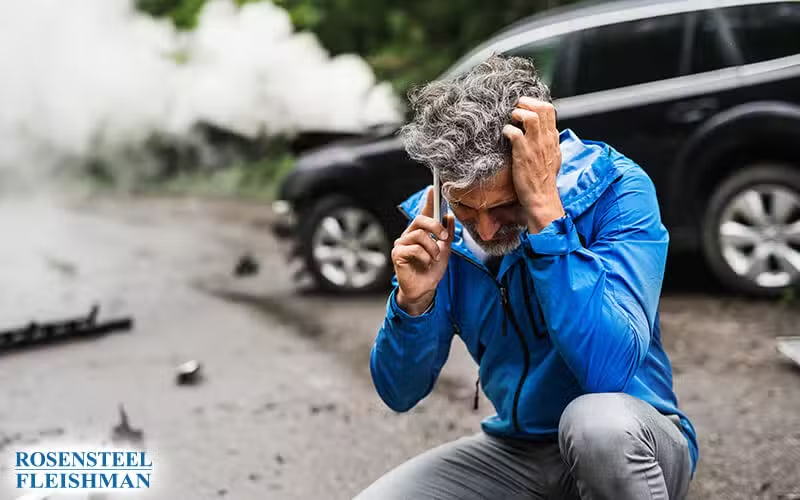

Visibility can change how a crash is understood because it affects what drivers saw, what they reasonably could have noticed, and how quickly they were able to react. In Charlotte, drivers may face glare, rain, poor lighting, obstructed signs, busy intersections, or traffic patterns that make a collision harder to evaluate after the fact. One common misunderstanding is assuming that poor visibility automatically excuses a driver from responsibility, when claim reviews usually look at the choices each person made under the conditions present. As Attorney Matthew Fleishman has said, “A clear record often helps explain what a driver was dealing with in the moments before impact.” For people trying to make sense of an accident, speaking with an auto accident attorney can help them understand how visibility, timing, documentation, and shared responsibility may fit together.
Article Brief
- Poor visibility can influence a claim, but it does not automatically decide fault.
- Insurance reviews often consider whether each driver acted reasonably for the conditions.
- Photos, witness accounts, dashcam footage, and timely medical records can help clarify what happened.
How Poor Visibility Can Shape a Crash Review
When visibility is limited, the facts of a crash can become harder to sort out because the claim review has to consider both the physical scene and the decisions made by each driver. Rain, darkness, fog, sun glare, construction barriers, parked vehicles, and obstructed traffic signals can all affect what someone could see. Still, drivers are generally expected to adjust to the conditions around them, which may include slowing down, increasing following distance, using headlights, or being more cautious near intersections and crosswalks.
This is where visibility issues in accidents often become more complicated than people expect. A driver may say they could not see another vehicle until the last second, but an insurance company may still ask whether that driver was traveling too fast for the conditions. Another driver may claim the other vehicle came out of nowhere, but vehicle damage, skid marks, traffic camera footage, or witness statements may suggest that both drivers had some opportunity to react. The issue is rarely just whether visibility was bad. The more important question is often whether the driver responded reasonably to the risk.
For example, imagine a driver traveling through a busy Charlotte corridor near a bus stop as evening traffic builds. A city bus pulls away from the curb, pedestrians are nearby, and vehicles are shifting lanes to get around stopped traffic. If a crash happens in that setting, public transit interaction areas can create several visibility concerns at once. A driver’s view may be blocked by the bus, a pedestrian may be difficult to see between vehicles, and another motorist may misjudge whether a lane is clear. A claim review may then look closely at speed, signaling, lane position, lighting, and whether anyone had enough time to avoid the collision.
These reviews may also involve shared responsibility. Some people assume that if another driver was partly at fault, their own actions no longer matter. In reality, the review may examine whether more than one person contributed to the crash. A driver who failed to use headlights in heavy rain may bear some responsibility even if another driver made an unsafe turn. A driver who entered an intersection with limited sightlines may still need to show they slowed, checked carefully, and responded as safely as possible.
Several types of evidence can help explain visibility concerns after a crash:
- Photos showing lighting, weather, signs, trees, parked cars, or obstructions
- Dashcam or traffic camera footage showing timing and vehicle movement
- Witness statements describing what could or could not be seen
- Police reports noting road conditions, visibility, or contributing factors
- Vehicle damage and final resting positions that help reconstruct movement
The challenge is that visibility can change quickly. A storm may clear, traffic may move, a bus may leave the area, or glare may fade within minutes. That is why early documentation can matter. The closer the records are to the time of the crash, the more useful they may be in showing the conditions that existed when decisions were made.
Common Mistakes People Make After a Low Visibility Accident
A claim can become harder to manage when people make assumptions too early, especially when they believe poor visibility will explain everything on its own. While weather or lighting may be important, insurance companies usually look for a full picture. They may compare driver statements, physical evidence, road layout, traffic controls, speed estimates, medical records, and any available video. If someone gives a quick statement without thinking through the conditions, that statement may later be compared against evidence that tells a more detailed story.
One common mistake is saying “I never saw them” as if that ends the discussion. That statement may be honest, but it can also raise follow-up questions. Why was the person not visible? Was there an obstruction? Were headlights on? Was one vehicle speeding? Was the driver distracted? Was the driver looking in the direction they should have been looking? A claim reviewer may treat the statement as one piece of information, not as a complete explanation.
Another misunderstanding involves delayed pain or delayed reporting. After a crash in poor visibility, a person may focus first on getting out of traffic, checking on passengers, or dealing with a damaged vehicle. Pain may seem minor at the scene but become more noticeable later. If medical care is delayed, the insurance company may question whether the injuries are connected to the accident. That does not mean the claim is automatically weakened beyond repair, but it does make clear documentation more important.
People may also underestimate how financial pressure can affect decision making. A damaged vehicle can disrupt work, school drop-offs, medical appointments, and basic errands. Repair delays, rental car costs, and missed income can cause someone to consider a quick settlement before the full impact of the crash is known. When visibility and shared responsibility are still being reviewed, moving too quickly may leave important details unresolved.
It is also common for drivers to blame road conditions without preserving proof of those conditions. If a tree limb blocked a sign, construction equipment narrowed a lane, or lighting was poor near an intersection, those details should be documented as soon as possible. Even simple photos from a safe location can help show what the scene looked like. If the scene changes before anyone records it, the claim may rely more heavily on statements and assumptions.
A careful approach does not require panic or conflict. It means treating the situation as something that needs a clear record. People involved in a crash should seek appropriate medical care, report the accident, save photos and videos, keep repair and rental records, and avoid guessing when speaking with insurers. When someone is unsure how shared responsibility may affect a claim, measured guidance can help them avoid unrealistic expectations and focus on the evidence that matters.
Why Documentation Matters When Visibility Is Disputed
Visibility disputes often come down to details that seem small at first but become important later. The angle of the sun, the position of a parked truck, whether headlights were on, or whether a signal was blocked can all influence how the crash is evaluated. A clear record helps separate what someone remembers from what can be shown through documents, images, and other evidence.
Rosensteel Fleishman Law Firm often hears from people who are unsure whether a crash was partly their fault because conditions were confusing. That uncertainty is understandable. A person may know they were trying to drive carefully but still worry that an insurance adjuster will view the situation differently. As Attorney Corey Rosensteel has said, “Preparation helps people tell the story of what happened with facts instead of guesswork.”
What to Keep Track Of After the Crash
After a crash involving limited visibility, the most useful information is often the information gathered before memories fade or the scene changes. Photos of the roadway, traffic lights, signs, weather, vehicle damage, and nearby obstructions can provide context. Medical records can also show when symptoms began and how they developed. Repair estimates, towing records, rental car receipts, and missed work documentation may help explain the practical impact of the accident.
It can also help to write down what happened while the details are still fresh. This does not need to be dramatic or overly detailed. A simple timeline can include where each vehicle was traveling, what the weather was like, whether lighting was poor, what traffic was doing, and when pain or symptoms appeared. If there were witnesses, their names and contact information may help later if accounts differ.
The main takeaway is that poor visibility is not a shortcut around the facts. It is one factor in a larger review of how the crash happened and whether each person acted reasonably under the circumstances. By documenting the scene, getting medical care when needed, and avoiding assumptions about fault, people can put themselves in a stronger position to understand the claim process. For those who want help reviewing what happened, Rosensteel Fleishman can be reached in Charlotte at 1-704-714-1450 for a free consultation.
Additional Car Accidents Articles
Left Turn Gap Judgment Errors When Visibility or Road Design Plays a Role
What happens when a driver begins a left turn and another vehicle suddenly changes lanes? The available opening can disappear almost instantly. In Charlotte traffic, this type of conflict may occur near multilane intersections where drivers must monitor oncoming vehicles, traffic signals, pedestrians, and vehicles moving between lanes at the same time. These crashes can […]
Multi Policy Insurance Considerations When One Policy Does Not Cover Every Loss
Insurance coverage after a serious car accident is not always limited to one policy. A collision may involve liability coverage, underinsured motorist coverage, medical payments coverage, an employer’s commercial policy, or another source of compensation. Identifying each applicable policy can affect how losses are documented, how negotiations develop, and whether a proposed resolution fairly reflects […]
What Happens When Vehicle Damage Appears Later Despite an Initial Inspection
Damage found days or weeks after a collision can complicate an insurance claim, especially when the cause of the crash or responsibility for the repairs remains disputed. A vehicle may look drivable during an initial roadside review in Charlotte, yet later show suspension problems, electrical faults, alignment issues, or damage hidden beneath exterior panels. When […]



