
Poor lighting can make an ordinary walkway difficult to navigate, especially when shadows conceal a spill, uneven flooring, loose debris, or a change in elevation. In Charlotte, visibility problems may arise in apartment stairwells, parking garages, restaurants, retail stores, and other properties used by the public. When a fall causes an injury, the lighting conditions […]
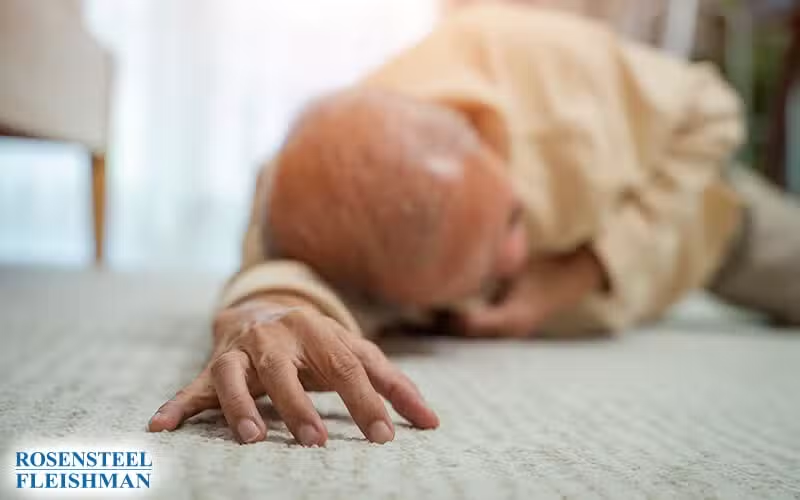

Walking after a fall may change across surfaces, distances, fatigue levels, and stages of recovery. A note that someone is “unsteady” cannot show the task, setting, assistance, device, duration, or instruction involved. A mobility-specific log links observable changes to dates and clinical sources while avoiding unsafe self-testing or medical conclusions.
A post-fall mobility record should identify the observed task, surface and setting, gait or balance change, assistance or device used, date, observer, clinical instruction, and source without converting a home observation into a diagnosis or formal mobility assessment.
Establish the pre-fall mobility baseline
- Ordinary walking distance, pace, stairs, curbs, uneven ground, transfers, standing tolerance, driving, work, exercise, and community activity
- Cane, walker, brace, orthotic, wheelchair, handrail, another person, or no assistance identified by ordinary use before the incident
- Prior fall, condition, surgery, therapy, restriction, or intermittent symptom included only as supported by a record or identified recollection
- Independent, supervised, standby, cueing, setup, partial assistance, and full assistance kept as different descriptions
Record a task and setting, not a label
- Bed, chair, toilet, shower, vehicle, doorway, hallway, stair, curb, ramp, sidewalk, parking area, store, or workplace task identified
- Distance, duration, surface, slope, lighting, crowd, carried item, footwear, fatigue, and available support noted when observed
- Pause, shortened step, uneven step, foot clearance issue, sway, reach for support, stumble, near fall, fall, or inability to begin recorded descriptively
- Good day, difficult day, flare, medication change, new illness, and environmental difference preserved as context without assigning cause
The National Institute on Aging’s falls and fractures page for older adults discusses balance, gait, footwear, medications, health conditions, and properly fitted assistive devices as fall-related considerations in that population. It also advises involving health-care providers in device selection and use. The page is not a patient-specific post-injury assessment and should not be applied beyond its scope.
Track every device and assistance change
- Device name, manufacturer or model, size or setting, source, delivery date, fitting, instruction, maintenance, and return or replacement
- Clinician recommendation separated from a family suggestion, borrowed device, store purchase, or temporary emergency use
- Person providing assistance, task, assistance level, date range, training source, and exception
- Device available but not used, used differently, damaged, poorly fitted, or discontinued recorded without guessing why
The CDC’s STEADI clinical algorithm describes provider screening, assessment, and intervention for fall risk in older adults, including standardized gait and balance assessment. It is a clinical resource, not a home test. A person should not attempt a balance maneuver or change an assistive device for documentation purposes without appropriate clinical direction.
Link observations to the clinical record
- Emergency, primary care, orthopedic, neurological, therapy, nursing, or equipment visit linked by date and provider
- Recorded diagnosis, examination, imaging, restriction, therapy goal, device instruction, and follow-up quoted or summarized cautiously
- Patient-reported symptom, family observation, therapist measurement, and physician opinion retained as separate source types
- Later improvement, setback, new condition, or revised instruction added as a dated event
The U.S. Department of Health and Human Services explains on its medical-record access page that individuals generally have rights to inspect and obtain copies of health information in a designated record set, subject to applicable limits. Preserve the clinical source and correction history rather than copying one measurement into a personal log without context.
The related guide on documenting symptoms and function when an injury initially seems minor covers the broader change record. The mobility log should focus on gait, balance, transfers, devices, and assistance and link back to that general record only where the same event is relevant.
Protect the observation boundary
North Carolina Rule of Evidence 701 addresses opinion testimony by a nonexpert witness, while Rule 702 addresses testimony by a qualified expert. A person may document what they saw and did. Diagnosis, medical causation, fall-risk scoring, prognosis, device prescription, and rehabilitation conclusions belong to qualified clinicians.
- Do not stage a difficult movement, remove support, or repeat a risky task to create evidence
- Preserve native videos, photographs, device records, instructions, and clinical documents
- Record ordinary tasks completed without difficulty as well as difficulty and assistance
- Seek medical help for urgent symptoms or a new fall rather than delaying care for the log
A North Carolina slip-and-fall matter involving disputed mobility changes may require review of the pre-fall baseline, clinical record, device history, ordinary observations, and later events. This article supplies a documentation framework, not medical advice, a fall-risk assessment, or a prediction about causation or claim value.
Additional Slip and Falls Articles
Second Opinion Timing After Fall When Recovery Progress Remains Unclear
How can someone protect their interests when recovery after a fall remains difficult to understand? In Charlotte, the answer often begins with maintaining clear records, following established provider instructions, and asking appropriate questions when the existing information leaves important concerns unresolved. The decision to seek another evaluation is personal and should be discussed with a […]
Organizing Appointments and Household Help After a Fall
Appointments, rides, work messages and household commitments can be difficult to coordinate after a fall. A short written plan can keep practical tasks from being missed while you follow your healthcare provider’s instructions. It is a way to organize responsibilities, not a test of recovery or a reason to take on more physical activity. Choose […]
Work Restrictions After a Fall: Comparing Notes, Duties and Pay Records
A work-status note, a proposed assignment and a payroll record answer different questions after a fall. Keep them together without treating any one of them as the full return-to-work decision. Your healthcare provider should clarify medical restrictions; the employer can describe the actual duties being proposed. Keep each version of the work-status note Record who […]



