
An occupant may move forward, sideways, upward, rotate, or experience more than one movement during a truck collision. The useful record does not try to diagnose an injury from a photograph. It preserves what can be observed and allows qualified medical professionals and other appropriate reviewers to address causation. The file should connect the collision […]
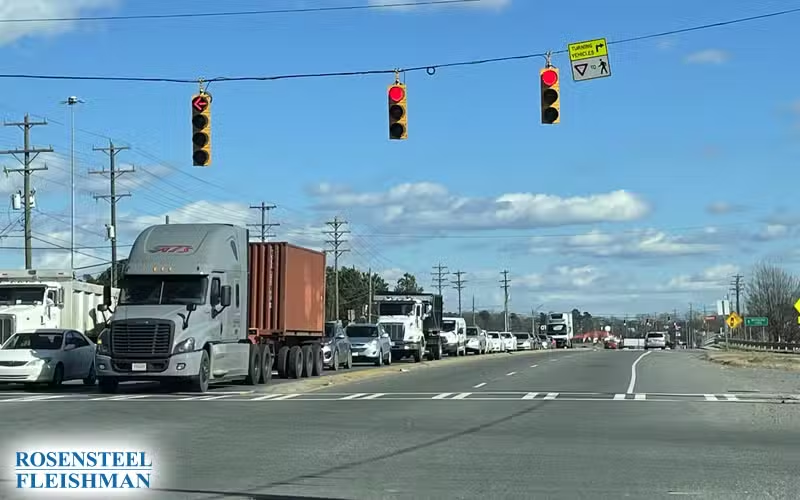

A truck collision in or near Concord can involve Cabarrus County roads, interstate travel, out-of-county residents, an out-of-state carrier, several companies, local responders, and medical care in different places. Location is an evidence and procedure question, not just a phrase added to a general article.
A Concord connection may affect records, witnesses, venue, and convenience, but the city name does not determine every court, deadline, defendant, or governing rule.
Create a location and participant map
- Exact crash location, road owner, municipality, county, direction, lane, and nearby property
- Driver and company residences, offices, registered agents, ownership, authority, and insurance
- Tractor, trailer, cargo, dispatch, origin, destination, route, and trip purpose
- Responding agency, fire, emergency medical, tow, storage, repair, roadway, and camera sources
- Treatment providers, employers, witnesses, and records located inside and outside Cabarrus County
Obtain the crash report through the correct process
The North Carolina Division of Motor Vehicles crash-report page explains access methods and privacy limits for redacted and unredacted reports. Eligibility and permissible-use requirements differ by requestor.
A crash report is one investigation record. Compare it with photographs, video, measurements, witnesses, vehicle and cargo evidence, electronic data, and company records. Preserve the report version and any later supplement or correction.
Preserve local and company evidence
- Traffic, business, residential, vehicle, and responder video before routine overwrite
- Road plans, work-zone records, signal data, maintenance, weather, and emergency communications
- Tractor, trailer, tires, brakes, steering, lighting, cargo, and post-crash custody
- Electronic logs, telematics, cameras, dispatch, mobile devices, fuel, toll, scale, and route records
- Native files, metadata, time zones, system definitions, download history, and chain of custody
The related post-crash truck evidence guide explains safety, reporting, identity, and preservation steps after the emergency.
Map the insurance and injury records
Identify every potentially relevant liability, vehicle, cargo, umbrella, excess, self-insurance, uninsured or underinsured, health, disability, and benefit source. Keep fault, coverage, medical causation, expenses, wage effects, and repayment interests in separate ledgers.
Do not assume venue from the crash location alone
G.S. 1-82 provides a general venue rule for covered cases based on party residence and includes other language. Other venue statutes, corporations, railroads, government parties, jurisdiction, contractual issues, and change-of-venue rules may affect the analysis.
Understand the court path
The North Carolina Judicial Branch lawsuits guide describes civil cases and provides general information about small claims, district court, superior court, filing, venue, service, and procedure. The right forum depends on the actual parties, claims, relief, and law.
Calendar deadlines from the claim, not a slogan
G.S. 1-52 contains three-year periods for listed actions and accrual language for identified injury and property claims. Different claims and parties may carry different periods, notices, or accrual rules. Preserve evidence and obtain claim-specific guidance early.
A Concord claim organization file
- Participant and location roster
- Evidence-source and retention calendar
- Collision, medical, work, coverage, and payment timelines
- Potential forum, venue, service, and deadline questions
- Unresolved cross-border, company, insurance, and causation facts
Rosensteel Fleishman Car Accident & Injury Lawyers provides information about truck collision claims involving Concord and the Charlotte region.
Sources
Additional Trucking Accidents Articles
How to Investigate Responsibility After a Multi-Vehicle Truck Crash in Charlotte
Responsibility after a multi-vehicle truck crash cannot be evaluated reliably from the final vehicle positions alone. One event may involve an initial lane change, a later rear impact, cargo movement, evasive action, or a separate failure to slow. The useful question is not simply who struck whom last, but what happened at each stage and […]
Returning to Work After a North Carolina Truck Crash: A Documentation Guide
Returning to work after a truck collision is not a single yes-or-no decision. Driving, lifting, climbing, prolonged sitting, screen work, concentration, medication effects, sleep disruption, and travel may recover at different rates. The useful question is which duties can be performed now, under what restrictions, and when the plan will be reviewed again. A return-to-work […]
Commercial Vehicle Accident Injuries and the Costs Families Often Overlook
A claim involving a delivery van, box truck, tractor trailer, or other business vehicle can become complicated long before a family realizes how many expenses are connected to the crash. Imagine an injured parent who leaves the hospital expecting insurance to cover the obvious bills, only to face follow-up treatment, reduced income, transportation costs, and […]



