
Lane markings, turning movements, and crosswalk locations can help explain a truck collision, but they cannot establish an injury. Clear records help separate crash circumstances from documented losses.
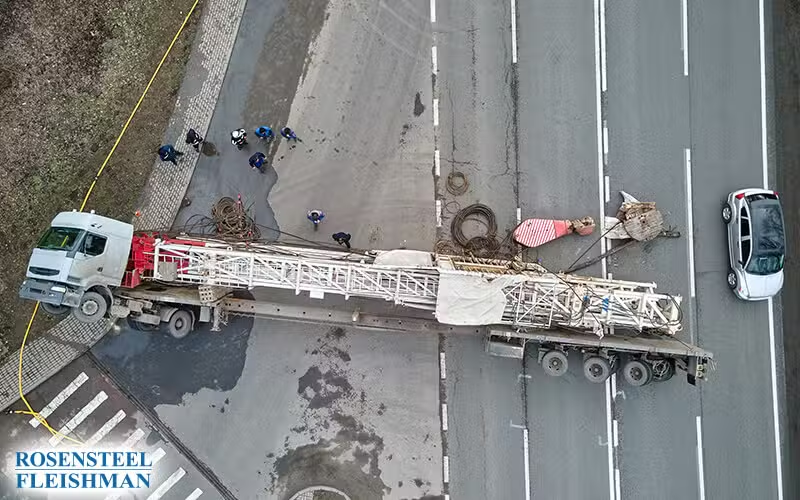

Traffic congestion along I-77 and I-485 in Charlotte often leads to sudden stops and high-impact collisions, especially when large commercial trucks are involved. In these moments, the body absorbs force in ways that are not always immediately obvious, and joint injuries can quietly begin to develop beneath the surface. Many people walk away from a crash thinking they are only dealing with soreness, only to notice instability or weakness in their joints weeks later.
Joint instability truck accident injuries can evolve gradually, making recovery less predictable than expected. A shoulder that felt stiff at first may begin slipping during everyday movements, or a knee may start to feel unreliable when walking on uneven ground. These changes can create both physical and practical challenges, especially when they interfere with work, driving, or daily routines. As Corey Rosensteel, an attorney, once noted, "Injury symptoms do not always follow a clear timeline, which is why paying attention to changes over time matters."
For those trying to understand their options or next steps, learning how these injuries develop can make a meaningful difference. Accessing reliable information, including resources connected to a trucking accident attorney, can help people better understand how injury patterns may affect both recovery and related claims.
TLDR
Joint instability after a truck accident can create delayed and evolving recovery challenges that are often underestimated.
- Symptoms may not appear immediately after the crash
- Instability can worsen with normal daily activity
- Missed early signs can affect long-term recovery
- Insurance evaluations may not fully account for delayed joint issues
How Joint Instability Develops After A Truck Accident
Joint instability often begins with damage to ligaments, tendons, or supporting structures that hold a joint in place, even if the initial injury seems minor. During a truck collision, the force can stretch or partially tear these tissues without causing immediate pain that signals something serious. This creates a situation where the joint appears functional at first but gradually loses its ability to remain stable during movement.
Over time, everyday activities can reveal the underlying issue. A person might notice their shoulder slipping when reaching overhead or their knee feeling unsteady when stepping off a curb. These are not just inconveniences. They can signal a deeper structural problem that continues to worsen if left unaddressed. One common misconception is that if an injury does not require immediate emergency care, it is unlikely to become serious, which is not always the case with joint instability.
Another overlooked factor is how compensation and posture changes after an injury can place added stress on nearby joints. For example, favoring one leg after a crash may lead to instability developing in the opposite knee or hip. This chain reaction can complicate recovery and make it harder to pinpoint the original source of the problem.
Why Symptoms Often Appear Later
Delayed symptoms are common with joint instability because inflammation and tissue damage can take time to affect how the joint functions. In the days following a crash, adrenaline and general soreness can mask more specific issues. As swelling changes and the body begins to heal, instability may become more noticeable rather than less.
This delay can lead to timing mistakes, such as waiting too long to seek evaluation or assuming that discomfort will resolve on its own. Insurance companies may also question injuries that appear later, which makes documentation and consistent follow-up care important. Recognizing that delayed onset is normal for these types of injuries can help people respond more effectively.
How Recovery Barriers Change Over Time
The most challenging aspect of joint instability truck accident injuries is that recovery does not follow a straight path. Early stages may focus on pain management and basic mobility, but later stages often involve rebuilding strength and stability. If instability is not properly addressed, it can limit progress and create setbacks that extend the recovery timeline.
As weeks turn into months, individuals may face practical challenges such as difficulty returning to work or participating in physical activities they once handled easily. These changes can affect both financial stability and overall quality of life. In Charlotte, where commuting and daily travel are part of routine life, even minor instability can make driving or navigating busy areas more stressful.
Insurance company behavior can also shift during this period. Early claims may focus on immediate injuries, while later complications like joint instability may require additional documentation to be fully recognized. This creates a decision point where individuals must determine how to present evolving medical evidence and whether to revisit earlier evaluations. In some cases, reviewing how injuries are documented through resources like can provide helpful context for understanding long-term impact.
Common Long Term Challenges And Risks
Joint instability can introduce several long-term concerns that are not always obvious at the beginning of recovery. These challenges often build gradually and can affect both physical health and daily life.
- Increased risk of re-injury due to weakened joint support
- Chronic pain or discomfort during routine movements
- Reduced range of motion affecting work or hobbies
- Development of arthritis in the affected joint
- Difficulty maintaining consistent physical activity
These risks highlight why early recognition and consistent care are important. What starts as occasional discomfort can turn into a persistent limitation if stability is not restored.
What To Keep In Mind As Recovery Moves Forward
Recovery from joint instability is often about managing change rather than expecting a quick return to normal. Paying attention to how the body responds over time can help identify whether progress is being made or if additional evaluation is needed. Small signs, such as a joint giving way or increased discomfort during certain movements, should not be ignored.
For those dealing with the aftermath of a truck accident in Charlotte, having a clear understanding of how injuries can evolve makes it easier to navigate next steps. If questions arise about how an injury may affect a claim or long-term recovery, speaking with a professional team like Rosensteel Fleishman can provide helpful clarity. They can be reached at 1-704-714-1450 for a conversation that focuses on understanding the situation rather than rushing decisions.
Moving forward, it helps to stay aware that recovery is not always linear. Adjusting expectations, keeping track of symptoms, and seeking timely input when changes occur can make the process more manageable and less uncertain.
Additional Trucking Accidents Articles
Living With Permanent Disabilities After a Truck Crash Involving Multiple Vehicles
A lasting disability affects more than a claim file. Learn how to connect the collision timeline with documented changes in work, household responsibilities, and expenses without treating assumptions as evidence.
Reducing Reinjury Risk With Physical Therapy After a Truck Crash in Charlotte
Concerns about reinjury involve medical questions that claim records cannot answer. Learn how to organize physical therapy documentation, practical expenses, and scene evidence without drawing unsupported conclusions.
When Mobility Loss After a Charlotte, NC Truck Crash Has No Clear Diagnosis
An unclear diagnosis does not prevent a family from recording practical changes after a truck crash. Keep observations, added expenses, and unanswered claim questions separate.



