
Lane markings, turning movements, and crosswalk locations can help explain a truck collision, but they cannot establish an injury. Clear records help separate crash circumstances from documented losses.
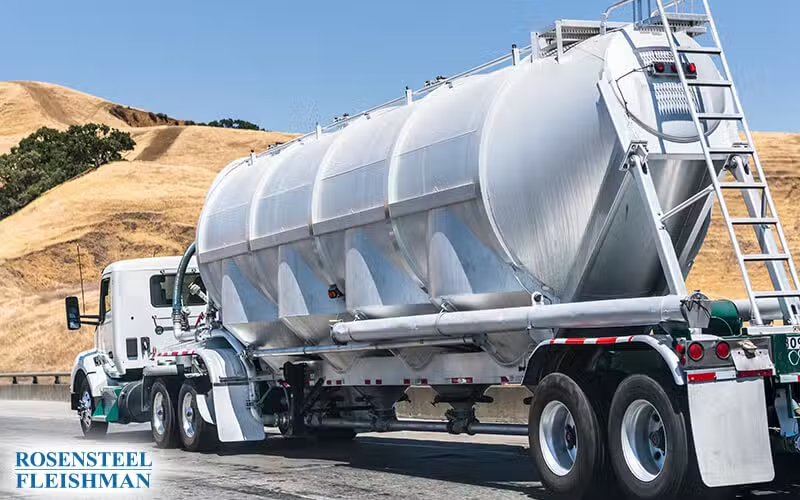

The name printed on a tractor, the owner shown on a registration, the company listed on a trailer, and the motor carrier responsible for a load may not be the same entity. A semi-truck crash file should preserve every identifier before trying to decide how the companies and equipment relate to one another.
A carrier-identity worksheet should compare every identifier and source instead of assuming that the name on the cab, vehicle registration, or trailer is the responsible motor carrier.
Photograph each identifier in context
Use photographs already taken safely or arrange access through the vehicle’s custodian. Do not step into traffic, climb onto equipment or enter a restricted lot to read a number. If an identifier is blurred or missing, mark it unresolved and seek another lawful source rather than guessing from a partial logo or digit.
- Legal name, trade name, USDOT number, unit number, plate, jurisdiction, VIN, tractor make and model, trailer number, and equipment marking
- Full side of tractor, cab door, front and rear plates, trailer sides and rear, shipping placards, and damaged components
- Close view for legibility plus a wider view showing which tractor or trailer carried the marking
- Native file, timestamp, device, collector, transfer, and unedited original preserved
Do not treat vehicle registration as carrier identity
FMCSA’s guide to finding the responsible carrier and correct USDOT number explains that registration generally identifies an owner or registrant but may not identify the motor carrier responsible for the movement. The guide also warns that the information on the side of a truck may not be sufficient by itself.
- Registration source, issuing jurisdiction, vehicle or trailer, registered owner, address, plate, VIN, and effective date
- Cab-card, registration, lease, rental document, insurance card, permit, and report kept as separate sources
- Owner, registrant, lessee, driver, employer, motor carrier, broker, shipper, and receiver recorded as distinct roles
- No role converted into legal responsibility without the governing records and qualified review
Compare the driver log, lease, and shipping papers
The FMCSA guide identifies the driver interview, driver log, lease agreement, and shipping papers as additional sources. A source matrix should capture exactly what each document states and the time period or movement it covers.
- Driver log or electronic record: carrier name, principal place of business, date, driver, device or record source, and identified trip
- Lease or rental agreement: lessor, lessee, equipment, term, possession, identifiers, signatures, and cited USDOT number
- Shipping paper or bill of lading: shipper, carrier name, origin, destination, commodity or shipment identifier, date, and signatures
- Dispatch, load confirmation, broker record, fuel record, toll record, inspection, and report cross-referenced without assuming they are interchangeable
Verify the USDOT number in the official public data
FMCSA explains that public carrier information is available through the Company Snapshot and other public safety-data resources. Save the query used, access date, USDOT number, legal name, trade name, address, operating status shown, and the exported or captured result. Public database information can help reconcile identity; it does not determine collision fault or the admissibility of a particular record.
Build a conflict table instead of choosing one name
- Source, identifier, entity name, role stated, date range, equipment or load, custodian, and retrieval method
- Exact spelling, punctuation, corporate suffix, trade name, old name, and address preserved
- Agreement, conflict, missing field, stale information, unreadable marking, or uncertain role labeled explicitly
- Follow-up source and responsible person assigned for every unresolved identity question
The related guide to identifying trucking entities and record custodians after a crash follows the next step: connecting a verified entity to the records it may hold.
Rosensteel Fleishman Car Accident & Injury Lawyers provides general information about North Carolina truck-accident matters involving motor-carrier identity. The entities, roles, records, responsibility, and preservation needs depend on the actual movement and complete evidence.
Sources
Additional Trucking Accidents Articles
Living With Permanent Disabilities After a Truck Crash Involving Multiple Vehicles
A lasting disability affects more than a claim file. Learn how to connect the collision timeline with documented changes in work, household responsibilities, and expenses without treating assumptions as evidence.
Reducing Reinjury Risk With Physical Therapy After a Truck Crash in Charlotte
Concerns about reinjury involve medical questions that claim records cannot answer. Learn how to organize physical therapy documentation, practical expenses, and scene evidence without drawing unsupported conclusions.
When Mobility Loss After a Charlotte, NC Truck Crash Has No Clear Diagnosis
An unclear diagnosis does not prevent a family from recording practical changes after a truck crash. Keep observations, added expenses, and unanswered claim questions separate.




