
Were You Injured in a Charlotte Auto Accident?
The days after a collision can affect both your health and any insurance claim that follows. Evidence may disappear, witnesses can become difficult to locate, and an early statement to an adjuster may later be used to dispute fault or the seriousness of an injury. At the same time, you may be trying to arrange treatment, repair or replace a vehicle, and determine how missed work will affect your family.
Rosensteel Fleishman has represented injured people across North Carolina since 2005. Our attorneys examine how the crash occurred, identify available insurance coverage, document medical and financial losses, and explain the choices that arise during a claim. The goal is not to make decisions for you. It is to give you the information and support needed to make those decisions with a clear understanding of the risks and available options.
- Serving Injured Clients Since 2005
- $100M+ Recovered for Injured Clients*
- Over 50 Years of Combined Legal Experience
- Free Consultations
Not every accident requires a lawyer. A free consultation can help you determine whether you can reasonably handle the matter yourself or whether the injuries, disputed facts, or insurance issues make legal representation appropriate.
Why Choose Rosensteel Fleishman for Your Charlotte Car Accident Case?
Car accident claims often turn on disputed details: conflicting accounts of the crash, allegations that the injured person contributed to it, questions about prior medical conditions, gaps in treatment, lost-income documentation, or limited insurance coverage. Rosensteel Fleishman works to identify these issues early, preserve available evidence, and document how the collision has affected the client’s health, work, finances, and daily life.
Our attorneys explain the available options, handle communications with the insurance companies, and help clients evaluate important decisions, including settlement offers. When an insurer denies responsibility or will not make a reasonable offer, we are prepared to pursue the claim through litigation.
What Clients Can Expect From Our Firm
- A careful review of fault, injuries, insurance coverage, and potential sources of recovery
- Clear explanations of North Carolina law and significant case developments
- Help preserving evidence and documenting medical and financial losses
- Guidance when evaluating settlement offers and other important decisions
- Preparation for litigation when a fair resolution cannot be reached
Financial Recoveries for Our Injured Car Accident Clients
Every case depends on its particular facts, available evidence and insurance coverage. These selected results illustrate how disputed fault, limited coverage and additional responsible parties can affect a car accident claim.
$2,300,000 Car Accident and Wrongful Death
Facts: The defendant denied liability and blamed our client for causing the collision. The case also involved evidence that our client’s blood alcohol concentration was above the legal limit. The matter settled shortly before trial.
$2,200,000 Collision Involving an Impaired Driver
Facts: A drunk driver struck a vehicle carrying four members of the same family. The driver had minimum insurance limits. Through further investigation, the firm identified the bar that had served the driver and filed suit after the bar’s insurer denied responsibility. Following substantial discovery, the bar tendered its $2 million policy limits rather than proceed to a jury trial.
$1,915,000 Fatal Collision With Disputed Liability
Facts: The other driver blamed our client, alleging that he was speeding and inattentive. The defense also relied on medical records concerning medications and driving restrictions. The firm disputed that account, filed suit, and pursued claims against the driver, the driver’s employer, and other associated businesses. The case resolved shortly before trial after extensive litigation and multiple mediations.
"I was in a car accident on July 8, 2025. I called Rosensteel Fleishman on July 10, 2025. They had me paid by November 19, 2025. They were fast and efficient. Mat Fleishman was my attorney and he kept me updated, whereas Elizabeth Lopez, his paralegal stayed in contact on a regular basis. They made everything easy for me. From the rental of a car down to the chiropractor. They showed that they cared and overstood. Everything they did was in a timely manner. I AM Great-Full and Appreciative for them and the Great settlement they retrieved for me. I would recommend Rosensteel Fleishman to everyone that is in a car accident. Thanks Again Mat Fleishman and Elizabeth Lopez for everything."
Natasha Russell - Google 5.0 Review
Nov 10, 2025
Meet the Attorneys Handling Charlotte Car Accident Cases


When Should You Contact a Charlotte Car Accident Lawyer?
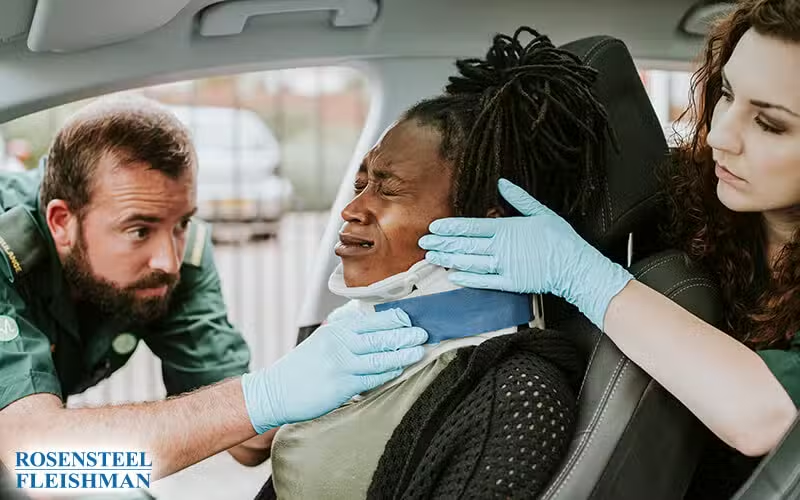
Minor property-damage matters can sometimes be resolved directly with the insurers. An injury claim is more likely to require legal analysis when the consequences of a mistake are greater or the facts and coverage are contested.
Consider speaking with an attorney if:
- Your injuries require medical treatment, prevent you from working, or may cause lasting limitations.
- The other driver or insurer claims that you contributed to the accident.
- An adjuster requests a recorded statement, a broad medical authorization, or a quick settlement and release.
- The insurer denies the claim, delays a decision, or makes an offer that does not appear to include documented losses.
- The at-fault driver has no insurance or may not have enough insurance to cover the harm caused.
- The collision involves a tractor-trailer, delivery vehicle, rideshare driver, employer, government vehicle, or multiple drivers.
- There may be evidence that needs to be preserved, such as surveillance footage, vehicle data, electronic records, or commercial driving records.
- A family member died as a result of the collision.
You do not have to know whether you have a case before calling. During a free consultation, our legal team can review the basic circumstances, identify questions that require further investigation, and explain whether representation may be appropriate.
"Rosensteel Fleishman did a great job handling my case for me. They made everything easy while getting me the compensation I deserved. If you’re looking for a car accident lawyer, look no further!"
Abigail Moss - Google 5.0 Review
Jun 29, 2024
Charlotte and Mecklenburg County Crash Risks
The North Carolina Department of Transportation reported 37,228 crashes in Mecklenburg County during 2024. Charlotte’s combination of local commuter traffic, commercial vehicles, and interstate travel creates frequent points of conflict on roads such as I-77, I-85, I-485, Independence Boulevard, and South Tryon Street.
Statistics provide local context, but they do not establish fault in an individual case. Determining responsibility requires examining the drivers’ actions, traffic controls, roadway conditions, witness accounts, vehicle damage, video, and other available evidence.
For detailed statewide crash reports, see the North Carolina Department of Transportation publication: North Carolina Traffic Crash Facts
Car Accident Cases We Handle

Rosensteel Fleishman represents people injured in many types of motor vehicle collisions, including:
Rear-end collisions
T-bone and side-impact crashes
Intersection accidents
Head-on and wrong-way collisions
Rollover accidents
Speeding and reckless-driving crashes
Red-light and stop-sign accidents
Distracted-driving accidents
Multi-vehicle accidents
Drunk- and impaired-driving accidents
Uninsured and underinsured motorist claims
Chain reaction crashes
The type of collision is only one part of the claim. Our attorneys examine what each driver was doing before the impact, whether traffic laws were violated, what physical and electronic evidence is available, and which insurance policies or responsible parties may provide compensation.
How Much Compensation Can I Recover After a Charlotte Car Accident?

There is no formula that determines the value of every car accident claim. Compensation depends on the injuries and losses that can be established, the strength of the liability evidence, the available insurance or other assets, and how North Carolina law applies to the facts.
Economic Losses
Economic damages address measurable financial harm. Depending on the case, they may include:
- Emergency care, hospital treatment, physician visits, therapy, medication, and medical equipment
- Reasonably necessary future treatment and care
- Wages lost while recovering or attending medical appointments
- Reduced earning capacity when an injury affects the ability to work in the future
- Vehicle damage, loss of use, and other accident-related property losses
- Other documented out-of-pocket expenses caused by the collision
Noneconomic Losses
Not every consequence appears on a bill or pay stub. A claim may also include the physical pain, emotional effects, inconvenience, disability, scarring, and loss of enjoyment of life caused by the injury. These damages require evidence showing how the condition changed the person’s daily activities, relationships, and independence.
Factors That May Affect the Value of a Claim
Several factors may increase or limit the value of a car accident claim, including:
- The clarity of the evidence establishing fault
- Whether contributory negligence is alleged
- The nature, severity, and permanence of the injuries
- The treatment received and the support for future medical needs
- The effect on employment and future earning ability
- The consistency of the medical and other documentation
- The amount and type of insurance coverage available
- Whether more than one person or business is legally responsible
An early offer may arrive before the full medical outlook or available coverage is understood. Accepting a settlement generally requires signing a release that ends the claim, so the consequences should be considered before the agreement is finalized.
Punitive Damages in Limited Cases
Punitive damages are not available in an ordinary negligence claim simply because a crash caused serious harm. Under North Carolina law, they require proof of an aggravating factor such as fraud, malice, or willful or wanton conduct. They may become an issue in some impaired-driving or similarly egregious cases, but their availability depends on the specific evidence.
"Someone else hitting you in a car accident is a very upsetting, overwhelming, painful, and scary experience. They made the whole process of pursuing compensation for damages easy. Thank you!"
Andrea White - Facebook 5.0 Review
Oct 9, 2025
North Carolina Laws That Impact Your Auto Accident Claim
Several North Carolina rules can have a major effect on whether compensation is available. The summaries below provide general information, but the facts and deadlines in an individual case should be reviewed separately.
Statute of Limitations for Filing a Car Accident Lawsuit
North Carolina generally allows three years to file a lawsuit seeking damages for personal injury or property damage caused by negligence. A wrongful death action is generally subject to a two-year limitations period measured from the date of death.
Exceptions and shorter notice requirements may apply, including in some matters involving government entities, minors, legal incapacity, or other unusual circumstances. Waiting also creates practical risks because video may be erased, vehicles may be repaired, and witnesses’ memories may fade. Do not rely on a general deadline to determine the last day for a particular claim.
North Carolina’s Contributory Negligence Rule
North Carolina follows the doctrine of contributory negligence. In many negligence cases, a person who is found to have contributed to the injury may be barred from recovering damages. The party asserting contributory negligence has the burden of proving the defense.
An allegation is not the same as proof. Insurers may argue that an injured driver was speeding, following too closely, distracted, or could have avoided the collision. Those assertions should be tested against the physical evidence, witness accounts, traffic laws, and the circumstances as a whole. Other legal doctrines may also matter, which is why fault questions require a fact-specific analysis.
Required Automobile Liability Coverage
For North Carolina automobile policies issued or renewed on or after July 1, 2025, the minimum liability limits are:
- $50,000 bodily injury liability per person
- $100,000 bodily injury liability per accident
- $50,000 property damage liability
Older policies may be governed by the prior 30/60/25 minimum limits until renewal. The minimum policy may not be enough to cover the losses caused by a severe injury or a collision involving several injured people.
Uninsured and Underinsured Motorist Coverage
Uninsured motorist coverage may apply when the responsible driver has no applicable liability insurance. Underinsured motorist coverage may provide an additional source of recovery when the at-fault driver’s coverage is insufficient for the injuries and losses involved.
North Carolina made additional UM/UIM changes effective for policies issued or renewed on or after July 1, 2025. The policy language, applicable limits, household policies, vehicle involved, and payments from other coverage can all affect the analysis. Notify the appropriate insurers and review the policy before resolving the liability claim or signing a release.
How Much Does It Cost to Hire an Auto Accident Attorney?
Rosensteel Fleishman handles accepted car accident claims on a contingency-fee basis. This means the client does not pay an upfront attorney’s fee or hourly legal bills. The firm receives the agreed percentage of compensation recovered through a settlement or verdict. If no compensation is recovered, the client does not owe an attorney’s fee.
Attorney fees and case expenses are different. Expenses may include charges for medical records, filing fees, depositions, expert witnesses, and other costs required to investigate and pursue the claim. Before representation begins, the written agreement will explain the contingency percentage, how expenses are handled, and how fees and expenses are calculated from any recovery.
The initial consultation is free and does not obligate you to hire the firm. You can discuss the fee agreement and ask questions about possible expenses before deciding whether to proceed.
Frequently Asked Questions About Charlotte Car Accident Claims
After a car accident in Charlotte, it is common to have questions about your rights, your legal options, and what steps to take next. The answers below address some of the questions people frequently ask after a crash and provide general information about how car accident claims are handled in North Carolina.
What Is the Average Settlement for a Car Accident in North Carolina?
There is no average settlement amount because every car accident case depends on injuries, liability, and financial impact.
Medical costs, lost income, long-term effects, and available insurance coverage all influence what compensation may be available.
How Long Do I Have to File a Lawsuit After a Charlotte Car Accident?
In most North Carolina car accident injury cases, you have three years from the date of the crash to file a lawsuit.
If this deadline is missed, the right to pursue compensation is typically lost, even if the injuries are serious or long-lasting.
Who Can Be Held Liable for My Car Accident Injuries?
One or more parties may be held liable for a car accident depending on how the crash occurred and who contributed to it.
Liability can include another driver, multiple drivers in a chain-reaction collision, or other parties whose actions played a role, and determining responsibility requires reviewing evidence, crash details, and North Carolina law.
Can I Recover Compensation If I Am Partially at Fault?
North Carolina follows a contributory-negligence rule. In many cases, an injured person who contributed to an accident may be barred from recovering compensation. However, an allegation of fault is not the same as proof. The evidence should be reviewed carefully before accepting an insurer’s claim that you were partially responsible.
What Happens If I Am Hit by an Uninsured Driver?
You may still be able to recover compensation through uninsured or underinsured motorist coverage on your own auto policy.
These claims can involve complex insurance rules, so it is important to understand your coverage and options before accepting any decision from an insurer.
What Happens If I Do Not Have Auto Insurance?
Not having auto insurance does not automatically prevent you from seeking compensation if another driver caused the accident.
However, your lack of coverage can complicate the claim and may affect how insurers evaluate liability and damages under North Carolina law.
Should I Speak With the Insurance Company Before Hiring a Lawyer?
You are not required to speak with the insurance company before consulting a lawyer.
Statements given early can affect your claim, so it is often safer to understand your rights first.
Call Our Charlotte Car Accident Lawyers for a Free Consultation Today
If you were injured in a collision, you may be unsure who was legally responsible, which insurance policies apply, or whether an offer accounts for the losses the accident caused. Rosensteel Fleishman can review the circumstances, answer your questions, and explain whether legal representation may help.
The consultation is free and carries no obligation. If the firm accepts your case, there is no upfront attorney’s fee, and an attorney’s fee is owed only if compensation is recovered.
Call 704-714-1450 or send us a message to speak with our Charlotte legal team.




