
After a serious truck collision in Charlotte, it is common to feel overwhelmed by everything that follows. Emergency responders, medical evaluations, insurance calls, and missed time at work can quickly create stress and uncertainty. Many people are unsure what steps to take next or how their injuries may affect their long term stability. Questions about […]
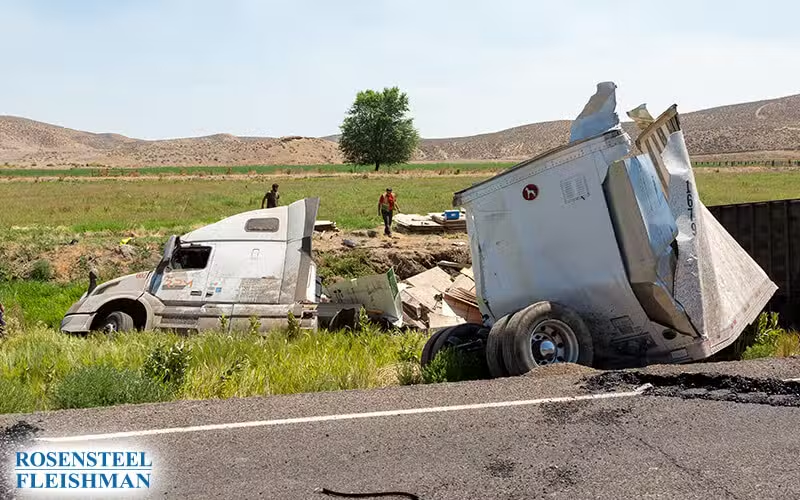

After a serious truck accident, most people focus first on the visible damage and the immediate medical concerns. What often receives less attention at the beginning is the long term impact of a back injury. Pain can intensify days after the crash. Diagnostic tests begin. Appointments multiply. Medical terminology becomes overwhelming. At that stage, questions about how those records affect an injury claim start to surface.
Back injuries are among the most complex conditions arising from a truck accident. Spinal discs, nerves, ligaments, and surrounding muscles all interact in ways that are not always obvious on a simple X ray. When insurance companies review a claim, they look closely at how clearly the medical documentation ties the injury to the collision. A Truck Accident Attorney for Back Injuries evaluates those records carefully to ensure that the full medical picture is accurately presented.
Understanding how medical evidence and expert analysis shape a claim can help injured individuals make informed decisions. Clear documentation does not just support a diagnosis. It directly affects how insurers assess responsibility, future treatment costs, and financial recovery.
How Medical Records Influence a Back Injury Claim
Medical records form the foundation of any truck accident injury claim. These documents tell the story of what happened physically after the collision. Emergency room notes, imaging results, surgical reports, physical therapy records, and physician observations each provide a piece of the overall narrative.
When reviewing these materials, legal professionals look beyond the diagnosis itself. They assess whether the records consistently describe symptoms, whether the timing of treatment aligns with the accident, and whether physicians clearly connect the injury to the crash. Gaps in care or vague language can create opportunities for insurance carriers to question the severity of the condition.
Back injuries often require ongoing evaluation. MRI scans may reveal disc herniations, spinal stenosis, or nerve compression. Treatment plans may include injections, rehabilitation, or surgery. Each recommendation carries financial implications, particularly if future care is likely. Careful analysis of medical documentation ensures that projected costs are not overlooked.
Key Medical Details That Carry Weight
Certain aspects of medical documentation tend to have a stronger impact during claim evaluation:
- Diagnostic imaging that identifies structural damage
- Physician opinions connecting the injury to the collision
- Documented functional limitations such as restricted mobility
- Recommendations for long term treatment or surgical intervention
- Clear notes regarding work restrictions or disability status
Consistency across these records strengthens credibility. When symptoms, imaging results, and treatment plans align, it becomes more difficult for insurers to argue that the injury is minor or unrelated.
The Role of Expert Reports in Truck Accident Cases
Medical records alone may not fully explain how a truck accident caused or worsened a spinal injury. In many cases, expert reports provide additional clarity. These reports often come from orthopedic surgeons, neurologists, accident reconstruction professionals, or vocational analysts.
Expert analysis helps interpret technical findings in practical terms. For example, a medical expert may explain how the force of a commercial truck collision can compress spinal discs or cause nerve damage. An accident reconstruction professional may describe the mechanics of impact and how that force transferred through the body. These explanations help bridge the gap between raw medical data and real world consequences.
In truck accident claims, insurance carriers frequently examine whether a back injury could have predated the crash. If imaging shows degenerative changes, an expert may clarify how trauma aggravated a previously stable condition. That distinction can significantly influence the outcome of a claim.
As one Charlotte attorney, Corey Rosensteel, has explained, “Medical records provide the foundation, but expert review often brings clarity to how and why an injury occurred. Clear explanation matters when evidence is being evaluated.”
For those researching their options after a serious collision, reviewing available accident claim guidance in Charlotte can also provide helpful context about how documentation and expert analysis fit into the broader process.
How Expert Opinions Strengthen Financial Projections
Beyond proving causation, expert reports often address long term impact. A vocational analyst may evaluate how chronic back pain limits earning capacity. A life care planner may estimate future treatment expenses. These assessments are especially important when injuries affect a person’s ability to return to physically demanding work.
Without expert support, projected costs may appear speculative. With structured analysis, however, future losses can be documented in a reasoned and measurable way. That level of detail supports fair evaluation during settlement discussions and, if necessary, in court.
Common Challenges in Back Injury Claims After a Truck Accident
Back injury claims frequently face scrutiny. Pain levels can be difficult to measure objectively, and imaging results do not always capture the full extent of nerve involvement or soft tissue damage. Insurance companies may argue that symptoms are exaggerated or unrelated to the crash.
Delayed onset of pain is another issue. It is not unusual for inflammation and nerve irritation to intensify days after a collision. When treatment does not begin immediately, insurers may question causation. Careful documentation of symptom progression becomes essential in these situations.
Preexisting conditions also complicate matters. Many adults show some degree of spinal degeneration on imaging. The legal question is often whether the accident caused new damage or aggravated an existing condition. Clear medical opinions and consistent treatment records help address these arguments directly.
Financial considerations further add to the complexity. Back injuries can require extended rehabilitation, surgical procedures, or long term pain management. Missed work, reduced earning ability, and ongoing medical costs can create significant economic strain. A structured review of records and expert findings ensures these impacts are fully considered during claim evaluation.
Insurance Review and Documentation Strategy
Insurance adjusters typically review claims with close attention to documentation detail. They assess the timing of medical visits, compare reported symptoms to imaging results, and evaluate whether treatment appears proportionate to the injury.
An organized presentation of records helps reduce disputes. When documentation clearly connects the collision, diagnosis, and recommended treatment, it limits opportunities for insurers to minimize the claim. Thorough preparation often leads to more productive negotiations and fewer misunderstandings.
Understanding Legal Review in Complex Injury Cases
After a serious truck accident, individuals often feel overwhelmed by paperwork and medical terminology. A structured legal review provides clarity. It involves organizing records, consulting with appropriate experts, and assessing how the evidence aligns with North Carolina injury law.
Local context also matters. State specific rules regarding liability and deadlines can influence how a claim proceeds. Reviewing documentation within that framework ensures procedural requirements are met while evidence remains clear and consistent.
In Charlotte, Rosensteel Fleishman approaches these cases by focusing first on the medical foundation. Our role is to examine the documentation carefully, identify areas requiring clarification, and communicate with experts when needed. The goal is not aggressive positioning, but clear presentation of facts supported by evidence.
Clarity Matters When Questions Arise
Complex back injuries often create uncertainty about next steps. Understanding how medical records and expert reports influence an injury claim can reduce confusion and help individuals evaluate their options. For those seeking straightforward information, Rosensteel Fleishman can provide guidance based on a careful review of the documentation. Questions about the process can be discussed by calling 1 704 714 1450, allowing individuals to make informed decisions grounded in evidence rather than assumption.
Additional Trucking Accidents Articles
How Truck Accident Claims Address Head Injury Damages
A serious truck accident can leave more than visible injuries. When a head injury is involved, the uncertainty often runs deeper. Symptoms such as headaches, memory gaps, dizziness, or mood changes may not fully appear until days after the collision. At the same time, medical bills begin arriving and insurance companies start asking questions. It […]
Understanding Your Legal Options After a Truck Driver Negligence Crash
After a serious collision involving a commercial truck, most people are left with more questions than answers. Medical appointments begin piling up, insurance companies start calling, and it becomes difficult to know what steps actually protect your financial and physical recovery. Truck crashes are rarely simple events. They often involve corporate carriers, federal safety rules, […]
How Head Injury Claims Are Evaluated After a Charlotte Truck Accident
After a serious truck accident involving a head injury, life can quickly feel uncertain. You may be dealing with headaches that linger, memory lapses that are hard to explain, or sudden fatigue that makes everyday tasks more difficult. At the same time, insurance companies may begin asking questions before you have fully understood what your […]



