Highway crashes do not always happen during predictable rush hour congestion or in the middle of heavy commuter traffic. In North Carolina, a collision may occur late at night, during an off-peak afternoon, or on a relatively open stretch of interstate where traffic conditions initially appear straightforward. Claims arising from these crashes can still become […]
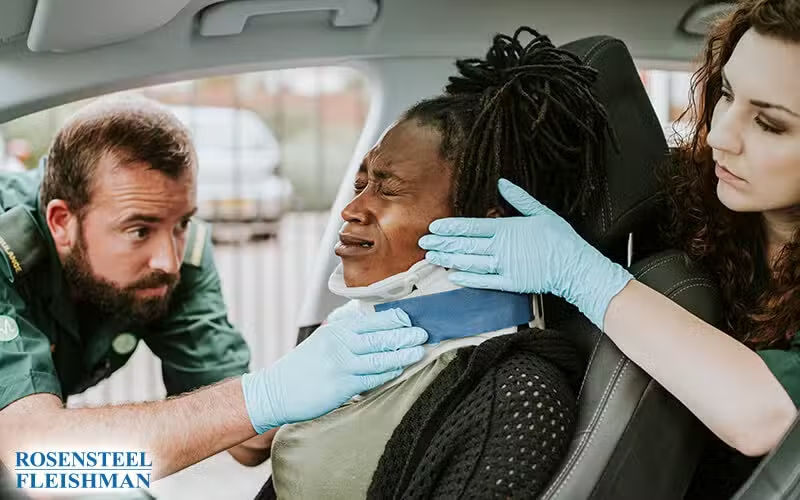

An impaired-driving crash can lead to a criminal prosecution, an insurance claim, and a civil action. Those paths may concern some of the same medical bills, lost income, and property damage, but they are not interchangeable. A person evaluating compensation should identify each proceeding, what it can address, who controls it, and how every payment is credited.
Criminal restitution and a civil injury claim arise from the same event but use different procedures, decision makers, proof records, and payment paths.
Identify the criminal case and restitution stage
G.S. 15A-1340.34 directs a sentencing court to determine restitution when a defendant is convicted of an offense. The statute ties victim status to direct and proximate harm from the offense. A police charge, pending DWI case, guilty plea, conviction, and restitution order are different events; none should be assumed from the others.
- Defendant name, court county, file number, charges, disposition, sentencing date, and probation status
- Prosecutor or victim-services contact, submission instructions, deadlines, hearing notices, and filed worksheets
- The loss dates and amounts requested, documents supplied, amount ordered, payment schedule, and clerk disbursements
- Any modification, appeal, probation violation, collection issue, or restitution balance
- The civil claim, every insurer, policy, coverage position, lawsuit, settlement, judgment, lien, and payment
Document losses by category
G.S. 15A-1340.35 identifies losses a restitution order may address, including medical and related professional services, rehabilitation, lost income, and property loss. It also permits the court to require admissible documentation and requires disclosure of that material to the defendant. The amount requested should therefore be traceable to records rather than a single unsupported total.
- Itemized medical bills, explanations of benefits, receipts, payment sources, balances, and dates of service
- Employer records, pay statements, schedules, tax material, disability notes, and a dated wage-loss calculation
- Vehicle estimates, photographs, valuation records, towing, storage, rental, replacement, and other property documents
- A short explanation connecting each item to the crash and separating unrelated or preexisting amounts
- A version-controlled ledger showing requested, disputed, ordered, paid, credited, outstanding, and later-adjusted amounts
Keep the civil path separate
G.S. 15A-1340.37 states that a restitution order does not eliminate the victim’s right to bring a civil action arising from the offense. It also provides that restitution paid by the defendant is credited against a civil judgment for the same victim and offense. Record actual payments, not only the amount ordered, and reconcile them before settlement or judgment calculations.
A civil claim still requires proof of responsibility, medical causation, damages, coverage, and compliance with applicable deadlines. A criminal conviction or restitution worksheet may be important, but its effect in the civil matter depends on the actual record and issue.
Do not merge compensatory and punitive questions
G.S. 1D-15 sets separate requirements for punitive damages, including liability for compensatory damages, an aggravating factor, and clear-and-convincing proof. Punitive damages should not be described as automatic because alcohol was alleged, a DWI charge was filed, or restitution was ordered. The responsible party, conduct, proof, and statutory conditions must be analyzed separately.
Reconcile payments before signing anything
Compare restitution disbursements, liability payments, medical payments coverage, health-insurance payments, property payments, wage benefits, and any other source. Determine which loss each payment addressed, whether a repayment interest or lien is asserted, and whether a proposed release affects another person, insurer, or claim. Preserve the signed agreement and final distribution ledger.
The related impaired-driving crash guide explains the broader criminal-and-civil evidence map. This page owns the narrower restitution and payment-reconciliation question.
Rosensteel Fleishman Car Accident & Injury Lawyers provides information about North Carolina car-accident claims involving an impaired driver. Each available path should be evaluated from the actual criminal, insurance, medical, and civil records.
Sources
Additional Car Accidents Articles
Left Turn Gap Judgment Errors When Visibility or Road Design Plays a Role
What happens when a driver begins a left turn and another vehicle suddenly changes lanes? The available opening can disappear almost instantly. In Charlotte traffic, this type of conflict may occur near multilane intersections where drivers must monitor oncoming vehicles, traffic signals, pedestrians, and vehicles moving between lanes at the same time. These crashes can […]
Multi Policy Insurance Considerations When One Policy Does Not Cover Every Loss
Insurance coverage after a serious car accident is not always limited to one policy. A collision may involve liability coverage, underinsured motorist coverage, medical payments coverage, an employer’s commercial policy, or another source of compensation. Identifying each applicable policy can affect how losses are documented, how negotiations develop, and whether a proposed resolution fairly reflects […]
What Happens When Vehicle Damage Appears Later Despite an Initial Inspection
Damage found days or weeks after a collision can complicate an insurance claim, especially when the cause of the crash or responsibility for the repairs remains disputed. A vehicle may look drivable during an initial roadside review in Charlotte, yet later show suspension problems, electrical faults, alignment issues, or damage hidden beneath exterior panels. When […]