
A car accident claim can look straightforward at first, but the picture often becomes clearer as documents, medical information, repair findings, and witness accounts develop. For people dealing with a crash in Charlotte, the amount of information available during the first few days may be very different from what is known several weeks later. That […]
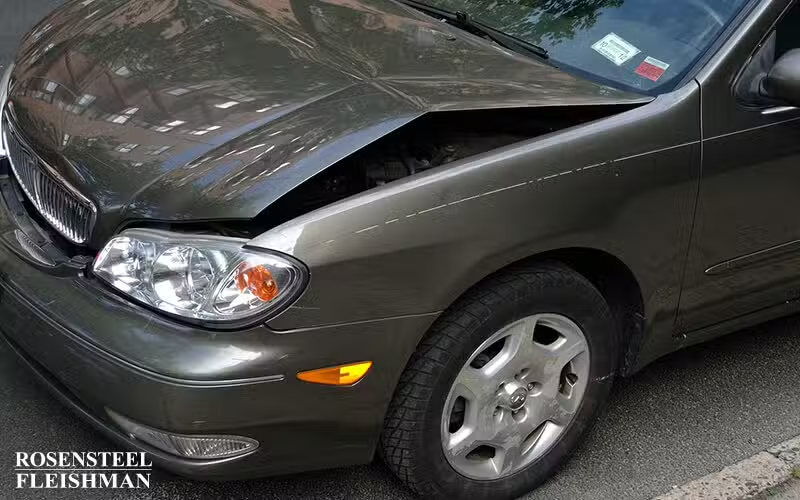

A damage bill from a rental-car company can contain several different demands: repair costs, towing, storage, a charge for time the car could not be rented, or other fees. Before treating the total as an agreed debt or assuming insurance will pay it, identify what each charge represents and which agreement or coverage provision the company relies on.
This guide focuses on reviewing a rental company's damage demand after a North Carolina crash. The demand is separate from determining fault for the collision, evaluating an injury claim, or choosing legal representation.
Confirm the vehicle, rental period, and person making the demand
Match the bill to the rental agreement, reservation, vehicle identification information, pickup and return dates, and incident number. Identify whether the demand came from the rental company, its claims department, an insurer, or another organization acting on its behalf.
If a message requests payment through an unfamiliar channel, verify the contact using the company's established contact information. Keep the message and attachments. Do not rely solely on the sender's display name or assume that an unexplained charge relates to your rental.
Collect the checkout inspection, return inspection, photographs you already have, incident report, and any record showing when the company took the vehicle back. Note which records you do not have and request copies. The absence of your own photograph does not prove that the company's account is accurate or inaccurate.
Ask for an itemized explanation
A single total can hide several separate disagreements. For each charge, request the calculation, the supporting document, and the rental-agreement term said to make you responsible.
- Repairs: Request the estimate or invoice and photographs identifying the damage being charged. Ask whether the figure is an estimate, an amount already paid, or a revised demand.
- Vehicle value: If the demand is based on a total loss or reduced value, request the valuation and an explanation of how credits or recoveries were applied.
- Loss of use: Ask which dates and rate were used and what supports the period claimed. Do not assume the daily rental rate on your reservation automatically establishes the amount owed.
- Towing or storage: Ask for the provider's records, dates, location, rate, and who authorized the service.
- Administrative or other fees: Ask what service or loss the fee covers and where it appears in the agreement.
- Credits: Identify deposits, card charges, insurance payments, refunds, or other amounts already applied to the demand.
These requests help make the dispute understandable. They do not establish that every requested record must be produced through an informal inquiry or that an unsupported-looking charge can simply be ignored.
Read the damage-waiver documents separately from insurance
North Carolina G.S. 66-201 defines a collision damage waiver as an agreement, purchased for a charge, under which a rental company waives specified claims against the renter for damage to the vehicle. Review the actual waiver, acceptance or rejection record, and any conditions the company says were not met.
The Federal Trade Commission's rental-car guidance distinguishes rental coverage options and waivers and explains that personal insurance, card benefits, or employer coverage may also be relevant. A waiver for damage to the rented car is not a substitute for evaluating an injury claim or liability to another person.
If a waiver was purchased but the company still seeks payment, ask it to identify the precise reason and agreement language. If an insurer or card-benefit administrator may cover the demand, obtain its current claim instructions and document requirements. Do not assume a benefit applies merely because the rental was paid for with a particular card.
Separate a charge dispute from a fault dispute
You may dispute the collision account, the connection between the crash and a damaged part, the price of a repair, or the company's interpretation of the agreement. Identify each issue separately. “The other driver caused the crash” does not by itself explain whether a particular fee is supported or which organization should handle it.
For example, a hypothetical demand may include both a repair to the impact area and an unexplained charge for damage elsewhere on the vehicle. Ask for the inspection timeline and evidence for the second item. Do not describe it as preexisting damage unless the records support that conclusion.
The broader guide to rental-car crash reporting and coverage questions explains how the rental agreement, other driver's claim, and possible policies fit together. Keep the itemized demand available when discussing those questions.
Keep a written response and track unresolved items
Use the company's designated dispute channel. Identify the rental and claim numbers, list the specific charges questioned, attach relevant records, and state what explanation or correction you are requesting. Keep a copy and note any acknowledgment or response date.
Do not assume that requesting records pauses a payment deadline, collection activity, policy notice requirement, or court deadline. If the demand includes a deadline or you receive legal papers, obtain advice about that document promptly. A complaint or customer-service inquiry is not a substitute for responding through a required legal process.
If the dispute is resolved, keep the final itemization and written terms showing what the payment or adjustment settles. Check whether an agreement addresses only the rental-company charge or also purports to affect other claims.
When a rental-company demand intersects with an injury claim or disputed insurance coverage, a car accident consultation about a rental-vehicle claim with Rosensteel Fleishman can help identify the documents and legal questions requiring review. The useful starting point is a clear account of the demand and your specific concerns, not a promise that every charge will be removed.
Additional Car Accidents Articles
Counteroffers in Accident Claims Based on Changes in Medical Prognosis
How should an accident claim change when a doctor gives a different outlook than expected? That question can become important when an injury initially appears temporary but later requires additional treatment, testing, therapy, or time away from work. A settlement discussion is based on the information available at that moment, so meaningful changes in the […]
How Car Accident Claims Are Reviewed When Accounts of the Crash Differ
What happens when two drivers remember the same collision differently? After a crash in Charlotte, North Carolina, conflicting descriptions are common because each person may have seen only part of what happened, reacted within seconds, or remembered certain details more clearly than others. Insurance companies generally do not rely on a single statement alone. They […]
Vehicle Inspection Reports After Crash Events with Suspected Hidden Damage
Crash-related vehicle damage is not always obvious from the outside. A car may still start, steer normally, and show only limited cosmetic damage while problems involving the frame, suspension, steering components, sensors, or alignment remain out of sight. A careful inspection can help turn those uncertainties into documented findings that drivers, repair shops, and insurers […]



