
Lane markings, turning movements, and crosswalk locations can help explain a truck collision, but they cannot establish an injury. Clear records help separate crash circumstances from documented losses.
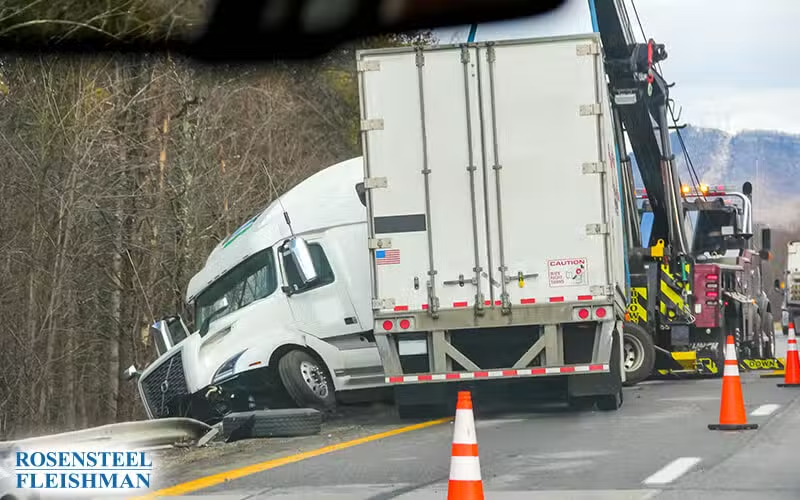

Insurance companies do not always agree on every detail after a truck crash, and that can make the settlement process feel uncertain. In many cases, the path toward resolution depends on finding enough reliable information to narrow the dispute, explain what likely happened, and give each side a clearer view of the claim.
Why Video Evidence Can Matter Early
Truck accident claims often involve several moving parts, including driver statements, police reports, vehicle damage, medical records, company policies, and sometimes conflicting accounts from witnesses. Dashcam footage in truck claims can help bring those details into sharper focus by showing traffic movement, lane position, speed patterns, braking, road conditions, or the moments leading up to impact.
Even when footage does not answer every question, it may help support a practical resolution. Some claims reach closure through compromise rather than full agreement on every point, and video evidence can make those discussions more grounded. When people understand what the footage shows, what it does not show, and how it fits with the injury evidence, they are often better prepared to make informed decisions.
Article Brief
- Dashcam video may help clarify how a truck collision occurred.
- Footage can affect settlement discussions by reducing uncertainty.
- Video evidence should be reviewed alongside medical records, crash reports, and witness accounts.
- Early action can matter because video files may be overwritten, lost, or difficult to obtain later.
How Video Evidence Can Shape Truck Accident Claim Discussions
One of the biggest challenges after a truck accident is that the story of the crash may change as more information comes in. A driver may remember one thing at the scene, a witness may describe another, and the physical evidence may point to something more detailed than either person noticed in the moment. When a person is also dealing with pain, appointments, missed work, and insurance calls, it can be hard to sort out what matters most.
This is where it may help to consult an truck accident attorney about your injury, especially when video footage may exist but has not yet been preserved. Trucking companies, commercial drivers, nearby businesses, rideshare vehicles, and other motorists may have cameras that captured parts of the incident. The sooner those sources are identified, the better the chance that useful footage can be requested before routine deletion or data overwriting occurs.
Video can be useful because it gives claim discussions a more concrete starting point. For example, footage might show whether a truck drifted from its lane, failed to slow with traffic, made a wide turn, or stopped suddenly. It may also show whether another vehicle cut into the truck’s path, whether traffic signals were visible, or whether weather and road conditions played a role. These details can influence how liability is evaluated, but they still need to be interpreted carefully.
Video evidence can also affect how injuries are understood. A crash may look minor in a photograph but appear more forceful on video, especially if the footage shows rapid deceleration, a secondary impact, or the way a smaller vehicle was pushed or spun. That context may help explain symptoms such as neck pain, back pain, headaches, dizziness, shoulder injuries, knee trauma, or worsening pain that develops after the scene has cleared. Still, video does not replace medical documentation. It works alongside treatment records, diagnostic findings, and the injured person’s description of how symptoms affect daily life.
What Dashcam Footage May Show and What It May Miss
Dashcam footage can show important details, but it rarely tells the complete story by itself. A front-facing camera might capture traffic ahead but miss what happened beside or behind the truck. An interior camera may show whether a driver was distracted, but not always whether the truck was properly maintained. Some systems record audio, speed, braking, or driver behavior, while others only capture a narrow visual angle.
Because of those limits, footage should be reviewed as one piece of a larger claim picture. A police report may identify citations or witness names. Vehicle inspections may reveal mechanical concerns. Medical records may connect the collision to specific injuries. Phone records, delivery schedules, electronic logging data, and truck maintenance documents may also become relevant depending on the facts.
A realistic Charlotte scenario shows how this can play out. Imagine a driver traveling near I-85 during heavy afternoon traffic when a commercial truck moves over and clips the side of their vehicle. The truck driver says the car was in a blind spot, while the injured driver says the truck changed lanes without enough room. Dashcam footage from the truck may show the lane change, but a nearby vehicle’s camera may show traffic conditions behind the truck. Together, those clips could make the claim easier to evaluate, even if the parties still disagree about some details.
This matters during settlement talks because uncertainty often affects value. If the insurer believes liability is unclear, it may make a lower offer. If video supports the injured person’s account, it may help move the discussion toward a more realistic assessment. On the other hand, if the footage raises questions, it may help the injured person and their legal team plan more carefully before responding to an offer.
Can Dashcam Footage Help Prove Fault in a Truck Accident
Yes, dashcam footage may help prove fault when it clearly shows how the collision happened. It can show traffic signals, lane changes, following distance, sudden braking, unsafe turns, or driver distraction. However, fault is usually based on the full evidence record, not video alone.
A strong claim often connects the footage to other facts. For instance, if a video shows a truck following too closely before impact, medical records may help explain why the injured person developed back pain or headaches afterward. If footage shows a hard impact at an intersection, witness statements and vehicle damage may help confirm the timing and direction of the crash.
How Long Do Trucking Companies Keep Dashcam Video
There is no single answer because retention practices can vary by company, camera system, and internal policy. Some footage may be kept for a short time unless an incident triggers preservation. Other systems may save clips tied to braking, swerving, impact, or driver alerts.
That is why timely action can be important. If a claim may involve a commercial truck, requests to preserve video should be made as early as possible. Waiting too long can create problems if footage is deleted through normal business practices, lost during system updates, or overwritten by newer recordings.
What If the Footage Does Not Show the Entire Crash
Partial footage can still be useful. It may show traffic speed, the truck’s position, weather conditions, brake lights, or what happened seconds before the impact. Even a short clip can help confirm or challenge parts of a statement.
At the same time, partial footage can be misleading if viewed without context. A clip that begins too late may miss the event that caused the crash. A camera angle may make distances look different than they were. Careful review helps prevent one incomplete video from being treated as the whole story.
Why Careful Review Can Make a Difference Before Settlement
A truck accident settlement is rarely just about one document or one piece of footage. It is usually about how the evidence fits together. Dashcam video may make certain facts clearer, but the strength of a claim also depends on medical care, injury progression, work disruption, repair records, insurance coverage, and the credibility of each side’s account.
For injured people, thoughtful planning can reduce the risk of settling before the full picture is known. Pain may become more noticeable days later. A doctor may recommend imaging or follow-up treatment. Missed work may continue longer than expected. If settlement talks happen before these details are understood, the final agreement may not reflect the real impact of the crash.
Rosensteel Fleishman Law Firm works with people in Charlotte, NC who are trying to make sense of truck accident claims and the evidence involved. Corey Rosensteel and Matthew Fleishman approach these cases with practical attention to the facts, including how video, records, and injury documentation may affect the settlement process. For a neutral conversation about a truck accident claim, the firm can be reached at 1-704-714-1450.
Making Decisions With a Clearer View of the Evidence
Before responding to an insurance offer, it can help to ask whether the available evidence has been fully reviewed. That includes whether dashcam footage exists, whether it has been preserved, whether other cameras may have captured the scene, and whether the medical record explains the injuries in a clear way. These questions are not about making the process more complicated. They are about making sure important facts are not missed.
A clear review can also make compromise more informed. Settlement does not always mean that every detail has been resolved perfectly. It often means both sides have enough information to understand the risks, weigh the evidence, and decide whether closure makes sense.
When truck accident footage is handled carefully, it can provide more than a replay of the crash. It can help clarify decisions, support fairer discussions, and give injured people a steadier path forward during a process that often feels difficult to navigate.
Additional Trucking Accidents Articles
Living With Permanent Disabilities After a Truck Crash Involving Multiple Vehicles
A lasting disability affects more than a claim file. Learn how to connect the collision timeline with documented changes in work, household responsibilities, and expenses without treating assumptions as evidence.
Reducing Reinjury Risk With Physical Therapy After a Truck Crash in Charlotte
Concerns about reinjury involve medical questions that claim records cannot answer. Learn how to organize physical therapy documentation, practical expenses, and scene evidence without drawing unsupported conclusions.
When Mobility Loss After a Charlotte, NC Truck Crash Has No Clear Diagnosis
An unclear diagnosis does not prevent a family from recording practical changes after a truck crash. Keep observations, added expenses, and unanswered claim questions separate.



