
Clear records from outside sources can make a car accident claim easier to understand, especially when the people involved remember the crash differently or the insurance company asks for more proof. In Charlotte, a routine drive on a busy road can turn into a complicated claim when police reports, medical notes, repair estimates, traffic footage, […]
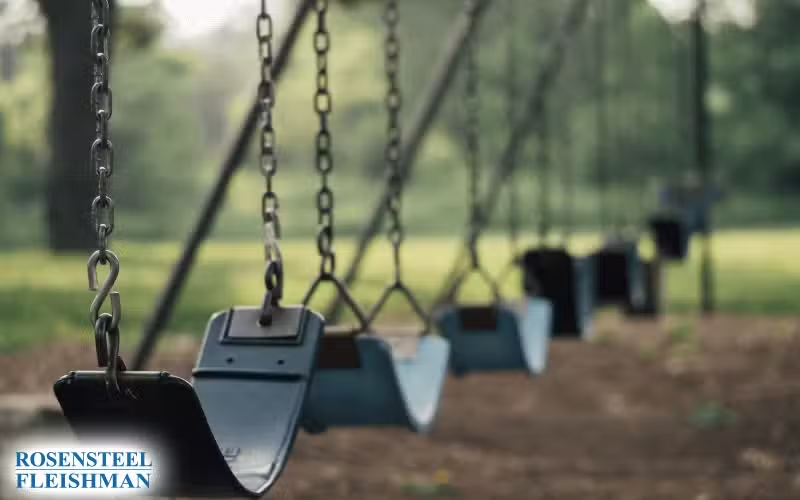

Playgrounds are a place of fun and enjoyment for many children. It is an open opportunity for them to use their imagination, make new friends, and get physical exercise. However, there are risks and hidden dangers at all playgrounds that children enjoy. According to the Center for Disease Control and Prevention, hospitals and emergency rooms see more than 200,000 children every for playground-related injuries. The vast majority of the injuries occur at schools or daycare facilities where large groups of children are expected to be supervised by a small number of adults. The CDC estimates that playgrounds have an even higher rate of injury occurrence with children than a bicycle or even automobile accidents. The astronomical rate at which children seem to sustain injuries on playgrounds means that it is vital for parents to be equipped with the proper legal knowledge should a lawsuit need to be pursued.
Injuries on playgrounds can, of course, occur because of the recklessness of a child, but there are several common causes of playground injuries that may leave certain parties open to liability. When there is poor maintenance of equipment, poor design of playground equipment, or lack of adequate supervision, other parties may be liable for any injuries sustained by children.
Many schools utilize a playground that can be several years old, even decades old. As a result of deterioration, and constant use of playground equipment can quickly become outdated and unsafe for use. For example, screws become loose, wood rots ropes become frail, and metal rusts and becomes fatigued. The wear and tear that playground equipment goes through creates sharp edges, protruding metal fragments, or unexpectedly slippery surfaces. The design of playground equipment can also play a significant factor in the dangers presented to children. Playground equipment presents certain inherent risks such as falls no matter how safely designed and maintained the equipment may be. The designers of playgrounds would be wise to have soft landing areas for children to help minimize any role they may play in a child’s potential injuries.
On par with adequate maintenance and design is proper supervision of children while they are playing. Children rarely have the capability to accurately assess risk and realize their own limitations when playing on a playground — adults who are responsible for the supervision of children are a significant factor in the prevention of injuries. Adults who fail to take responsible steps to ensure a safe experience for a child could possibly be found liable in a negligence claim provided the child was injured as a result of the inadequate supervision.
The manner in which a child sustains their injuries be it from faulty equipment or poorly maintained equipment establishes the framework for any potential suit. The plaintiff who plans to pursue a lawsuit based on poorly designed or poorly maintained equipment will most likely name the owner of the equipment as the defendant. For public parks, the responsible party could be any local municipality. Playgrounds at schools are typically owned and maintained by the school district, and playgrounds at private schools or daycares they generally are owned by a church or other non-profit entity. All plaintiffs need to know who the potential defendant could be so they can adequately pursue legal action.
The responsible party could also be the company who designed or built the playground itself. The builders of the playground will likely not be held liable when the playground is not maintained correctly; instead, they could be open to liability when a flaw in the design leads to the injury of a child. When playgrounds and not adequately constructed, they can cause children to fall or sustain lacerations. When children are injured in this fashion, those who were responsible for constructing the playground will likely be held liable.
However, most construction companies do a good job building playgrounds, and most entities responsible for maintaining the equipment, make sure that it is safe. It is far more likely a child will sustain an injury because they were not properly supervised. When there is negligent supervision, it means there was a failure to monitor the child adequately. Adequate supervision means that the child was looked after in the same way as children of a similar age, with similar experience, participating in the same activity would have been looked after. Outside factors may play a role in determining if supervision was adequate or not. The duty of adequate supervision does not mean merely taking reasonable steps to ensure a child is kept safe during an activity such as playing on the playground. Schools and daycare facilities are responsible for supervising the environment surrounding the children to minimize threats to safety. For example, teachers should take note of how students are playing on the playground and be able to step in if it is clear that the actions of certain students may cause harm to others. The duty of adequate supervision puts the onus on the supervising adult to take all appropriate steps to eliminate any threats or dangers. The dangers of a playground can be dynamic and demanding for a teacher to supervise adequately alone. Schools are in their best interest to have as many adults as possible on the playgrounds to help spot and eliminate any potential dangers students may face.
The level of adequate supervision is determined by numerous variables, as mentioned above. School districts and daycare facilities that fail to provide adequate supervision in any given situation could cause a child to suffer an injury. If the school supervisor’s failure to watch the children leads directly to the injuries, then they will likely be held legally responsible.
When a plaintiff is pursuing damages against a school, municipality, or individual, they will be able to collect damages. The plaintiff could receive any compensation for medicals bills and rehabilitation that stemmed directly from the injury. A plaintiff could also seek to recover for pain and suffering that resulted from the injury or recovery time of the injury. Finally, in cases where the defendant was grossly negligent, or the courts feel they need to be punished; the plaintiff may be able to collect punitive damages.
If you or a loved one was injured on a playground please contact us. You will speak directly with a personal injury lawyer who can best answer your questions. There is no fee for the initial consultation.
Additional Personal Injury Articles
Highway Accident Overview for Crashes in Charlotte, North Carolina
Highway crashes often move through several stages before anyone has a clear sense of what the claim may become. After a collision on I-77, I-85, I-485, or another busy route in Charlotte, NC, the first concern is always safety and medical care, but the way people communicate afterward can also affect how smoothly the situation […]
Injury Prevention Habits Workplace Recovery for Safer Daily Work Routines
Workplace injury claims often depend on details that seem simple at first, such as where an employee was, when a task happened, and how the injury occurred. In Charlotte, those details can matter when an injured worker is trying to connect medical treatment, job duties, and reported timelines in a clear way. Location data from […]
Bone Healing Timelines Truck Accident Injuries and What Recovery May Involve
Truck accident injuries can disrupt a family’s routine in ways that are hard to predict at first. A broken bone may sound straightforward, but healing often depends on the type of fracture, the person’s overall health, the treatment plan, and whether other injuries are involved. When families in Charlotte are trying to understand medical updates, […]



