Extra breaks can change a workday without changing a paycheck. Clear records help distinguish interrupted tasks, unpaid time, and questions about responsibility for a bicycle accident.
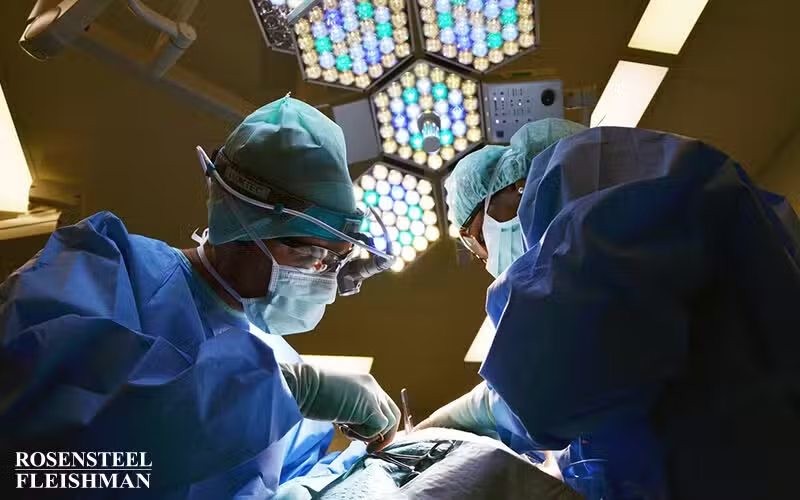

Gallbladder removal, or cholecystectomy, can be performed through laparoscopic or open surgery. The National Institute of Diabetes and Digestive and Kidney Diseases identifies injury to the bile ducts as a serious possible complication that can cause infection and require additional operations. A legal review must go beyond the fact that an injury occurred.
A bile duct injury is a recognized serious complication; its occurrence alone does not answer whether the care was negligent.
Preserve the complete preoperative and operative record
- Symptoms, diagnosis, imaging, laboratory results, prior abdominal procedures, inflammation, scarring, anatomical concerns, procedure indication, alternatives, and consent discussion
- Operative report, anesthesia record, nursing record, photographs, video, imaging, pathology, device records, medication record, and any contemporaneous description of anatomy
- How the cystic duct and artery were identified, whether anatomy became uncertain, which alternate approach or imaging was considered or used, and why the plan changed or did not change
- The first indication of a possible injury, actions taken, consultation, disclosure, transfer, drainage, repair, and referral timeline
Read the surgical guidance with its stated limits
The multi-society SAGES safe-cholecystectomy guideline discusses the critical view of safety, alternate approaches when anatomy cannot be safely identified, intraoperative biliary imaging, recognition of suspected injury, and referral to an experienced multidisciplinary hepatobiliary team. Many recommendations are conditional or based on low-certainty evidence, and the guideline does not require the same step in every operation.
For example, the guideline strongly recommends intraoperative biliary imaging when anatomy is uncertain or bile duct injury is suspected, while noting that evidence does not support one universal conclusion about routine imaging in every elective non-acute operation. The record should show the actual clinical situation and reasoning rather than assuming that the presence or absence of one technique decides the case.
Reconstruct recognition and subsequent care
- Postoperative symptoms and signs, calls, messages, examinations, laboratory work, imaging, emergency visits, admissions, and changes over time
- When bile leak, obstruction, infection, vascular injury, or another complication was considered, confirmed, communicated, and treated
- Endoscopic, radiologic, surgical, and hepatobiliary consultations; drainage, stenting, repair, revision, transfer, and follow-up records
- Additional procedures, hospitalizations, liver or biliary effects, infection, work and activity limits, expenses, and other claimed harm
Separate four questions that are often blurred
- Complication: what happened anatomically and clinically
- Standard of care: what a qualified reviewer says the applicable care required in the same or similar circumstances
- Breach: the particular act or omission alleged to have fallen below that standard
- Causation and damages: which additional injury probably resulted from that act or omission rather than from the underlying disease or an unavoidable complication
G.S. 90-21.12 states North Carolina's professional standard-of-care framework. Rule 9(j) generally requires qualified review of the available care and medical records before a complaint alleging failure to meet that standard is filed.
Use the general framework for the filing-stage questions
The related North Carolina medical-malpractice basics guide explains how injury, standard of care, causation, records, parties, and Rule 9(j) fit together.
Rosensteel Fleishman Car Accident & Injury Lawyers provides information about consulting a Charlotte medical malpractice attorney when a bile duct injury after gallbladder removal requires review of operative decisions, recognition, referral, repair, and causation.
Sources
Additional Medical Malpractice Personal Injury Articles
Handling Aggressive Drivers in Charlotte, NC While Recovering From a Crash
After a crash, another driver’s pressure should not determine your account. Keep specific records of the encounter, later concerns, and practical disruptions while separating observations from conclusions.
Can Scar Massage Help With Lasting Tightness After a Dog Bite?
Lasting tightness does not establish whether scar massage would help. Keep personal observations, existing care records, expenses, and unresolved claim questions separate.
How Evidence Is Reviewed During a Wrongful Death Case
Evidence review means checking where records came from, comparing accounts, and separating documented facts from assumptions about responsibility and losses.