
A witness’s contact details and early photographs are only part of the record. Timely follow up can help clarify what someone actually saw before unanswered questions complicate a claim.
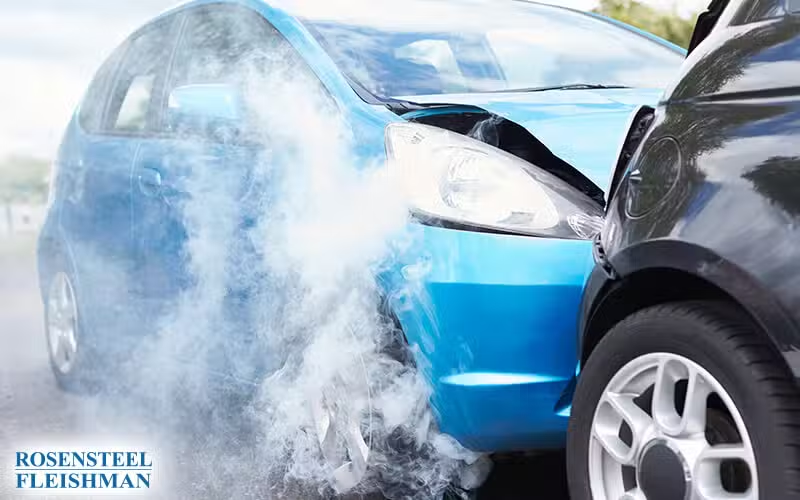

A skid mark is one piece of evidence, not a complete explanation of a crash. When reviewing a collision on roads in Charlotte, the useful starting point is the surface beneath the mark, the surrounding roadway, and when the evidence was recorded. A photograph alone should not be treated as proof of speed or fault.
To understand what a mark may show, separate visible details from conclusions. A photo may document a dark line beside a pavement patch, but it may leave unanswered which vehicle made it, when it appeared, or whether it continues beyond the frame.
When discussing skid marks and road evidence with an insurer or a car accident settlement lawyer, identify those gaps rather than filling them with guesses. Whether the records answer those questions can change the claim discussion from evaluating an explanation to gathering evidence needed to assess it.
Attorney Matthew Fleishman: "A tire mark should be considered alongside the surface, its location, and the records that connect it to the collision."
Overview
-
Record the road surface and surroundings, not just the mark.
-
Keep observations separate from estimates about speed or movement.
-
Identify missing evidence before accepting a complete crash narrative.
Connect Surface Details With the Available Records
Road conditions matter because a tire mark must be interpreted in relation to the surface where it appears. Wet pavement, loose material, surface changes, and roadway shape belong in that assessment. A mark’s length or darkness alone does not supply all of that context.
Start with moisture and material on the road. Preserve any existing photographs showing standing water, damp areas, gravel, sand, or debris near the mark. Describe what is visible without assuming that it caused a loss of traction or was present before the collision. Material photographed afterward needs a clear connection to the conditions at the time of the crash.
Next, look for changes in the pavement itself. A mark that crosses a repair patch, a rough area, or a different surface raises questions about whether its appearance remains consistent across that change. Record where the transition occurs rather than treating every interruption as proof that a driver released the brakes. If the surface was later repaired or altered, distinguish later photographs from the original scene records.
Roadway shape provides another part of the context. Curves, slopes, lane boundaries, and intersection geometry help establish where a mark lies in relation to the reported vehicle movement. A close photograph may show texture clearly while leaving that relationship unclear. Wider views and scene diagrams can provide context, but their labels, scale, and timing still need attention.
Lighting and camera position also deserve a place in the record. Shadows, glare, and the edge of a photograph may leave part of a mark difficult to see. Preserve original image files and note who took them and when, if known. Do not treat a photograph taken later under different conditions as an exact record of the crash scene.
Consider a hypothetical collision in which a driver’s photo shows a dark mark ending near a pavement patch. One account might describe that endpoint as the place braking ended, while a wider image might show that the visible line continues beyond the patch. Until the images are compared, the narrow photo leaves an incomplete narrative. Conversely, if no wider view exists, the gap should remain an acknowledged uncertainty rather than becoming a confident explanation.
These distinctions affect the flow of a claim. If scene photographs, vehicle positions, and witness accounts fit together, the discussion can focus on what they collectively support. If they conflict, the next task may be locating original images, clarifying a witness’s vantage point, or asking how a measurement was obtained. Missing road evidence does not automatically establish either party’s account.
When a proposed fault assessment depends on a particular mark, a useful question for an insurer or a lawyer for car accident is which records connect that mark to the vehicle and event. Any speed calculation also needs an explanation of its measurements and road condition assumptions. The important distinction is between a conclusion supported by connected records and one that relies on details nobody documented.
Ask What Supports the Claim Decision
Before responding to a fault explanation, organize the road evidence you already have by date and location. Keep original photographs separate from annotated copies, and identify whether each note reflects your own observation or someone else’s account. Do not enter traffic or stand in an unsafe location to fill a documentation gap.
Attorney Corey Rosensteel: "When a claim turns on a roadway detail, ask what documents that detail and what remains uncertain."
If a claim decision relies on a skid mark, ask for the explanation connecting it to the collision, including how road conditions were considered. Preserve that response with your records so you can raise specific disagreements before deciding whether to accept a proposed resolution. An unexplained line on the pavement should not substitute for a clear account of the evidence affecting your claim.
Additional Car Accidents Articles
How Witness Accounts Support Crash Injury Documentation in Charlotte
Witness statements can add context to a crash injury claim without establishing a diagnosis. Learn which details to preserve, how to handle conflicting accounts, and why small omissions matter.
How Injury Severity Affects Charlotte Dooring Accident Claims
Injury severity can change the losses involved in a dooring claim, but it does not establish fault or determine a payment by itself. Clear records help connect the incident to its practical consequences.
Does Minor Vehicle Damage Always Mean Minor Injuries?
A small repair bill does not explain every consequence of a crash. Keep vehicle evidence separate from injury records, and document changes to work and daily responsibilities without guessing about their cause.



