Responsible recordkeeping after a crash means separating observations from assumptions. Learn what to document about assistance, follow-up appointments, and practical disruptions.
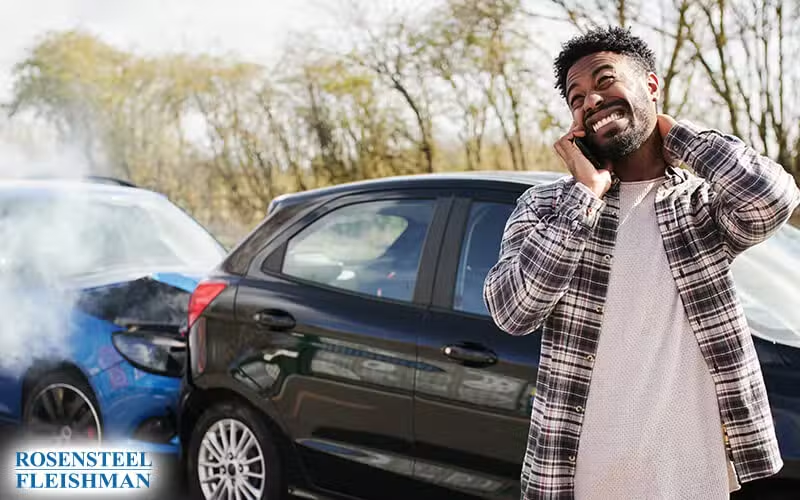

Does driving below the posted speed limit settle responsibility when fog obscures the road? It does not answer the whole question after a fog-related crash in Charlotte. A claim evaluation also needs to consider what drivers could see, how they responded to the conditions, and how their actions contributed to the collision.
Speed and visibility affect the evidence about responsibility, while documented losses help establish the amount being claimed. These are connected but separate issues. Clear evidence of financial loss does not resolve disputed fault, and evidence of careless driving does not establish the dollar amount of a claim.
The useful starting point is to separate observations from assumptions when reviewing fog driving accident factors. Whether discussing the claim with Rosensteel Fleishman Law Firm or responding to an insurer, keep measured facts, personal estimates, and unanswered questions distinct. That approach makes it easier to explain both what happened and which losses followed.
Overview
- Speed needs to be considered alongside the visibility available before impact.
- Records should connect conditions and driver conduct to the collision.
- Documented expenses, disputed responsibility, and available coverage affect a claim estimate in different ways.
Build the Claim Around Conditions and Conduct
A report that simply describes the weather as foggy leaves important questions unanswered. Was visibility consistently limited, or did the driver encounter a change? What vehicles, signals, or road markings were visible before impact? An account becomes more useful when it describes specific observations rather than treating fog as the complete explanation.
The posted speed limit is one part of that account, not a complete measure of whether a driver's conduct was reasonable under the circumstances. The relevant issue is how speed related to the available view, following distance, and opportunity to respond. Neither the presence of fog nor a driver's claim of traveling slowly establishes fault by itself.
Preserve What the Records Actually Show
Start by keeping existing photographs, original video files, witness contact information, vehicle damage records, and correspondence about the collision together. Record when each image was taken and whether it shows the conditions before, during, or after the crash. A photograph taken later may show the location clearly without establishing how much a driver could see at the time of impact.
Describe your own observations without adding precision you cannot support. If you remember seeing taillights but cannot reliably estimate the distance, record that limitation rather than supplying a number. Keep your original account when adding a later clarification so the reason for the change remains clear.
Speed estimates deserve the same care. A witness's impression, a dashboard recording, and information recorded by a vehicle are different kinds of evidence, each with limits. Where records appear to conflict, an auto accident attorney reviewing responsibility would need to distinguish actual measurements from estimates before drawing conclusions about speed in the fog.
Separate Fault From the Amount Claimed
Consider a hypothetical collision in which one driver describes an unavoidable loss of visibility and another describes following distance that left little room to respond. A recording might help establish the sequence, but it would still need to be considered alongside the other evidence. The important question is not simply whether fog existed, but whether particular conduct contributed to the crash.
Disputes about each driver's conduct matter especially in North Carolina. Under the state's contributory negligence rule, a claimant's own negligence contributing to the collision can bar recovery from another negligent party, subject to exceptions. It is therefore misleading to assume that shared responsibility simply reduces every claim by a matching percentage.
This distinction explains why two claims with similar repair bills can receive very different evaluations. Clear evidence connecting another driver's conduct to the collision may strengthen one claim, while unresolved questions about the claimant's own conduct may substantially weaken another. An allegation of fault, however, is not the same as an established finding.
Connect Each Loss to Supporting Documents
Once the responsibility questions are identified, organize the amount claimed into documented categories. Repair estimates and invoices explain vehicle costs; receipts explain transportation expenses; employer records can support claimed missed earnings. Existing medical bills and records may also document claimed injury-related losses, without requiring the claimant to draw medical conclusions.
Records should explain both the amount and its connection to the collision. For example, a rental receipt shows a charge, while repair dates help explain the period for which transportation was needed. For missed work, distinguish time lost because the vehicle was unavailable from time missed for other crash-related reasons rather than grouping every absence together.
A more complete record can support an estimate, but additional paperwork does not automatically increase a claim's value. Duplicate charges, unrelated expenses, unexplained gaps, and unsupported projections can create disputes about the requested amount. Available insurance coverage is another separate issue: the amount of a documented loss and the amount payable under a policy are not necessarily the same.
Ask What Supports the Claim Estimate
Before treating an insurer's estimate as a settled answer, ask which parts reflect documented losses and which reflect disputed responsibility. Request an explanation of any excluded expense, questioned date, or assumption about speed and visibility. A useful response addresses the specific disagreement rather than simply repeating that the collision happened in fog.
Weather should not crowd out evidence of other contributing conduct. If the claim also involves a rideshare vehicle and evidence of distraction, the issues surrounding distraction in rideshare crash claims deserve separate attention. Keep that evidence distinct from visibility observations so neither explanation substitutes for examining what the records show.
Prepare a Clear Record of Unresolved Issues
Create a short written account that identifies agreed facts, disputed facts, and missing documents. Pair each claimed expense with its supporting record, and note any estimate that remains uncertain. For a claim discussion with Rosensteel Fleishman Law Firm, this organization can keep the conversation centered on the actual points of disagreement rather than a general description of bad weather.
Attorney Matthew Fleishman: "A useful claim review separates what the records show about visibility, what remains disputed about driver conduct, and how each claimed loss is documented."
You do not need to supply a confident answer where the evidence is incomplete. The more useful next step is to identify what supports the current estimate, what could change it, and which questions remain open before making a claim decision.
Additional Car Accidents Articles
How Scene Safety Affects Charlotte Crash Documentation and Claims
Safety can limit what you document after a crash. Clear notes about timing, vehicle spacing, and scene changes help explain those limits without guessing about fault.
When an Older Driver’s Medical Condition Affects Crash Liability and Costs
A medical condition alone does not explain a crash. Connecting records to the collision and tracking bills that have not arrived helps keep fault questions separate from unresolved costs.
Overlooked Factors in Charlotte Car Accident Settlement Evaluations
A settlement evaluation involves more than adding bills. Clear records can help explain household disruption, work losses, disputed expenses, and why an offer changes as information develops.