
What happens when a cyclist and a driver remember the same crash differently? In Charlotte, that question can become important when an insurance company begins reviewing a bicycle injury claim and comparing statements from the people involved with photographs, medical records, witness accounts, and other evidence. Differences in recollection do not automatically prevent recovery, but […]
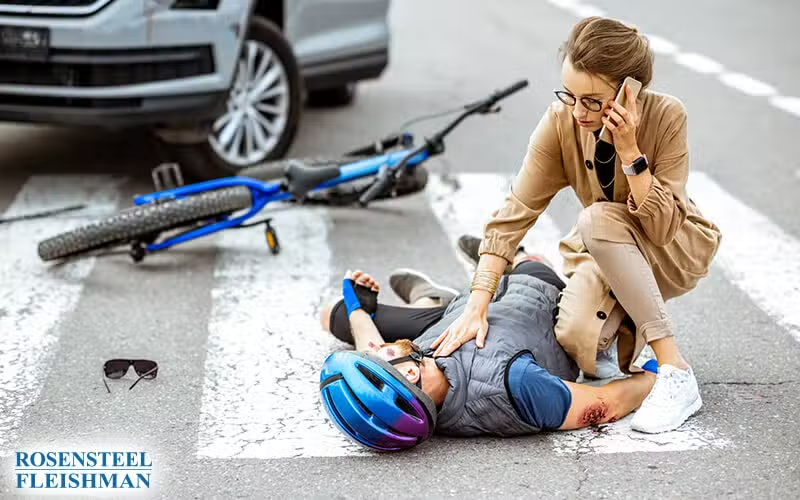

What happens when a driver says they never saw a cyclist, but the cyclist believes they were clearly visible? Questions like this often arise after bicycle crashes because visibility depends on more than whether a person was physically present on the road. Lighting, traffic, parked vehicles, weather, road design, vehicle blind spots, and the movements of everyone involved can affect what each person could reasonably see and how quickly they could react.
Cyclists still have legal protections when visibility becomes part of a disagreement about how a collision occurred. A driver's statement that a bicycle was difficult to see does not automatically resolve responsibility, just as a cyclist's belief that they were visible does not settle every factual question. Investigators, insurers, and others evaluating the incident may consider the entire sequence of events. People trying to understand how those facts can influence financial recovery may also find hiring a Charlotte, NC bike accident attorney useful when considering how evidence, injuries, and responsibility fit together. As Attorney Corey Rosensteel often emphasizes in practical terms, "the details surrounding the crash matter."
Article Brief
Visibility issues in bicycle accidents can create genuine disagreements because drivers and cyclists may experience the same roadway from very different positions. Determining what happened usually requires looking beyond individual recollections and examining lighting, traffic conditions, sight lines, physical evidence, and each person's actions before impact. Understanding those details can help injured cyclists protect their rights while making informed decisions about medical care, documentation, and a potential claim.
Why Conflicting Accounts Can Develop After a Bicycle Collision
The first moments after a bicycle crash can produce very different memories of the same event. A driver may remember checking before turning and seeing an open lane, while the cyclist may remember traveling steadily through an area where they believed they were easily visible. Neither account necessarily explains the complete situation. Perspective, timing, stress, and the physical surroundings can all affect what each person noticed.
Visibility disputes often become clearer when the collision is examined as a timeline rather than as a single instant. Several seconds before impact may reveal where the cyclist was traveling, whether a vehicle was turning or changing lanes, whether another object blocked someone's view, and how much time either person had to respond. That progression can be especially important when one side claims the bicycle appeared suddenly.
For example, imagine a cyclist traveling along a Charlotte street in the early evening while a driver prepares to turn across the cyclist's path. Parked vehicles near the intersection may partially block the driver's view until the cyclist reaches a certain point. The cyclist, meanwhile, may see the vehicle and reasonably assume the driver will remain stopped. When the vehicle begins turning, both people may later describe the collision differently. The driver may say the bicycle was impossible to see, while the cyclist may say the driver pulled directly into a clearly established path of travel.
Those accounts can both reflect what the individuals perceived, but responsibility usually requires a broader analysis. The question is not merely whether someone says they saw the other person. It can also involve whether reasonable observation, speed, positioning, signaling, lighting, and roadway awareness could have prevented the crash.
Several types of information may help clarify visibility issues bicycle accidents often present:
- Photos showing lighting, lane layout, vegetation, signs, parked vehicles, and other sight obstructions
- Video from nearby businesses, residences, traffic cameras, or vehicle recording systems
- Statements from witnesses who observed the cyclist or vehicle before the collision
- Damage patterns showing where and how the bicycle and vehicle made contact
- Records describing weather, sunrise or sunset conditions, and other environmental factors
The timing of this evidence can matter. A parked delivery truck that blocked part of an intersection may be gone an hour later. A construction barrier may be moved. Lighting conditions can change quickly around sunrise or sunset. Photographs and video collected soon after the incident may therefore provide context that later descriptions cannot recreate as accurately.
Drivers And Cyclists May Have Different Duties at the Same Moment
Bicycle collisions are sometimes discussed as though responsibility must belong entirely to one person from the beginning. Real crashes can be more complicated. Drivers are generally expected to watch for lawful road users, including bicycles, while cyclists also have responsibilities related to traffic signals, positioning, lighting, and other roadway rules that apply to the circumstances.
A visibility problem does not automatically eliminate those responsibilities. If a driver is approaching a crosswalk, bike lane, intersection, driveway, or other area where cyclists may reasonably be present, the surrounding circumstances may affect how carefully the driver should observe the roadway. Likewise, a cyclist traveling after dark may face questions about lighting or other visibility measures if those factors are relevant to how the collision occurred.
This is one reason broad statements such as "the driver never saw the bicycle" can be misleading when standing alone. The more useful question may be why the driver did not see the cyclist and whether that lack of awareness was reasonable under the circumstances. Investigators may also consider whether the cyclist's actions contributed to the difficulty of being seen.
Physical Evidence Can Carry More Weight Than Memory
Memory after a sudden collision is rarely perfect. Adrenaline, pain, confusion, noise, and the speed of the event can affect how people remember distances and timing. A person may sincerely believe events happened in a certain sequence while later evidence shows that parts of the timeline developed differently.
Physical evidence provides another way to evaluate the incident. Damage to the front, side, mirror, hood, or windshield of a vehicle may help establish where contact occurred. Scrapes on the bicycle, debris patterns, skid marks, and the final resting positions of the bicycle and vehicle can also help provide context.
Video can be particularly useful in a visibility dispute because it may show movement before impact rather than only the aftermath. A recording might reveal how long the cyclist was visible, whether the driver slowed before turning, whether another vehicle blocked the view, or whether the cyclist entered the roadway unexpectedly. Even footage that does not capture the collision directly may help establish traffic conditions and positioning immediately beforehand.
Why Early Statements Sometimes Conflict With Later Evidence
People frequently give short statements immediately after a crash when they are still processing what occurred. A cyclist experiencing pain may not remember every movement of the vehicle. A driver may focus primarily on the moment of impact rather than what happened several seconds earlier.
Later, photographs, medical records, witness accounts, and video may provide additional information. That does not necessarily mean someone was dishonest. It may simply mean the original description was incomplete.
Still, inconsistencies can become important when an insurance company evaluates responsibility. Clear documentation helps provide an objective record that can be compared with later statements. Cyclists may benefit from recording what they remember while events are still relatively fresh, including traffic direction, lighting, weather, vehicle movement, and anything that may have affected visibility.
Medical documentation is also part of the timeline. Seeking appropriate care after a collision helps address health concerns while creating records showing when symptoms were reported and how injuries developed. Some bicycle accident injuries become more noticeable after the initial shock begins to fade, making continued communication with medical providers important when symptoms change.
Moving Forward When Visibility Is Disputed
A disagreement about visibility does not mean an injured cyclist has no path forward. It usually means the surrounding facts deserve closer attention. Understanding the road layout, gathering available evidence, documenting injuries, and reviewing the sequence of events can help transform conflicting personal accounts into a clearer picture of what likely occurred.
Recovery can involve more than determining who caused the collision. Medical appointments, reduced work capacity, bicycle replacement or repair costs, transportation problems, and uncertainty about insurance can quickly affect daily stability. Keeping records of these losses can make it easier to understand the full impact of the crash while treatment continues.
Getting Guidance Without Losing Focus on Recovery
When responsibility remains unclear, speaking with someone who understands bicycle accident claims can help injured riders evaluate their options without relying entirely on an insurer's interpretation of the event. Rosensteel Fleishman Law Firm works with people dealing with bicycle crashes in Charlotte and can review issues involving visibility, conflicting statements, medical documentation, and available evidence.
A consultation can also help identify information that may be important to preserve before it disappears. If questions remain about how a bicycle collision happened or how visibility could affect a claim, Rosensteel Fleishman can be reached at 1-704-714-1450 for a free consultation. Getting clear information early can make it easier to concentrate on treatment, protect important records, and move toward greater stability with a better understanding of the choices ahead.
Additional Bicycle Accidents Articles
Underinsured Coverage Bicycle Cases When Insurance Accounts and Crash Details Conflict
Roadway congestion can make bicycle crashes more complicated because several things may happen at once, including sudden lane changes, limited visibility, close passing, and multiple vehicles reacting within seconds. When a cyclist is injured and the responsible driver does not have enough insurance to cover the resulting losses, underinsured coverage bicycle cases may involve a […]
Home Exercises Bicycle Recovery Records Can Help Explain Progress After Disputed Injuries
Home exercise records can provide useful context when several people or organizations disagree about how an injured cyclist is recovering. A bicycle accident may involve the rider, a driver, insurance companies, medical providers, employers, and sometimes witnesses or additional parties. When each person has different information, small gaps in communication can make it harder to […]
How Accident Reports in Bicycle Cases Help Compare Conflicting Versions of Events
Bicycle accident reports often become important when the people involved remember the same collision differently. A driver may say a cyclist entered the roadway unexpectedly, while the cyclist may remember having the right of way and being visible well before impact. In Charlotte, those differences can influence how insurers and others evaluate responsibility, particularly when […]



