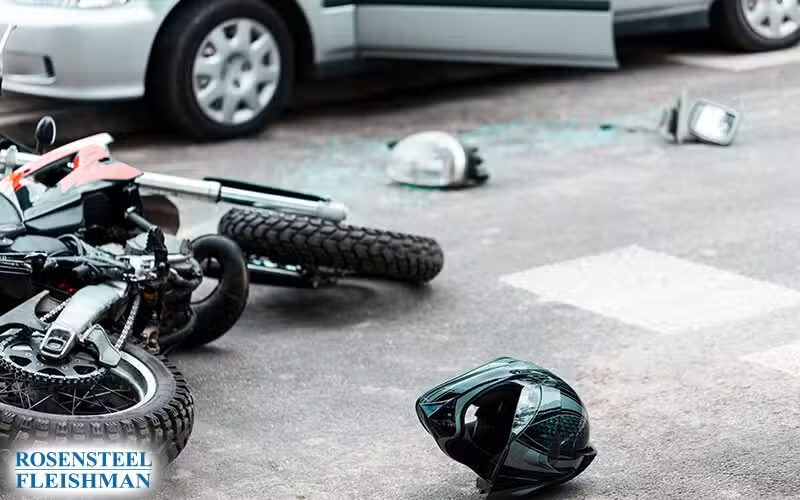
A motorcycle can go down without ever touching another vehicle, but that does not automatically mean the rider caused the crash. Road defects, spilled cargo, loose gravel, mechanical failures, poor lighting, and another driver’s sudden movement can all contribute to single vehicle motorcycle crashes. In Charlotte, the first explanation recorded at the scene may change as photographs, witness accounts, traffic footage, maintenance records, and medical findings become available.

Determining accountability requires looking beyond the fact that only one vehicle was damaged. A rider traveling on I-77 might swerve to avoid a car entering the lane, strike debris near the shoulder, and lose control. The other car may continue without stopping, leaving the incident report with an incomplete account. As Attorney Corey Rosensteel explains, “The physical evidence can tell an important part of the story when another driver is no longer at the scene.” Preserving that evidence can help clarify whether another motorist, a contractor, a property owner, a parts manufacturer, or a government entity contributed to the crash.

Early assumptions can affect insurance decisions, medical payments, and a rider’s ability to recover lost income. Anyone facing uncertainty about what caused a wreck can consult a motorcycle accident lawyer before giving a detailed recorded statement or accepting an insurer’s conclusion. A careful review may reveal facts that were not obvious during the confusion immediately after the incident.

Article Brief

  • A crash involving one motorcycle does not always mean the rider bears full responsibility.
  • Photographs, video, witness accounts, vehicle inspections, and road records can change an early liability assessment.
  • Delays often occur when evidence is missing, injuries are still being evaluated, or several parties may share responsibility.
  • Prompt documentation can protect important details before conditions change or records become harder to obtain.

How Evidence Can Change an Early Fault Decision

An initial crash report is a starting point rather than the final word on liability. An officer usually arrives after the event and must work with the information available at that moment. If the rider is injured, disoriented, or transported for emergency treatment, the report may contain little or no statement from the person who experienced the crash.

The next step is comparing the report with physical and digital evidence. Skid marks, scrape patterns, debris locations, motorcycle damage, helmet damage, and roadway photographs may help reconstruct how the motorcycle moved before it fell. Traffic cameras, nearby business cameras, dashboard recordings, and phone photographs can also show a vehicle or dangerous condition that was not mentioned in the original report.

Consider a rider traveling along a Charlotte surface street after a utility crew has completed work near an intersection. The rider enters a poorly marked patch of uneven pavement, the front wheel shifts, and the motorcycle falls. An early report might describe a loss of control. Later photographs, work permits, repair schedules, and prior complaints could show that the roadway condition had existed long enough for a responsible party to know about it.

Witness accounts can be equally important. A person standing near the intersection may have seen a delivery truck drop material onto the road, or another driver may have watched a car force the motorcycle toward the curb. Investigators can compare those observations with vehicle damage and roadway evidence to determine whether the accounts are consistent.

Mechanical evidence may reshape the analysis as well. A failed tire, defective brake component, loose part, or recently performed repair can raise questions about whether a product or service contributed to the incident. The motorcycle should generally be preserved until the relevant parties have had an opportunity to inspect it. Repairing, selling, or disposing of it too quickly could eliminate evidence needed to identify the failure.

The most useful information often includes:

  • Scene photographs showing the road, debris, signs, lighting, and surrounding area
  • Video from traffic cameras, nearby properties, or other vehicles
  • Witness names, contact details, and timely statements
  • Motorcycle maintenance records and inspection findings
  • Road maintenance reports, work orders, and prior hazard complaints

North Carolina’s contributory negligence rule makes a careful investigation particularly important. An insurer may argue that even a small mistake by the rider prevents recovery. That makes it necessary to examine speed, visibility, lane position, warning signs, protective actions, and the time available to react instead of relying on a broad statement that the rider lost control.

Who May Be Responsible When No Collision Occurred

Another driver can contribute to a motorcycle wreck without making physical contact. A sudden lane change, failure to yield, unsafe turn, or object falling from a vehicle may force a rider into an emergency maneuver. Evidence identifying the vehicle and showing how its movement caused the crash can be central to a claim.

Responsibility may also extend to a business or contractor that created a road hazard. Improperly secured construction materials, fluid spills, missing warnings, or unsafe work zones can place riders at particular risk. A claim will usually depend on who controlled the area, who created the condition, and whether that party had a reasonable opportunity to correct it or warn road users.

A defective motorcycle part may create a different type of inquiry. Inspection findings, recall information, service records, and the condition of the failed component can help determine whether the manufacturer, seller, or repair provider played a role. More than one party may share responsibility, so each possible cause should be evaluated before reaching a final conclusion.

Why Motorcycle Claims Can Take Longer Than Expected

The claim process usually moves from evidence preservation to medical evaluation, liability analysis, and insurance negotiations. Delays can develop at any of these stages. Some waiting is necessary because the full effect of an injury or the true cause of a mechanical failure may not be known immediately.

Medical uncertainty is a common source of delay. Shoulder injuries, concussions, back pain, nerve symptoms, and joint problems can evolve after the initial emergency visit. An insurer may request records from every provider before evaluating the claim, while the rider may still be attending appointments or waiting for a physician to explain future treatment needs.

Evidence collection can also take time. Businesses may not voluntarily release surveillance footage, government agencies may require formal records requests, and witnesses can become difficult to reach. Video systems frequently overwrite recordings, which is why requesting footage quickly can matter even when the broader claim is not ready for settlement.

Liability disputes create another layer of delay. An insurance company may argue that the rider was going too fast, failed to notice an open and obvious hazard, or overreacted to another vehicle. Addressing those arguments may require measurements, weather information, sight distance analysis, witness interviews, or an independent inspection of the motorcycle.

A missing motorist can complicate the process further. If an unidentified vehicle forced the rider off the road, uninsured motorist coverage may become relevant depending on the policy language and facts. Notice requirements and other policy conditions can affect that route, so waiting too long to examine the available coverage may create avoidable problems.

In the middle of medical treatment and evidence gathering, a rider may choose to discuss your motorcycle accident case with an attorney. That conversation can help identify missing records, approaching deadlines, insurance issues, and evidence that should be preserved before it disappears.

How Riders Can Reduce Avoidable Delays

Keeping organized records can make it easier to respond when an insurer requests information. Riders can maintain copies of medical bills, treatment instructions, work absence notes, repair estimates, photographs, and insurance correspondence. A brief written account of symptoms and daily limitations may also help document changes that are difficult to remember months later.

Consistency matters throughout the process. Medical providers should receive an accurate description of how the incident happened and how the injuries affect ordinary activities. Missed appointments and unexplained gaps in care may lead an insurer to question whether treatment was necessary, although transportation problems, scheduling delays, and financial pressures can provide legitimate explanations that should be documented.

It is also useful to avoid premature conclusions. Accepting a quick payment before the motorcycle has been inspected or before doctors understand the likely recovery can close the claim without accounting for later expenses. A measured approach gives the available evidence and medical information time to develop.

Choosing a Clear Path After the Crash

The most practical first step is to protect health and preserve information. Medical care creates a record of the injuries while giving the rider an opportunity to address symptoms that may worsen over time. Scene photographs, damaged riding gear, motorcycle parts, witness details, and insurance documents should be kept in a safe and organized place.

The next step is to test early assumptions against the evidence. A report that describes rider error may not account for an unsafe lane change, hidden pavement defect, dropped cargo, or failed component. Reviewing the complete sequence before making a statement about fault can prevent an incomplete first impression from controlling the entire claim.

When Legal Guidance May Be Useful

Legal guidance may be helpful when fault is disputed, another vehicle left the scene, a road condition contributed to the fall, or a mechanical problem is suspected. It can also be useful when an insurer requests a recorded statement, points to contributory negligence, or offers payment before treatment is complete.

Rosensteel Fleishman Law Firm can review how an incident occurred, identify possible sources of insurance coverage, and explain what information may affect the claim. A consultation does not require a rider to have every record or know exactly who was responsible. The purpose is to understand the available options and the practical steps that may protect the evidence.

What to Prepare for an Initial Review

A rider can begin with the crash report, photographs, medical paperwork, insurance policies, repair estimates, and any messages exchanged with insurers. Names of witnesses, nearby businesses, responding agencies, and medical providers can help locate additional records. Even a simple timeline of the ride, crash, treatment, and insurance communications may reveal unanswered questions.

The absence of a collision with another vehicle should not end the investigation. Liability depends on the complete circumstances, including what created the danger, what the rider could reasonably perceive, and whether another party had an opportunity to prevent the harm. Preserving evidence early and reviewing it carefully provides the clearest route toward an informed decision.