After a car accident in Charlotte, recovery often develops one day at a time, and the records connected to that process may be less complete than expected. A person might visit an emergency room, schedule follow-up care with a family doctor, miss a physical therapy appointment because of pain, or forget to save a receipt […]
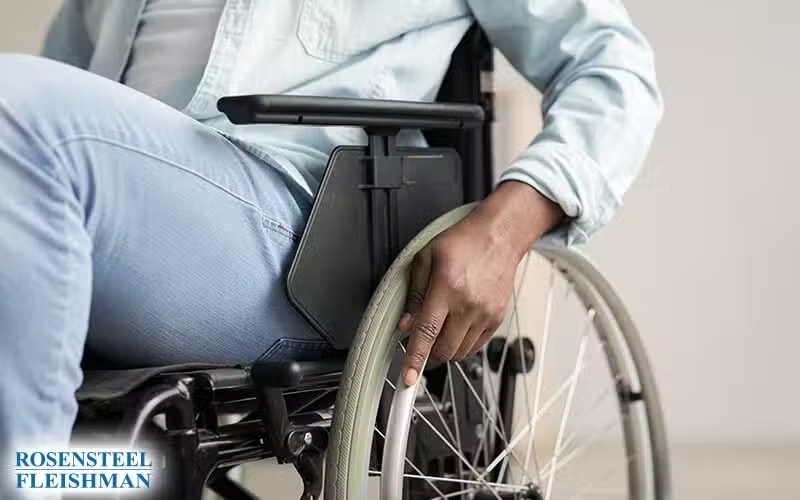

What happens when an injury that first seemed temporary begins affecting work, family routines, sleep, or everyday movement for longer than expected? Insurance adjusters often look closely at medical documentation to answer that question, and the picture presented by those records may change as treatment continues. Early notes may describe pain and limited movement, while later records can show whether symptoms improved, required additional care, or created ongoing limitations that were not apparent immediately after the accident.
For a Charlotte family dealing with an injury after a parking lot collision or another low-speed accident, the first few days can create uncertainty. Someone may initially expect soreness to fade quickly, only to return to a doctor when headaches, back pain, or reduced mobility continue. That progression can affect how a claim is understood because adjusters generally review the timing of treatment, reported symptoms, diagnostic findings, recommended care, and the patient's response to treatment. When questions arise about how those records may affect a claim, speaking with a local Charlotte injury attorney can provide useful context without distracting from the most important priority, getting appropriate care.
Medical Records Tell a Developing Story
Medical documentation does more than show that someone visited a doctor. It can demonstrate how an injury developed over time, whether treatment recommendations were followed, and whether physical limitations changed. Attorney Corey Rosensteel often emphasizes a practical point in injury matters: "The record should reflect what the patient is actually experiencing." Clear and consistent documentation can make it easier to understand why how claim expectations can shift over time as more information becomes available.
Why Early Claim Estimates May Change
An early estimate of an injury claim is often based on incomplete information. Shortly after an accident, no one may know how long treatment will last, whether additional testing will be needed, or how quickly the injured person can return to normal activities. As those details become clearer, expectations about medical costs, lost income, recovery time, and future needs can change as well.
Consider a Charlotte parent who is rear-ended while slowly moving through a crowded shopping center parking area. At first, the person reports neck stiffness and expects to recover after a few days of rest. A week later, the discomfort has not improved, turning the head while driving has become difficult, and a doctor recommends physical therapy. Several weeks after that, the medical records may show steady improvement, continued limitations, or the need for further evaluation. Each stage gives the insurer more information than was available immediately after the collision.
Adjusters commonly evaluate several parts of that developing record, including:
- When symptoms were first reported and how they changed
- What examinations, imaging, or diagnostic testing showed
- Whether recommended treatment was completed consistently
- How the injury affected work and ordinary daily activities
- Whether doctors identified continuing restrictions or future care needs
These details matter because an initial claim value is not necessarily a reliable forecast of the final outcome. A short period of conservative care may point toward one range of expectations, while months of documented treatment and continuing restrictions may support a different assessment. The reverse can also happen. If symptoms improve sooner than expected and treatment ends quickly, anticipated medical expenses and other losses may be lower than originally assumed.
Consistency Can Matter as Much as Severity
Adjusters often compare records from different appointments to see whether the medical history follows a logical progression. Consistency does not mean every appointment must contain identical wording. Symptoms naturally improve, worsen, or move from one area to another. What matters is whether the overall record reasonably reflects the person's actual recovery.
Gaps in treatment can raise questions, particularly when the records do not explain why care stopped. There may be completely understandable reasons, such as difficulty getting an appointment, transportation problems, family responsibilities, or a doctor's direction to continue exercises at home. When those circumstances are documented, the timeline can be easier to understand than when weeks or months simply disappear from the medical history.
How Recovery Can Reshape the Claim
The longer recovery continues, the more concrete the claim may become. Early uncertainty gradually gives way to actual medical bills, documented work absences, treatment results, and clearer information about whether symptoms are temporary or persistent. This is one reason resolving an injury claim too early can create problems. Once more is known about recovery, the assumptions made during the first few days after the accident may no longer fit the situation.
For example, someone may initially miss only two days of work and believe that lost income will be minimal. If pain later makes lifting, driving, standing, or concentrating difficult, additional absences or reduced hours may follow. Those changes can create financial pressure while also adding information that affects the claim. Medical records, employment documentation, and other supporting records help connect those developments to the recovery process.
When Should Someone Reevaluate Their Claim Expectations
Claim expectations may deserve another look whenever meaningful new information appears. A new diagnosis, additional treatment recommendation, prolonged work restriction, unexpected improvement, or return to normal activity can all change the practical picture. Reevaluation does not necessarily mean that something has gone wrong. It simply means the claim should reflect the information that is actually available rather than assumptions made earlier.
If treatment is continuing and the likely outcome remains unclear, an experienced injury attorney can help explain how insurers may interpret the developing medical record. That type of guidance can be particularly useful when an adjuster is requesting settlement discussions before the treating provider has explained whether additional care will be necessary.
Can an Insurance Adjuster Change a Claim Evaluation Later
Yes. An adjuster's evaluation can change as additional records, bills, employment information, or other evidence becomes available. A claim that initially appeared straightforward may become more involved if symptoms persist or further treatment is required. Likewise, a claim may become easier to evaluate when recovery progresses faster than expected.
This does not mean every change in treatment automatically produces a particular settlement result. Liability, insurance coverage, prior medical history, the strength of the documentation, and other circumstances can also affect the analysis. Medical progress is important, but it is one part of the larger claim.
Keeping Recovery and Stability at the Center
The most useful approach is usually to let actual recovery information guide expectations rather than trying to predict the final claim value immediately after an accident. Medical care often develops in stages, and each stage can provide a clearer understanding of symptoms, limitations, expenses, and future needs. Keeping appointments, communicating accurately with healthcare providers, and maintaining organized records can make that progression easier to follow.
Financial concerns can make early settlement discussions tempting, especially when medical bills are arriving or missed work is affecting household income. The difficulty is that accepting a resolution before the recovery picture is reasonably clear may leave little room to address later treatment or additional losses. A careful review of current medical information can help someone make decisions based on what is known rather than on pressure or uncertainty.
Getting Perspective Before Making a Final Decision
If questions remain about whether the medical record fully reflects the course of recovery, speaking with someone familiar with personal injury claims can help put the information into perspective. Rosensteel Fleishman Law Firm works with injured people in Charlotte who are trying to understand insurance issues while continuing their medical care. A conversation can help clarify what documentation matters, what questions may still need answers, and whether the timing of a settlement discussion makes sense.
Recovery should remain the priority because stability provides better information for both personal decisions and claim decisions. Expectations can change as the facts become clearer, and that is a normal part of the process. Making decisions from a well-documented understanding of current health, treatment, work limitations, and financial impact can provide a steadier foundation for whatever comes next.
Additional Personal Injury Articles
How Accident Reports in Bicycle Cases Help Compare Conflicting Versions of Events
Bicycle accident reports often become important when the people involved remember the same collision differently. A driver may say a cyclist entered the roadway unexpectedly, while the cyclist may remember having the right of way and being visible well before impact. In Charlotte, those differences can influence how insurers and others evaluate responsibility, particularly when […]
What Causes a Claim to Move Forward or Stall When Answers Feel Uncertain
After an injury, families often expect an insurance claim to follow a fairly simple path. Information is submitted, the insurer reviews what happened, and eventually an answer arrives. In practice, claims can move in bursts. A person may hear regularly from an adjuster for several weeks and then encounter a period when very little seems […]
Police Report Accuracy After a Crash When Important Details Are Missing
In Charlotte areas where cyclists and pedestrians frequently share the road with drivers, such as Uptown, South End, and busy crossings near greenway access points, a collision can become complicated within seconds. The police report may later serve as an important record, but officers often arrive after the impact and must reconstruct events from statements, […]