Families often think about crash safety in terms of seat belts, airbags, and where children are seated, but unusual seating positions can change how those protections work. A passenger who is reclined far back, leaning toward the center console, resting their feet on the dashboard, or sitting at an angle may not interact with a […]
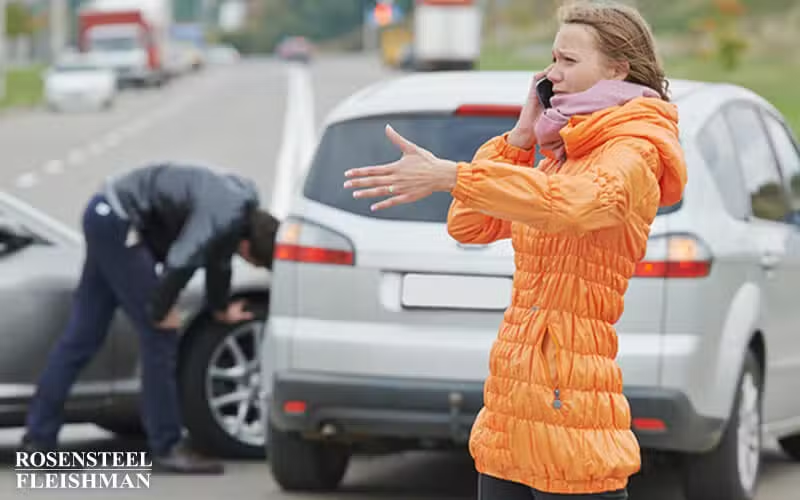

North Carolina has a crash-scene Good Samaritan provision, but it is not blanket immunity for every act, every location, or every claim by another person.
The legal analysis should identify where the event occurred, whether it was a motor-vehicle crash, who was injured as a result of that crash, what aid the person rendered, who later asserted a claim, and which alleged act or omission caused the claimed harm.
G.S. 20-166(d) is specific to aid at a motor-vehicle crash
G.S. 20-166(d) applies to a person who renders first aid or emergency assistance at the scene of a motor-vehicle crash on a street or highway to a person injured as a result of the crash. It limits civil liability for acts or omissions relating to those services unless they amount to wanton conduct or intentional wrongdoing.
Each part of that description matters. The statute should not be assumed to cover unrelated conduct before the rescue, conduct after the emergency has ended, an event outside the stated location, assistance unrelated to a crash injury, or conduct that falls within an exception.
The general emergency-treatment statute has different conditions
G.S. 90-21.14 addresses a person who voluntarily and without expectation of compensation renders first aid or emergency health-care treatment to an unconscious, ill, or injured person when the apparent circumstances require prompt decisions and delay would seriously worsen the condition or endanger life. Its liability limitation uses gross negligence, wanton conduct, or intentional wrongdoing as exceptions.
The statute also states that G.S. 20-166(d) controls if the two provisions conflict. The related guide to North Carolina protection for unpaid emergency aid examines the broader non-crash statute.
Hutton v. Logan limits who can invoke the crash provision
In Hutton v. Logan, the North Carolina Court of Appeals considered a rescuer who stopped on a highway and was then struck from behind. The court held that G.S. 20-166(d) insulates a rescuer from ordinary-negligence liability to the person rescued; it does not provide blanket immunity from a claim by a third party allegedly injured by the rescuer's conduct.
The result means the claimant-rescuer relationship and the source of the claimed injury must be identified. A person should not assume the crash-scene provision eliminates every ordinary-care question involving traffic, vehicle placement, warning, access, or other road users.
Build a chronology before applying either statute
- Crash location, time, traffic lanes, vehicles, injured person, initial observations, and when assistance began and ended
- 911 call, dispatch instructions, responder arrival, scene photographs or video, witness accounts, and contemporaneous statements
- The specific assistance rendered, available information, apparent urgency, equipment used, and whether compensation was expected
- The person asserting the claim, the alleged act or omission, the claimed injury, and the causal sequence
- Any conduct alleged to be grossly negligent, wanton, or intentional stated with supporting facts rather than a label
Immunity and the underlying crash are separate questions
A Good Samaritan issue does not decide who caused the original collision, whether an insurer provides coverage, whether another defendant is responsible, or what damages can be proved. Those questions require their own facts and law.
Rosensteel Fleishman Car Accident & Injury Lawyers provides general information about speaking with a North Carolina car-accident attorney when emergency assistance becomes part of the crash record. The applicable immunity, possible claims, defenses, evidence, coverage, and deadlines depend on the particular event.
Sources
Additional Car Accidents Articles
Keeping Records After Claim Closure in Case New Issues Develop
After an insurance claim closes, the paperwork connected to the accident can still matter months or even years later. A driver may feel relieved when repairs are completed, medical bills appear resolved, and the insurer marks the file closed, but later developments can make old records important again. Symptoms may return, a medical provider may […]
Insurance Coverage Gaps for Injury Care After Benefits Run Out
A car accident can create medical needs that continue long after the first emergency room visit, particularly when rehabilitation, physical therapy, diagnostic testing, or follow-up treatment stretches across several months. For people recovering in Charlotte, the financial side of that care can become almost as complicated as the treatment itself. Different insurance policies may pay […]
Claims History Impact on Insurance When a Prior Claim Was Not Your Fault
A prior insurance claim can create confusion even when the accident was caused entirely by someone else. Insurance companies maintain records of reported losses, and those records may appear when a carrier reviews a new application, renews a policy, or investigates another accident. For drivers in Charlotte, understanding what information appears in a claims record […]