
Families often think about crash safety in terms of seat belts, airbags, and where children are seated, but unusual seating positions can change how those protections work. A passenger who is reclined far back, leaning toward the center console, resting their feet on the dashboard, or sitting at an angle may not interact with a […]
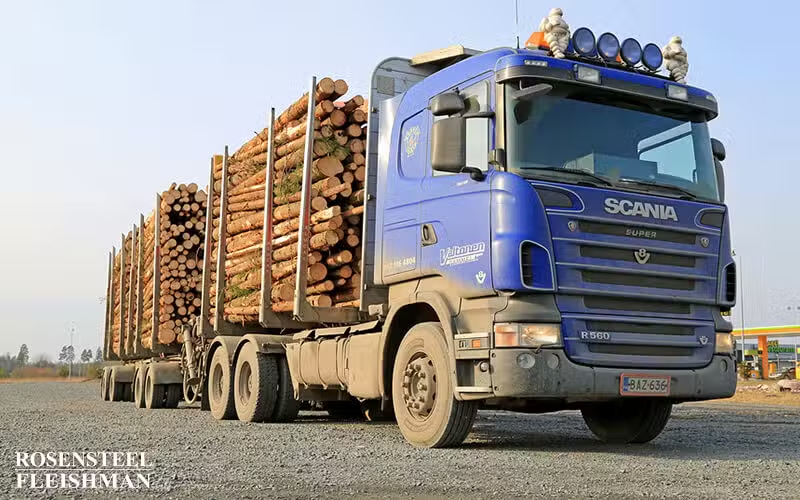

A collision between a commercial truck and a horse-drawn vehicle raises specific questions about road access, approaching or passing an animal, and each operator’s movements. Identify the exact roadway and the sequence of events before assuming either road user lacked a right to be there.
The buggy’s legal presence, each operator’s conduct, and the cause of the collision are separate questions.
Animal-drawn traffic is addressed directly by North Carolina law
G.S. 20-171 applies Article 3 traffic rules to a person riding an animal or driving an animal that draws a vehicle on a highway, except provisions that by their nature cannot apply. The inquiry should therefore begin with the exact movement and rule, not an assumption that a buggy has no road rights or that every motor-vehicle provision fits it.
G.S. 20-216 separately requires a motor-vehicle operator to use reasonable care when approaching or passing a horse or another draft animal, whether ridden or otherwise under control. That provision is directly relevant to the interaction between a commercial truck and a horse-drawn buggy.
Passing clearance is part of a larger movement analysis
G.S. 20-149 states rules for overtaking a vehicle traveling in the same direction, including clearance and returning right only when safely clear, subject to other passing provisions. The lane configuration, oncoming traffic, sight distance, buggy width, truck speed, braking distance, and whether a lawful pass was available all matter.
- Map the buggy and truck paths, speeds, lane positions, approach distances, perception points, braking, steering, and impact location.
- Document curves, grade, intersections, lane markings, shoulder width and condition, lighting, weather, traffic, signs, vegetation, and sight restrictions.
- Preserve truck engine-control, event, camera, dispatch, phone, duty-status, inspection, maintenance, and cargo records before retention periods expire.
- Preserve the buggy, lamps or reflectors, damage, harness and animal information, carried load, route, travel timing, and witness observations.
- Separate a traffic citation or early statement from the evidence needed to prove duty, breach, causation, injury, damages, and any defense.
Confirm whether the roadway was controlled access
The NCDOT Traffic Services Legal Guide identifies 19A NCAC 02E .0409, which generally prohibits operation of a horse-drawn wagon or another listed nonmotorized vehicle on an interstate or controlled-access highway unless the Board of Transportation authorizes it. Photographs and a general map do not by themselves establish the roadway’s legal access classification.
Use the official roadway designation, access-control plans, right-of-way records, signs, interchange and driveway configuration, agency records, and exact crash coordinates. Even if a road-use restriction applied, its legal effect on a civil claim would still require a separate analysis of purpose, causation, each person’s conduct, and current North Carolina law.
Commercial-truck evidence can disappear on different schedules
The related guide to preserving roadway and traffic-condition evidence after a tractor-trailer crash explains measurements, mapping, video, weather, work-zone, and agency records.
Rosensteel Fleishman Car Accident & Injury Lawyers provides information about consulting a Charlotte truck-accident lawyer after a collision involving a slow-moving or animal-drawn vehicle. Roadway access, operator duties, carrier responsibility, causation, defenses, insurance, deadlines, and damages depend on the complete evidence.
Sources
Additional Car Accidents Articles
Keeping Records After Claim Closure in Case New Issues Develop
After an insurance claim closes, the paperwork connected to the accident can still matter months or even years later. A driver may feel relieved when repairs are completed, medical bills appear resolved, and the insurer marks the file closed, but later developments can make old records important again. Symptoms may return, a medical provider may […]
Insurance Coverage Gaps for Injury Care After Benefits Run Out
A car accident can create medical needs that continue long after the first emergency room visit, particularly when rehabilitation, physical therapy, diagnostic testing, or follow-up treatment stretches across several months. For people recovering in Charlotte, the financial side of that care can become almost as complicated as the treatment itself. Different insurance policies may pay […]
Claims History Impact on Insurance When a Prior Claim Was Not Your Fault
A prior insurance claim can create confusion even when the accident was caused entirely by someone else. Insurance companies maintain records of reported losses, and those records may appear when a carrier reviews a new application, renews a policy, or investigates another accident. For drivers in Charlotte, understanding what information appears in a claims record […]



