
Lane markings, turning movements, and crosswalk locations can help explain a truck collision, but they cannot establish an injury. Clear records help separate crash circumstances from documented losses.
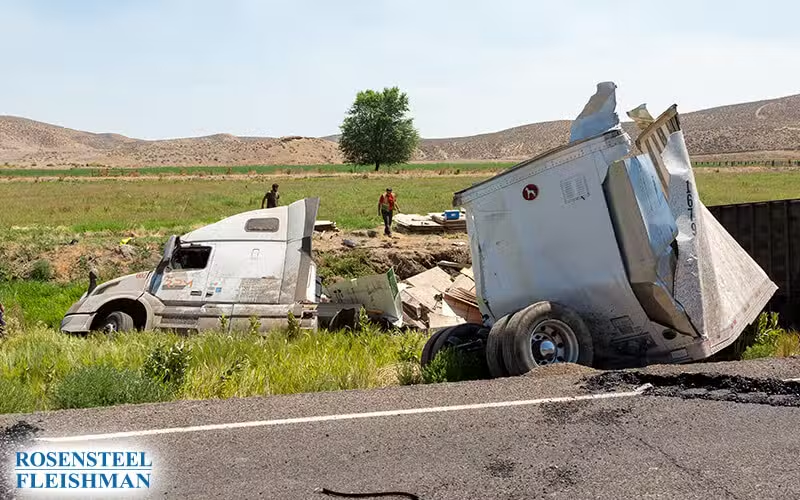

An occupant may move forward, sideways, upward, rotate, or experience more than one movement during a truck collision. The useful record does not try to diagnose an injury from a photograph. It preserves what can be observed and allows qualified medical professionals and other appropriate reviewers to address causation.
The file should connect the collision sequence, occupant position, observed movement, symptoms, clinical findings, treatment, and itemized cost without treating any one item as conclusive.
Build a movement-and-treatment chronology
- Seat location, belt use, body orientation, first impact, later impacts, interior contacts, and final position
- Original vehicle, interior, restraint, seat, cargo, roadway, and exterior-damage photographs
- Symptom onset, provider, examination, diagnosis, treatment, restriction, response, referral, and follow-up
- Billed charge, payment, adjustment, patient payment, outstanding balance, and payment source for each service
Do not infer medicine from crash appearance
Low visible damage does not establish the absence of injury, and severe damage does not establish a particular diagnosis. Record the mechanism described, the clinician’s actual findings, prior relevant condition, later functional change, and any conflicting account as separate evidence. Commercial-driver, carrier, vehicle, and crash records should be requested by source and date rather than assumed to exist in every case.
Use official records for the questions they can answer
Federal motor-carrier rules identify specified crash records a carrier must maintain, although the complete evidence set depends on the event. See 49 C.F.R. § 390.15.
Federal health-privacy guidance explains access and amendment rights for many medical and billing records. See U.S. HHS: Your Medical Records.
North Carolina evidence law distinguishes paid medical expenses from amounts necessary to satisfy unpaid bills. See North Carolina Rule of Evidence 414.
Connect the file to the next decision
Reconcile the chronology before comparing medical, wage, and other claimed losses so the same cost is not counted twice. The related truck-injury symptom and cost guide provides a focused companion resource.
Rosensteel Fleishman Car Accident & Injury Lawyers provides information about consulting a Charlotte truck accident attorney when the crash mechanics, medical causation, business records, or treatment expenses are disputed.
Sources
Additional Trucking Accidents Articles
Living With Permanent Disabilities After a Truck Crash Involving Multiple Vehicles
A lasting disability affects more than a claim file. Learn how to connect the collision timeline with documented changes in work, household responsibilities, and expenses without treating assumptions as evidence.
Reducing Reinjury Risk With Physical Therapy After a Truck Crash in Charlotte
Concerns about reinjury involve medical questions that claim records cannot answer. Learn how to organize physical therapy documentation, practical expenses, and scene evidence without drawing unsupported conclusions.
When Mobility Loss After a Charlotte, NC Truck Crash Has No Clear Diagnosis
An unclear diagnosis does not prevent a family from recording practical changes after a truck crash. Keep observations, added expenses, and unanswered claim questions separate.



