
Highway crashes do not always happen during predictable rush hour congestion or in the middle of heavy commuter traffic. In North Carolina, a collision may occur late at night, during an off-peak afternoon, or on a relatively open stretch of interstate where traffic conditions initially appear straightforward. Claims arising from these crashes can still become […]
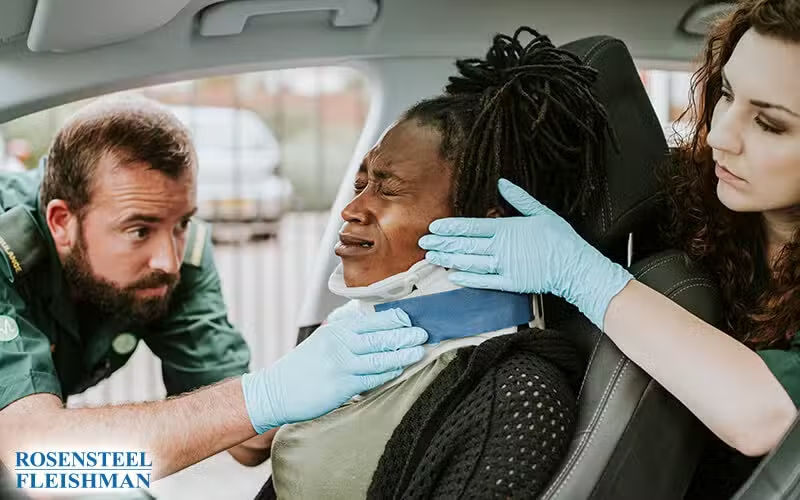

Intersection crashes at stop signs often come down to small details that can change how fault is viewed. When several drivers reach an intersection within a few seconds of each other, the available choices may be limited by traffic flow, sight lines, driver hesitation, road design, and whether someone misunderstood who had the right of way.
A four way stop can seem simple, but the facts after a collision are often more complicated than they first appear. As Attorney Corey Rosensteel has noted, “Fault is often determined by the details people remember, preserve, and explain clearly.” For drivers trying to understand what may matter after a crash, a Charlotte auto accident claim attorney can help place those details in a broader claim context.
Article Brief
When a crash happens at a four way stop, fault may depend on who arrived first, who moved first, whether a driver failed to yield, and what evidence supports each account. Practical limits such as traffic congestion, blocked views, and pressure from other vehicles can also affect how the situation unfolded.
- Arrival order is often important, but it is not the only factor.
- Witnesses, photos, vehicle damage, and police reports can help clarify what happened.
- Insurance companies may focus on inconsistencies, delays, or missing documentation.
- Early organization can make it easier to explain the crash accurately.
How Stop Sign Collision Details Shape Available Options
The sequence of events is usually the starting point when reviewing a crash at a four way stop. In many situations, the first vehicle to stop has the right to proceed first. If two vehicles stop at the same time, the driver on the left generally yields to the driver on the right. These rules sound straightforward, but real intersections rarely unfold in perfect order.
Drivers may stop at nearly the same time, roll forward slightly, wave another driver through, or hesitate because they are unsure what someone else is doing. A driver may think another vehicle is waiting, only to realize too late that both vehicles entered the intersection. These moments can limit available choices because once a vehicle has started moving, a driver may have only a second or two to brake, steer, or react.
Why Arrival Order Can Be Hard To Prove
Arrival order is one of the most common four way stop crash factors, but it can also be one of the most disputed. Each driver may believe they stopped first, especially when the crash happens during a busy traffic period or when attention is divided between several approaching vehicles. A driver may remember stopping completely, while another may recall seeing that same vehicle roll through without a full stop.
Evidence can help sort out these differences. Skid marks, vehicle resting positions, dash camera footage, nearby business cameras, and witness statements may all help show whether a driver entered the intersection too soon. Photos taken shortly after the crash can also show road layout, stop sign placement, lane markings, visibility limits, and damage patterns that may support one version of events over another.
How Driver Behavior Affects Fault
Fault may also depend on how each driver behaved before entering the intersection. A full stop matters, but so does whether the driver looked for cross traffic, yielded when required, and proceeded only when it was reasonably safe. A driver who stops briefly but then accelerates into the path of another vehicle may still face questions about whether they acted carefully.
Some behavior is especially important in these cases:
- Rolling through the stop sign without fully stopping
- Entering the intersection out of turn
- Failing to notice a vehicle already moving through the intersection
- Waving another driver through and then moving at the same time
- Driving distracted while approaching or leaving the stop
These facts may affect not only who is considered at fault, but also how an insurance company evaluates the claim. Even when one driver appears mainly responsible, the insurer may argue that another driver could have reacted sooner, waited longer, or avoided the crash. This is one reason clear documentation is valuable.
How Insurance Companies May Review These Crashes
Insurance companies often examine four way stop collisions by looking for gaps or conflicts in the available information. If the drivers give different accounts, the insurer may compare their statements with the police report, witness details, photos, vehicle damage, and any available video. When evidence is limited, the claim may turn on credibility and consistency.
Claim handling tactics can also affect how quickly a person understands their options. An adjuster may request a recorded statement, ask repeated questions about timing, or suggest that fault should be shared. These questions may seem routine, but answers given too quickly or without reviewing the facts can create confusion later. A person who is uncertain about how fault is being framed may benefit from speaking with an attorney for car accident guidance before making decisions that could affect the claim.
Why Documentation Matters After a Stop Sign Crash
Good documentation can expand the choices available after a collision because it gives the claim a clearer factual foundation. Without photos, witness names, medical records, or repair documentation, a person may have fewer ways to respond if the insurer disputes fault or questions the seriousness of the impact. The goal is not to overcomplicate the situation, but to preserve details while they are still fresh.
For example, imagine a driver in Charlotte approaching a four way stop near a neighborhood cut through during the evening rush. Traffic is backing up from a nearby signal, one vehicle pauses longer than expected, and another driver enters the intersection believing it is their turn. After the crash, each driver gives a different account. In that situation, photos showing vehicle positions, the direction of travel, and the surrounding traffic pattern may become important when explaining how the collision happened.
Medical documentation can also matter, even when injuries seem minor at first. Soreness, headaches, and stiffness may worsen after the adrenaline wears off. If there is a delay in treatment, an insurance company may argue that the injuries were unrelated or not serious. Getting appropriate care and keeping records of symptoms, appointments, missed work, and out of pocket costs can help create a more complete picture.
Rosensteel Fleishman Law Firm in Charlotte, NC helps people understand how accident details, insurance responses, and documentation may affect a car accident claim. A consultation can be useful when fault is disputed, when the insurer is asking difficult questions, or when a person is unsure what information they should gather next. Calling 1-704-714-1450 can be a practical step for someone who wants clear guidance before moving forward.
The main takeaway is that stop sign crashes are rarely decided by one fact alone. Arrival order, driver conduct, visibility, traffic conditions, and documentation all work together. The sooner those details are organized, the easier it may be to understand the claim, respond to insurance questions, and make informed decisions with a steady sense of direction.
Additional Car Accidents Articles
Left Turn Gap Judgment Errors When Visibility or Road Design Plays a Role
What happens when a driver begins a left turn and another vehicle suddenly changes lanes? The available opening can disappear almost instantly. In Charlotte traffic, this type of conflict may occur near multilane intersections where drivers must monitor oncoming vehicles, traffic signals, pedestrians, and vehicles moving between lanes at the same time. These crashes can […]
Multi Policy Insurance Considerations When One Policy Does Not Cover Every Loss
Insurance coverage after a serious car accident is not always limited to one policy. A collision may involve liability coverage, underinsured motorist coverage, medical payments coverage, an employer’s commercial policy, or another source of compensation. Identifying each applicable policy can affect how losses are documented, how negotiations develop, and whether a proposed resolution fairly reflects […]
What Happens When Vehicle Damage Appears Later Despite an Initial Inspection
Damage found days or weeks after a collision can complicate an insurance claim, especially when the cause of the crash or responsibility for the repairs remains disputed. A vehicle may look drivable during an initial roadside review in Charlotte, yet later show suspension problems, electrical faults, alignment issues, or damage hidden beneath exterior panels. When […]




