
A useful claim record shows what changed, what remained unresolved, and why. Learn how consistent documentation can clarify recovery progress without drawing medical conclusions.
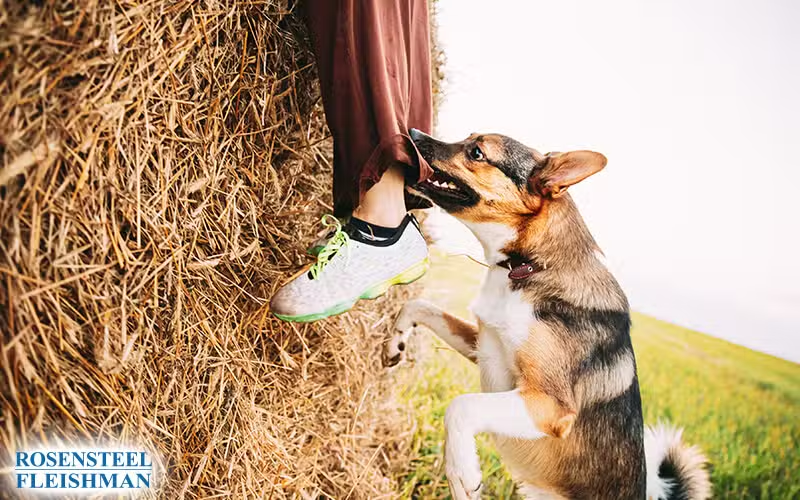

A delivery, repair, home-health or other service visit can be both a work event and a dog attack. The employer’s injury report, an animal-control report, medical records and a possible claim against someone outside the employer serve different purposes. Keep one event timeline, but label each record by who created it and which question it answers. Get needed medical care before working on either claim file.
Record the work assignment and the dog encounter separately
For the work side, retain the employer’s legal name, assignment, dispatch or appointment, route, scheduled time, location, supervisor notice and any incident-report number. For the dog side, record the location within the property, the dog and handler as identified by each source, what happened before and after contact, witnesses, photographs safely available and any animal-control identifier. A service address is not proof of who owned the dog. Do not revisit an unsafe property or approach the dog to fill a gap.
Track the work notice and Commission claim
G.S. 97-22 addresses written notice of a work accident to the employer, including its 30-day provision and exceptions. Give accurate notice promptly and keep proof of delivery rather than assuming a supervisor’s awareness finishes that task. Filing a workers’ compensation claim with the North Carolina Industrial Commission is a separate step. Its current Form 18 identifies the employee, employer and injury and explains filing instructions. The workplace-injury first-steps guide covers that notice and claim process in more detail. Ask a qualified professional to explain how the actual work arrangement and facts affect coverage; the job title alone does not decide it.
Keep the non-employer question distinct
G.S. 97-10.2 addresses workers’ compensation interests when an injury may also create a claim against a third party. A dog owner, handler, property owner, employer, insurer and customer may be different people or entities. Do not infer their legal duties or insurance from the location. Preserve the animal-control source, witness account, property or pet records and the insurer’s written position under the correct names. If both paths are being explored, tell each adviser about the other, keep payments and bills by source, and have any proposed settlement or release reviewed for its effect on the workers’ compensation interests.
Rosensteel Fleishman Car Accident & Injury Lawyers provides information about dog-bite legal questions after a service visit. The first useful consultation file is a dated event account with the employer notice, Commission record if any, animal-control number and care records kept as separate originals.
Sources
Additional Dog Bites Articles
Charlotte Hand Therapy Options for Coordination Problems After a Dog Bite
When hand coordination difficulties affect everyday tasks after a dog bite, clear records can help separate care arrangements, practical expenses, and unresolved claim questions.
Budgeting for Sun Protection to Care for Dog Bite Scars
A practical budget separates actual spending, shared household purchases, and uncertain future expenses. Clear records can help explain scar-related costs without making medical or legal assumptions.
Tissue Healing Variability Dog Bites and Why Recovery Timelines Can Differ
Why can two people with similar-looking dog bite injuries have very different recovery records? The answer often lies beneath the surface. The location and depth of the wound, the structures involved, complications documented by medical providers, and personal health factors can all affect how the injury develops over time. Those differences can become important during […]


