
Roadway congestion can make bicycle crashes more complicated because several things may happen at once, including sudden lane changes, limited visibility, close passing, and multiple vehicles reacting within seconds. When a cyclist is injured and the responsible driver does not have enough insurance to cover the resulting losses, underinsured coverage bicycle cases may involve a […]
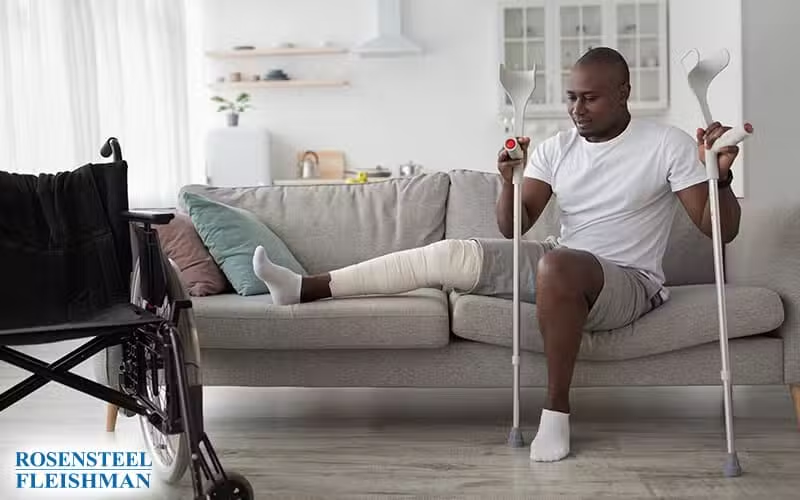

Changes after an injury may be observed by the injured person, relatives, friends, coworkers, supervisors, neighbors, caregivers, or others who shared particular activities. A useful record identifies what each person actually observed. It does not replace medical records, assign a monetary value, or assume that a relationship gives someone personal knowledge of every claimed change.
A firsthand-witness map should identify the person, relationship, opportunity to observe, baseline activity, later observation, date or period, location, source record, uncertainty, conflicting information, and follow-up question.
Start with a specific activity rather than a conclusion
- Activity before the event, frequency, duration, setting, role, equipment, assistance, interruption, and the witness who was present
- Post-injury event described through what the witness saw or heard: task attempted, movement, pause, assistance, schedule change, missed event, or reported limitation
- Date or bounded period, location, people present, ordinary context, related message, calendar entry, photo, work record, receipt, or other source
- Words such as disabled, permanent, severe, caused, depressed, unable, or recovered separated from the underlying observations that may or may not support them
Confirm personal knowledge
North Carolina Rule of Evidence 602 addresses a witness’s personal knowledge. A family member may know what happened during shared household tasks but not what occurred at work. A supervisor may know attendance and job performance but not a diagnosis. The map should record the basis for each observation rather than relying on the person’s title or relationship.
- How the person knows the injured individual, how often they interacted before and after the event, and which activities they personally observed
- Direct observation separated from information repeated by the injured person, a clinician, another witness, social media, or a document
- Memory limits, uncertain dates, infrequent contact, changed living arrangements, remote communication, or another reason the opportunity to observe may differ
- No one witness presented as covering home, work, transportation, recreation, sleep, relationships, treatment, and every other part of life
Map observations to relevant issues
Rule 401 defines relevant evidence through its tendency to make a consequential fact more or less probable. A witness list becomes more useful when every entry is connected to a precise issue instead of a general request to describe pain and suffering.
- Mobility, self-care, household task, parenting, caregiving, transportation, work, education, recreation, sleep routine, social activity, communication, or assistance issue
- Baseline observation, first observed change, later improvement or decline, current observation, and any period the witness did not see the person
- Specific contradiction or gap that needs a source check rather than an instruction to make different accounts sound alike
- Relevance question stated without assuming that every inconvenience, relationship change, or emotional response is legally recoverable
Keep lay observations within their limits
Rule 701 addresses opinion testimony by lay witnesses. A person may be able to describe first-hand changes and limited inferences grounded in perception, but medical diagnosis, medical causation, prognosis, permanence, vocational conclusions, or technical reconstruction can require a different foundation.
- Observed pace, frequency, duration, assistance, behavior, missed activity, changed routine, or task performance stated before any characterization
- Clinical term traced to the actual clinical record rather than adopted by a witness who lacks the necessary foundation
- Emotion or demeanor described through a particular interaction while avoiding a mental-health diagnosis
- Work effect separated into attendance, assigned duty, task attempt, accommodation, communication, payroll record, and any qualified vocational opinion
Preserve memory sources without scripting testimony
Rule 612 addresses writings used to refresh a witness’s memory. A map may point to a calendar, message, photo, receipt, work schedule, or other dated source, but it should preserve the original and identify how it was used. It should not become a script that replaces the witness’s actual recollection.
- Original file, custodian, creation date, metadata, complete conversation or series, storage location, and unedited copy
- Document reviewed, date reviewed, reason, what memory remained independent, and any correction made after checking the source
- Draft summary clearly labeled and kept separate from the underlying message, image, calendar, or business record
- No repeated group editing that erases genuine differences in memory, timing, wording, or perspective
Build a reviewable witness matrix
- Witness ID, contact-verification date, issue, baseline, later event, observation basis, date range, source, uncertainty, conflict, and next question
- Duplicate observations grouped without implying that repetition makes an assertion accurate
- Unavailable, unwilling, unknown, contradicted, incomplete, or needs qualified review recorded as a status rather than removed
- Later update linked to the earlier entry so improvement, decline, changing assistance, or corrected dates remain visible
The related guide to documenting pain, functional change, and financial loss after an injury covers the injured person’s broader source record. This page owns the separate witness, opportunity-to-observe, firsthand fact, memory source, and uncertainty map.
Rosensteel Fleishman Car Accident & Injury Lawyers provides general information about Charlotte personal-injury claims. Whether a particular observation is relevant or admissible depends on the issues, source, foundation, and circumstances.
Sources
Additional Personal Injury Articles
How CT Scans Are Used in Injury Claims to Document Physical Harm
When an injury claim is being reviewed, medical records often provide the clearest timeline of what happened to a person after an accident. CT imaging can become an important part of that record because it allows medical providers to examine internal structures that may not be fully evaluated through a physical examination alone. When a […]
How Medical Treatment Affects a Car Accident Claim When Care Is Delayed
Medical care can become one of the most important sources of information in a car accident claim because treatment records help show what injuries were identified, when symptoms appeared, and how those injuries affected everyday life. When someone in Charlotte, NC delays treatment after a collision, the delay does not automatically determine the outcome of […]
Understanding Nerve Damage Motorcycle Injuries and the Importance of Continued Medical Support
A motorcycle crash should be reported promptly to law enforcement and the appropriate insurance companies, even when pain or numbness seems minor at first. Nerve symptoms may develop gradually, and a timely report creates an official record connecting the incident to the circumstances in which the injury occurred. Missing a reporting deadline or giving incomplete […]



