
A lasting disability affects more than a claim file. Learn how to connect the collision timeline with documented changes in work, household responsibilities, and expenses without treating assumptions as evidence.
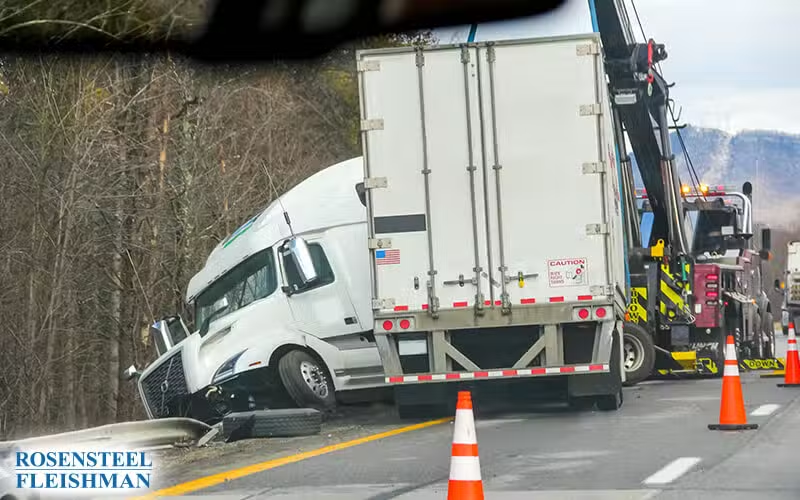

A commercial-vehicle crash may involve records held by a driver, motor carrier, shipper, broker, maintenance provider, electronic-logging vendor, telematics provider, insurer, public agency, or another custodian. The first task is to identify the carrier, vehicle, operation, and record system before assuming a particular federal rule or document applies.
A trucking-record inventory should identify the carrier, driver, vehicle, operation, record category, governing period, custodian, original system, retention question, request or preservation step, response, and limit on what the record can establish.
Identify the carrier, driver, vehicle, and operation
- Driver name and status, motor-carrier legal and trade names, USDOT or other identifier, vehicle and trailer numbers, license plates, and ownership or leasing documents
- Trip origin and destination, cargo, shipper, broker, consignee, route, dispatch, bill of lading, delivery window, and whether more than one carrier participated
- Vehicle type, weight and configuration, interstate or intrastate operation, passenger or property carriage, hazardous material when applicable, and any claimed exemption
- Police report, inspection report, citation, tow record, photographs, scene data, witness information, insurer claim, and public-agency file used to confirm identity
Separate duty-status records from the event timeline
49 C.F.R. § 395.8 addresses records of duty status and supporting requirements within its terms. A duty-status entry can help organize reported driving, on-duty, off-duty, and sleeper-berth periods, but it should be compared with source systems and does not by itself decide fatigue, fault, or causation.
- Record-of-duty-status date, time zone, driver, carrier, vehicle, shipping document, location, status changes, certification, edits, annotations, and unidentified-driving event
- Fuel, toll, dispatch, trip, payroll, gate, scale, inspection, lodging, receipt, location, communication, and delivery records that may test the sequence
- Device clock, location method, data export, user account, edit history, malfunction, diagnostic event, manual entry, paper backup, and custodian
- Collision time from each source, time-zone conversion, clock difference, estimated time, missing interval, and unresolved conflict
49 C.F.R. § 395.22 addresses motor-carrier responsibilities concerning electronic logging devices and records within the regulation. Preserve the native export and associated information when available rather than relying only on a screenshot or printed summary.
Inventory driver-qualification materials without assuming completeness
49 C.F.R. § 391.51 addresses specified driver-qualification files and retention within its scope. Application can depend on the carrier, driver, operation, and regulatory status. The file should be compared with licensing, application, inquiry, certificate, review, training, policy, and personnel records actually maintained by the responsible custodian.
- Application, employment history, license and motor-vehicle record inquiries, road test or equivalent material, medical qualification document, annual review, and disqualification information when applicable
- Hire, assignment, supervision, training, safety review, discipline, termination, contractor, staffing, and personnel records maintained outside the qualification file
- Record date, required or business-created status, custodian, amendment, retention period asserted, destruction policy, litigation hold, and missing-item explanation
- Difference between a record’s existence, regulatory compliance, negligent conduct, notice, and causal connection to the collision
Map inspection, repair, and maintenance records to the vehicle
49 C.F.R. § 396.3 addresses inspection, repair, maintenance, and specified records within its terms. Match each entry to the tractor, trailer, component, date, mileage, provider, complaint, inspection, repair, test, return-to-service decision, and later change.
- Vehicle identification, ownership or lease period, maintenance schedule, service history, inspection report, defect report, repair order, invoice, parts, technician, and approval
- Brake, tire, steering, lighting, coupling, load-securement, warning-system, and other component information relevant to the facts without assuming a defect
- Pre-trip or post-trip information, roadside inspection, out-of-service action, tow inspection, download, preservation inspection, and destructive or nondestructive testing
- Photograph, measurement, removed component, chain of custody, storage condition, alteration, repair, salvage, release, or disposal
Preserve electronic and third-party records by system
Start with records already lawfully available to you and a list of the organizations that may hold the rest. You do not need to log into a carrier account, handle a device or gather every item on this page yourself. Mark each relevant source as available, requested or unresolved, and ask your lawyer to coordinate preservation and authorized access.
- Engine-control, event-data, collision-avoidance, camera, telematics, GPS, mobile-device, dispatch, routing, fleet-management, and maintenance-platform data
- System owner, vendor, account, vehicle or driver association, collection interval, trigger, event window, clock, unit, calibration or configuration, export method, and metadata
- Shipper, broker, receiver, warehouse, toll, fuel, weigh-station, repair, tow, body-camera, 911, roadway-camera, weather, and other third-party sources
- Notice or request date, recipient and legal entity, categories and period, preservation response, production, objection, deletion claim, and follow-up
Do not treat one missing or present record as the conclusion
A record may be incomplete, edited, generated for a different business purpose, maintained under another entity, outside a regulatory period, or unavailable for a lawful reason. Preserve the governing provision, custodian explanation, policy, system evidence, alternate source, and chronology. Whether a record should have existed, was properly kept, is authentic, is admissible, or supports an inference requires separate factual and legal analysis.
The related truck injury-proof guide explains how collision and medical records can be connected without treating either category as self-proving.
Rosensteel Fleishman Car Accident & Injury Lawyers provides information about Charlotte truck-accident claims involving carrier and vehicle records. The operation, applicable law, record systems, preservation history, and complete collision evidence control an individual matter.
Sources
Additional Trucking Accidents Articles
Reducing Reinjury Risk With Physical Therapy After a Truck Crash in Charlotte
Concerns about reinjury involve medical questions that claim records cannot answer. Learn how to organize physical therapy documentation, practical expenses, and scene evidence without drawing unsupported conclusions.
When Mobility Loss After a Charlotte, NC Truck Crash Has No Clear Diagnosis
An unclear diagnosis does not prevent a family from recording practical changes after a truck crash. Keep observations, added expenses, and unanswered claim questions separate.
How Insurers Review Worsening Pain After a Truck Crash
An early insurance review may start with an incomplete account. Dated records can help explain later changes in pain, work limitations, and expenses without treating symptoms as proof of an injury.



