
A car accident can create medical needs that continue long after the first emergency room visit, particularly when rehabilitation, physical therapy, diagnostic testing, or follow-up treatment stretches across several months. For people recovering in Charlotte, the financial side of that care can become almost as complicated as the treatment itself. Different insurance policies may pay […]
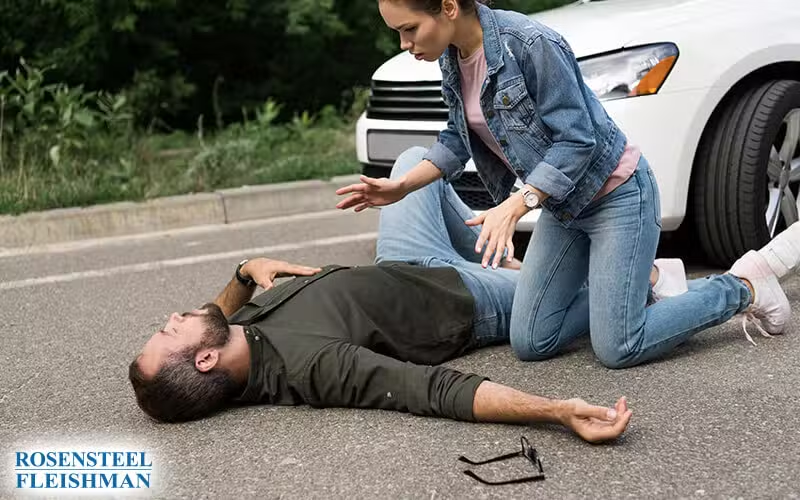

A pedestrian collision in a grocery-store, apartment, office, restaurant, hospital, school, or retail parking lot can involve the driver, vehicle owner, property owner, tenant, manager, security vendor, maintenance contractor, delivery company, and several insurers. Each may hold a different part of the event record.
A parking-lot pedestrian crash usually has several evidence custodians, and the useful record may disappear on different schedules.
Map the exact location before naming a duty
Photograph and measure the travel lane, parking stalls, sidewalk, curb ramp, driveway throat, private road, entrance, marked crossing, stop line, sign, lighting, vegetation, cart corral, loading area, and point of impact. Record whether the movement occurred on a public street, where a sidewalk crossed an entrance, or wholly inside private property.
G.S. 20-173(c) requires vehicles emerging from or entering an alley, building entrance, private road, or driveway to yield to pedestrians on a sidewalk extending across it. That rule may fit a lot entrance that crosses a sidewalk. It does not eliminate the need to classify the actual location, movement, visibility, and conduct of each person.
Identify every camera and retention system
- Exterior building cameras, parking-lot cameras, entrance cameras, doorbell cameras, access-control systems, and license-plate readers
- Tenant, neighboring-business, bank, municipal, traffic, bus, school, delivery-vehicle, rideshare, and security-vendor video
- Vehicle dashcam, event recorder, driver-assistance camera, infotainment, telematics, and connected-app records
- Bystander phones, employee phones, body-worn cameras, emergency-vehicle video, and social-media source files
- System owner, operator, vendor, clock settings, export method, retention period, overwrite cycle, and person who performed any export
A preservation request should identify the incident, date, time range, location, people or vehicles, requested system, and threatened loss. It should ask the custodian to retain the original-quality file, surrounding time, available metadata, audit information, and a record of export. A request is not a court order and should not claim authority the sender does not have.
Preserve the property and operations record
- Ownership, lease, management, security, maintenance, snow or rain response, lighting, landscaping, striping, and construction agreements
- Incident reports, employee and security notes, dispatch logs, photographs, communications, complaints, prior event records, and inspection logs
- Site plan, permits, traffic-control plan, parking configuration, pedestrian route, accessible route, work orders, and repair history
- Employee schedule, delivery schedule, vendor access, gate or access data, transaction record, receipt, and time-clock information
- Post-event repairs, repainting, sign changes, camera changes, ownership transfers, and the date each condition changed
Keep original scene, vehicle, and witness evidence
Retain original photographs and video with metadata, clothing and damaged personal items, vehicle photographs, repair and tow records, driver and vehicle identity, insurance information, phone records preserved through lawful means, and witness contact details. Record a witness’s own words and vantage point without supplying an answer. Do not enter restricted property, access private systems, or alter source files.
Formal discovery has defined uses
North Carolina Rule of Civil Procedure 34 provides a process for a party to request production and inspection of identified documents, electronically stored information, tangible things, and property. Rule 45 addresses subpoenas, including production and inspection from a person commanded by subpoena. These litigation tools are different from an early voluntary preservation request.
Plan for authentication, not just possession
Evidence Rule 901 requires evidence sufficient to support a finding that an offered item is what its proponent claims. Preserve who controlled the system, how it records, whether the clock was accurate, how the file was exported, whether it was edited, and where the retained copy has been stored. A screenshot or forwarded clip may omit information needed later.
Separate the evidence map from the ultimate claim
The property record may bear on sight lines, lighting, traffic flow, or control, but property ownership alone does not establish liability for a driver’s movement. Likewise, a police or incident report may collect statements without resolving fault. Analyze each proposed party’s duty, conduct, notice, causation, defenses, and insurance separately.
The related Charlotte pedestrian-crash first-steps guide addresses care, reporting, driver identification, and initial insurance notice. This page owns the multi-custodian parking-lot evidence map.
Rosensteel Fleishman Car Accident & Injury Lawyers provides information about consulting a Charlotte pedestrian-accident lawyer after a parking-lot collision. Early review can identify the correct location, custodians, retention risks, and lawful preservation steps.
Sources
Additional Personal Injury Articles
Second Opinion Timing After Fall When Recovery Progress Remains Unclear
How can someone protect their interests when recovery after a fall remains difficult to understand? In Charlotte, the answer often begins with maintaining clear records, following established provider instructions, and asking appropriate questions when the existing information leaves important concerns unresolved. The decision to seek another evaluation is personal and should be discussed with a […]
Household Limitations Truck Injury Recovery Can Create and How to Document Them
Truck crash injuries can affect far more than a person’s ability to work or attend medical appointments. They may also change how someone cooks, cleans, shops, handles yardwork, cares for children, or completes basic home maintenance. Insurers handling claims with several involved parties often examine who caused the collision, which insurance policies apply, and whether […]
Claims History Impact on Insurance When a Prior Claim Was Not Your Fault
A prior insurance claim can create confusion even when the accident was caused entirely by someone else. Insurance companies maintain records of reported losses, and those records may appear when a carrier reviews a new application, renews a policy, or investigates another accident. For drivers in Charlotte, understanding what information appears in a claims record […]



