
Truck crash injuries can affect far more than a person’s ability to work or attend medical appointments. They may also change how someone cooks, cleans, shops, handles yardwork, cares for children, or completes basic home maintenance. Insurers handling claims with several involved parties often examine who caused the collision, which insurance policies apply, and whether […]
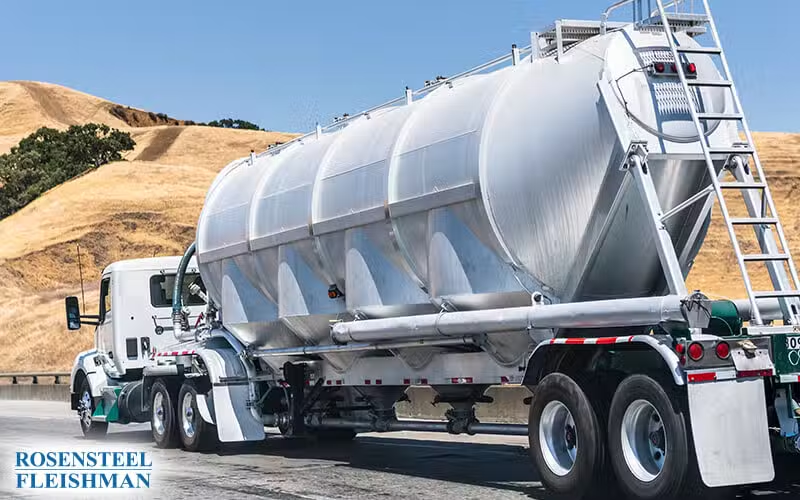

A motor carrier’s federal identification record can help connect a USDOT number to names, addresses, operation classifications, cargo categories, reported equipment, driver counts, mileage, and an update date. The record is a useful identity source, but it is only one dated filing in a larger carrier-and-trip record.
An MCS-150 is a motor-carrier identification filing for a stated date; it is not a complete trip record and does not by itself establish ownership, operating authority, insurance, employment, or crash responsibility.
Preserve the source and lookup date
- USDOT number used in the search and every company name or number shown on the truck, trailer, cab card, crash report, shipping record, or photograph
- Source system, requested URL, access date and time, displayed filing or update date, report type, page count, and exported or printed copy
- Current snapshot kept separate from a historical filing, prior company name, corrected record, or later update
- Unknown, inactive, out-of-service, missing, mismatched, or duplicated identifiers preserved as questions rather than silently resolved
Read the identity fields exactly
- Legal business name and doing-business-as name, including suffix, punctuation, abbreviation, and spelling
- Principal place of business, mailing address, telephone information, and other contact fields shown in the available record
- USDOT number, MC or MX number when listed, and any other identifier kept in its own column
- Reason for filing and the filing, update, effective, or display date identified without assuming they are the same
The FMCSA MCS-150 page describes the MCS-150 as a Motor Carrier Identification Report used by motor carriers and other registrants to update an existing USDOT-number company record, commonly for the biennial update. The current form and instructions identify the fields and filing choices; use the version applicable to the date being examined.
Separate operations, classifications, and cargo
- Interstate or intrastate and hazardous-material or non-hazardous-material operation boxes copied without converting the selection into a conclusion about the crash trip
- For-hire, private, passenger, government, mail, or other operation classification recorded as filed
- Cargo classifications copied individually, including an “other” description when provided
- Reported power units, drivers, mileage, mileage year, and other counts tied to the filing date rather than treated as a live fleet inventory
Check the update requirement and record history
49 C.F.R. § 390.19 addresses motor-carrier identification reports and updates, including the circumstances and schedule stated in the current regulation. Determine which requirement applied to the entity and period. A stale displayed date may prompt further inquiry, but it does not prove what equipment, drivers, cargo, or control existed on a particular trip.
- Current record compared with archived filings, carrier correspondence, registration changes, merger or acquisition documents, and name or address history
- Power-unit, driver, and mileage changes compared by filing date rather than averaged across versions
- Out-of-business, reactivation, revocation, reinstatement, or correction entries identified through their own records
- Source limitation recorded when only the current public snapshot is available
Do not use one filing to answer every carrier question
- Vehicle ownership checked through title, registration, lease, cab card, and equipment records
- Operating authority checked through the applicable licensing-and-insurance record and effective dates
- Insurance checked through policy, endorsement, insurer, filing, and coverage records rather than an MCS-150 label
- Driver relationship and trip control examined through employment, contractor, dispatch, trip, settlement, and communication records
- Cargo, shipper, broker, freight forwarder, motor carrier, registrant, and equipment owner kept as potentially different roles
Build an identity comparison table
- Field, exact MCS-150 value, filing date, current displayed value, matching source, conflicting source, and unresolved difference
- Normalized company name or address retained alongside the original text, never in place of it
- Each identifier connected to the source page, photograph, record custodian, and relevant time period
- Conclusion limited to what the filing states, with ownership, authority, insurance, control, and liability left for separate analysis
The related guide to reading an interstate truck cab card after a crash explains the vehicle-registration fields that belong to a different record and why a cab card should not be treated as a substitute for the carrier filing.
Rosensteel Fleishman Car Accident & Injury Lawyers provides general record-review information for people who may later consult a Charlotte truck accident lawyer. Regulatory scope, carrier identity, authority, insurance, control, preservation, and legal responsibility require current law and the complete source set.
Sources
Additional Trucking Accidents Articles
Joint Pain After a Truck Crash: Questions About Exams, Imaging and Follow-Up
If a knee, shoulder, wrist or another joint hurts after a truck crash, the immediate question is what medical attention you need. A claim file cannot answer that. Describe the symptoms to a healthcare professional and follow the care instructions you receive. Once care is underway, it can be difficult to understand why the record […]
Documenting Family Impact Truck Accident Injuries in Charlotte Households
When a serious truck collision disrupts a Charlotte family’s daily life, medical records often become the clearest evidence of what changed and why. Insurance adjusters review those records to determine whether injuries are connected to the crash, how treatment progressed, and whether ongoing limitations are medically supported. That review can affect compensation for medical expenses, […]
Open Fractures After a Truck Crash: Imaging, Wound Assessment and Records
An open fracture, also called a compound fracture, needs urgent medical attention. If an open fracture is suspected after a truck crash, seek emergency help; do not delay care to collect photographs or claim documents. The care team evaluates both the broken bone and the surrounding wound. Later, the medical file may include imaging, emergency […]




