
Roadway congestion can make bicycle crashes more complicated because several things may happen at once, including sudden lane changes, limited visibility, close passing, and multiple vehicles reacting within seconds. When a cyclist is injured and the responsible driver does not have enough insurance to cover the resulting losses, underinsured coverage bicycle cases may involve a […]
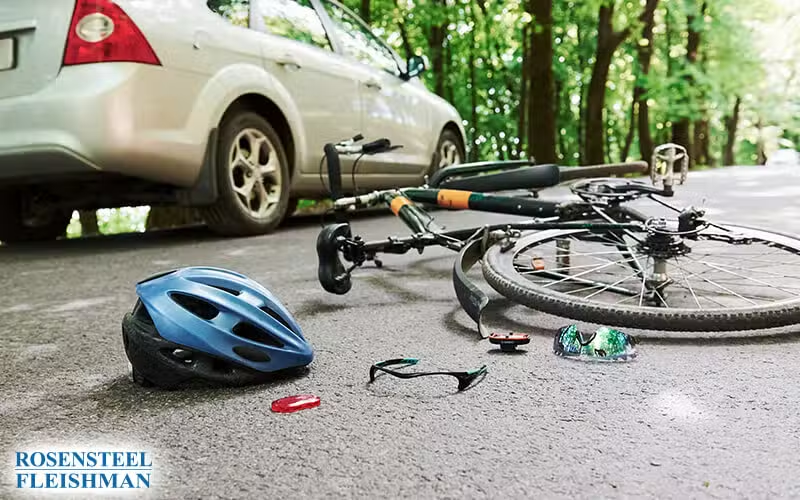

North Carolina treats bicycles as vehicles for many traffic-law purposes, while some provisions distinguish bicycles, motor vehicles, sidewalks, crosswalks, and particular maneuvers. A liability review should identify the rule that applies to the actual road, participant, and movement.
Fault analysis starts with the movement conflict and governing rule, not with the size of the vehicle. A rider can comply with one rule while a driver violates another, or both participants may have conduct requiring evaluation.
Draw the movement conflict before assigning fault
- Same-direction passing, right hook, left cross, driveway entry, door opening, rear impact, head-on movement, or lane change
- Traffic-control phase, stop location, turn path, bicycle or travel lane, shoulder, sidewalk, crosswalk, and intended route
- Speeds, distances, sight lines, lighting, weather, parked vehicles, obstructions, grade, curve, and available reaction time
- Impact point, vehicle and bicycle damage, final positions, marks, debris, video, electronic data, and witness viewpoints
Use the current North Carolina rule for the maneuver
NCDOT’s bicycle and pedestrian laws page collects frequently applicable statutes and notes that bicycles are generally subject to vehicle traffic laws unless a provision refers only to motor vehicles or another category.
G.S. 20-150 governs specified passing limitations and includes conditions for passing a bicycle or moped in a marked no-passing area, including at least four feet or complete entry into the left lane. Other passing situations and local conditions require their own analysis.
G.S. 20-154 addresses starting, stopping, turning, safety before movement, signals, and bicycle hand signaling. The statute also states that a violation does not constitute negligence per se, so conduct and causation still need fact-specific evaluation.
Separate rule violation from collision causation
A violation may be evidence, but the analysis must ask whether it contributed to the conflict. A missing signal that no participant could see may differ from an abrupt turn across an occupied path. A lighting issue may relate to detection, yet not explain a daytime collision or a driver’s acknowledged observation.
- What should each participant have perceived, and when did that information become available?
- What response time, braking, steering, or route was physically possible?
- Did a roadway, signal, vehicle, component, work zone, obstruction, or third participant add another cause?
- Which facts are measured, recorded, remembered, assumed, or disputed?
Evaluate the rider’s conduct without stereotypes
Review lane position, direction, speed, signals, lighting, attention, equipment, impairment, and route against the specific law and conditions. Avoid assuming a rider was invisible, too slow, required to use a bicycle lane, or required to be at the extreme roadway edge without identifying the legal and physical basis.
Identify every participant with control over a cause
The driver, vehicle owner, employer, delivery or rideshare platform, roadway authority, signal or work-zone contractor, property controller, bicycle or component entity, and another road user may have separate duties and evidence. Vicarious responsibility and insurance do not follow merely from a logo or app.
Preserve proof that can test competing accounts
- Police materials, 911 audio, body camera, nearby surveillance, traffic video, vehicle cameras, and witness interviews
- Vehicle event data, telematics, phone records, app status, dispatch, timekeeping, maintenance, and driver qualification when relevant
- Bicycle, helmet, lights, reflectors, components, fitness device, phone, route file, photographs, and repair history
- Signal timing, roadway plans, sight-distance measurements, illumination, traffic counts, permits, work records, and prior reports
The immediate-action guide explains what to preserve after a Charlotte bicycle collision, while the intersection guide addresses signal, turn, and visibility reconstruction in more detail.
Collision fault and injury causation are separate
Even when a movement caused the collision, medical evidence must connect that event to each claimed injury and loss. Compare mechanics, first history, objective findings, prior conditions, treatment, restrictions, function, earnings, and alternative causes.
Rosensteel Fleishman Car Accident & Injury Lawyers provides information about North Carolina bicycle-collision liability. A sound assessment identifies movements, rules, visibility, avoidability, concurrent causes, medical causation, coverage, and deadlines.
Sources
Additional Bicycle Accidents Articles
Home Exercises Bicycle Recovery Records Can Help Explain Progress After Disputed Injuries
Home exercise records can provide useful context when several people or organizations disagree about how an injured cyclist is recovering. A bicycle accident may involve the rider, a driver, insurance companies, medical providers, employers, and sometimes witnesses or additional parties. When each person has different information, small gaps in communication can make it harder to […]
How Accident Reports in Bicycle Cases Help Compare Conflicting Versions of Events
Bicycle accident reports often become important when the people involved remember the same collision differently. A driver may say a cyclist entered the roadway unexpectedly, while the cyclist may remember having the right of way and being visible well before impact. In Charlotte, those differences can influence how insurers and others evaluate responsibility, particularly when […]
Bicycle Accident Injury Basics When Riders and Drivers Remember the Crash Differently
People involved in the same bicycle crash can remember important details differently. A rider may recall having the right of way while a driver remembers the bicycle entering the roadway unexpectedly. Stress, sudden movement, limited visibility, and the speed of the event can all affect what each person notices and later describes. Understanding bicycle accident […]



