Investigators reconstruct a truck collision by comparing physical evidence, vehicle movement, medical findings, and witness accounts. In a crash involving several impacts, this process can help explain when an injury likely occurred, how additional contact changed the forces on an occupant, and why symptoms may become more noticeable as activity levels increase. A person may […]
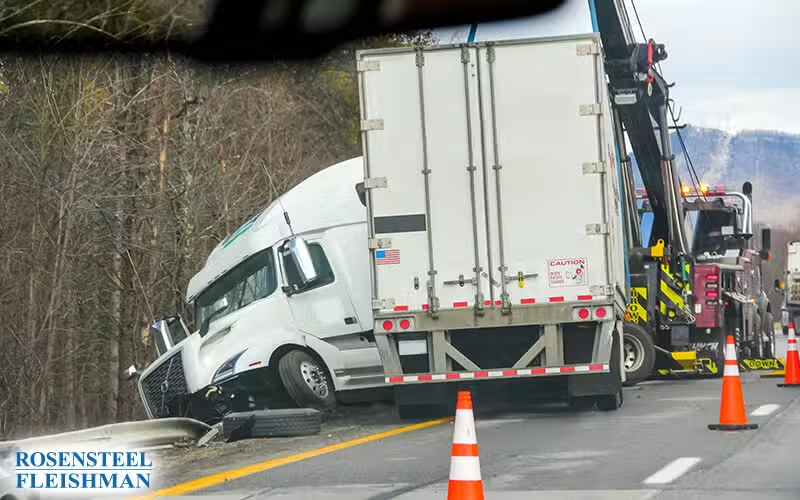

A driver vehicle inspection report, often called a DVIR, is one record in a commercial-vehicle file. It may identify a truck, tractor, trailer, or intermodal item and list a defect or deficiency reported at a particular time. Repair certifications, work orders, invoices, driver acknowledgments, photographs, and later inspections may address related questions, but they are not interchangeable records.
A driver vehicle inspection report records the vehicle identity and a reported defect or deficiency; it does not establish when a condition began, whether it contributed to a crash, or who bears legal responsibility.
Identify the report and the applicable vehicle
- Driver name, motor carrier, report date, work period, terminal, truck or tractor number, trailer number, license plate, vehicle identification number, and odometer or mileage entry when shown
- Paper form, electronic record, driver application, maintenance-system entry, intermodal report, inspection checklist, or another named format
- Original report, revised version, annotation, repair certification, driver review, and export or print date recorded as separate fields
- Missing page, unreadable field, unmatched unit number, conflicting date, or unidentified signature preserved as an open question
49 C.F.R. § 396.11 addresses driver vehicle inspection reports and includes separate provisions for carrier equipment and intermodal equipment. The current text also contains scope rules and exceptions. Determine which provision applied to the vehicle, carrier, driver, and date before treating a form as a required report.
Separate the reported condition from later work
- Copy the defect or deficiency exactly as written and identify the component, side, axle, position, or unit stated in the report
- Record whether the entry was made by the driver, supplied to the driver by another person, imported from another system, or left without an identified source
- Keep the reported condition separate from a mechanic diagnosis, repair description, replacement-part entry, invoice code, photograph, test result, or later observation
- Do not infer that a blank form means no problem existed or that a listed condition existed throughout an earlier trip without additional evidence
Read the repair certification as its own statement
When the applicable portion of § 396.11 requires corrective action, the regulation distinguishes the reported defect from the carrier or agent certification that the item was repaired or that repair was not required before further operation. Record the exact certification language, signer, organization, date, vehicle identity, and document version. Then locate the work order, technician notes, parts record, invoice, test result, or other material that may explain what was examined or performed.
- Certification that the reported item was repaired kept separate from a general maintenance entry or closed work-order status
- Statement that repair was not required copied without converting it into a finding that no condition existed
- Part number, labor operation, measurement, adjustment, diagnostic code, and road-test entry tied to the source page or system record
- Unmatched repair date, unit, component, signature, or description flagged for reconciliation rather than silently joined
Check the next-driver review without overstating it
49 C.F.R. § 396.13 addresses a driver’s inspection before driving, review of the last report when the cited rule requires it, and acknowledgment of the repair certification. A signature can document that review and acknowledgment. It does not by itself prove the mechanical condition of every component or resolve whether a condition later changed.
- Next driver, date and time, unit combination, report reviewed, signature or electronic acknowledgment, and any exception stated in the record
- Trailer substitution, tractor substitution, reassignment, dispatch change, or different unit number checked before connecting the acknowledgment to the crash vehicle
- Driver note, maintenance release, inspection result, and dispatch instruction retained as separate source statements
- Any missing link in the report-repair-review sequence listed with the custodian or record system that may address it
Keep other inspection records in their own lanes
A DVIR is different from a periodic inspection report, roadside inspection, pre-trip checklist, annual inspection sticker, maintenance schedule, recall, telematics alert, post-crash examination, or repair estimate. Put those records on the same chronology only after preserving their separate purpose, author, date, vehicle identity, and terminology.
The related guide to reading a periodic truck inspection report explains the inspection date, inspector qualifications, vehicle components, certification, and document-matching questions that belong to that different record. This page remains limited to a DVIR and the repair-and-review sequence associated with it.
Rosensteel Fleishman Car Accident & Injury Lawyers provides general record-organization information for people who may later consult a Charlotte truck accident lawyer. Regulatory coverage, preservation duties, mechanical analysis, causation, and legal responsibility depend on the complete record and qualified review.
Sources
Additional Trucking Accidents Articles
Household Limitations Truck Injury Recovery Can Create and How to Document Them
Truck crash injuries can affect far more than a person’s ability to work or attend medical appointments. They may also change how someone cooks, cleans, shops, handles yardwork, cares for children, or completes basic home maintenance. Insurers handling claims with several involved parties often examine who caused the collision, which insurance policies apply, and whether […]
Joint Pain After a Truck Crash: Questions About Exams, Imaging and Follow-Up
If a knee, shoulder, wrist or another joint hurts after a truck crash, the immediate question is what medical attention you need. A claim file cannot answer that. Describe the symptoms to a healthcare professional and follow the care instructions you receive. Once care is underway, it can be difficult to understand why the record […]
Documenting Family Impact Truck Accident Injuries in Charlotte Households
When a serious truck collision disrupts a Charlotte family’s daily life, medical records often become the clearest evidence of what changed and why. Insurance adjusters review those records to determine whether injuries are connected to the crash, how treatment progressed, and whether ongoing limitations are medically supported. That review can affect compensation for medical expenses, […]